

Many are wondering what the future of the coronavirus pandemic will be. Could there be a variant that will take us back to what we experienced in 2020? That is the big question that scientists are trying to answer.
The virus is unpredictable and has shown it in these pandemic years. What are researchers most concerned about? Oncologist Elmer Huerta, an expert at George Washington University and former president of the American Cancer Society, reviews a new episode of the podcast Coronavirus: Fact vs Fiction, by CNN.
“Many people wonder what will happen in the coming months with the new coronavirus and therefore the pandemic. What can put us back at the zero point? Will the family of the omicron variant, BA.1, BA.2 and BA.3, which currently predominate, be the last variants and subvariants we will see or other aggressive mutations? Or is it that, although new variants appear, the next ones will be relatively benign and allow us to live with them? In reality, as the pandemic itself has taught us, it is very difficult to predict the future,” said the expert. He added: “Let's remember that when we already thought that the decline of the Delta variant was announcing the endemic phase of the disease, the announcement came that a new variant — the Ómicron — had been discovered.”
For the specialist, when studying the impact of an epidemic on public health, three important elements must be analyzed: the infectious agent, the host and the environment.
The infectious agent of COVID-19
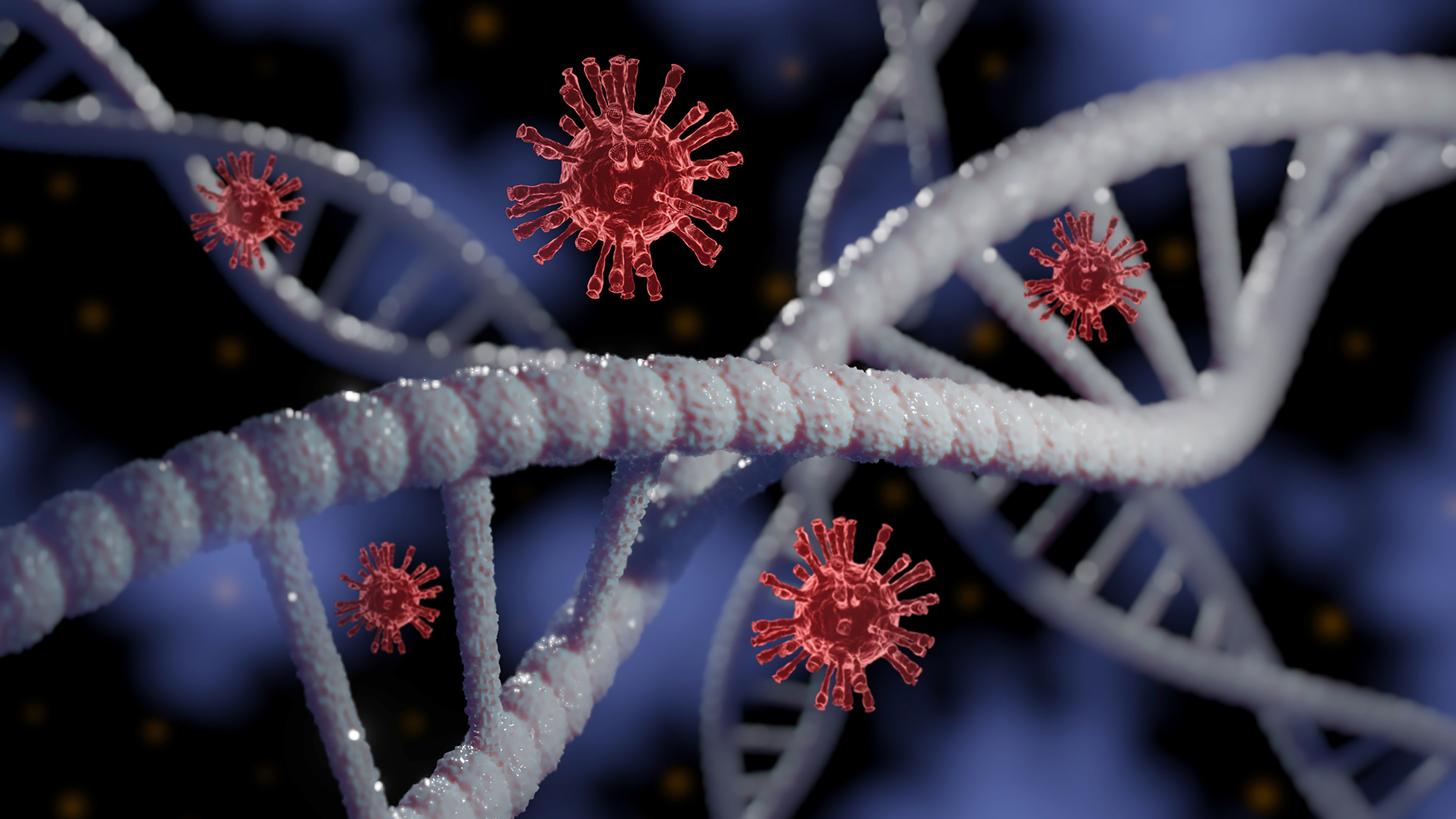
Huerta explains that knowing that the original or wild virus was an RNA virus — known for its high mutation potential — it was feared that from the first moment it started infecting the first people it would start to mutate. And that's what happened. The first documented mutation of the virus was G614D, which was first discovered in Europe and then in the United States, occurred in the ear of the virus, and was thought to increase its infectious capacity.
Later we got used to hearing about new mutations, with perhaps the announcement of the Alpha variant in the UK at the end of December 2020 that started the long list of variants that we have become accustomed to. Then we saw the Beta, Delta, Gamma, Epsilon and Mu variants arrive, among others, the latter being the Omicron and its sister, or subvariant, the BA.2.
“Given that context, and when millions of infections still occur in the world, it is very likely that new mutations will occur in the future. The big question is: what kind of mutations will they be? Will they be relatively benign like omicron and BA.2, or is it possible that there will be a completely unexpected mutation that will bring us back to zero sheets? Will there be a mutation that brings us back to the beginning of everything?” , he remarked.

Scientists cannot predict the future, but in a recent opinion piece in The New York Times, American researchers venture—based on what science has been discovering so far—which would be the direction of the next mutations.
In the evolutionary process that leads to their persistence, experts say, viruses try to achieve two important properties: the first, to be increasingly infectious, and second, to evade the neutralizing antibodies produced against them by vaccines or natural disease. And that is precisely what the Ómicron variant and its subvariant BA.2 have achieved, which, on the one hand, are extremely contagious and, on the other hand, are capable of infecting people who have already been vaccinated or who have passed the disease, characteristics that have allowed them to cause a very high number of infections in the world.
Although it is impossible to predict whether a more transmissible variant could emerge than Ómicron and BA.2, experts say that it is quite possible that the new coronavirus is reaching the limit in that characteristic. They give the example of a cheetah, which no matter how fast it is, its speed has a limit that is impossible to overcome. However, experts say that the characteristic of the virus of evading neutralizing antibodies and being able to infect vaccinees and people who passed the infection could be overcome.
The flu virus, an example of what could happen
In that sense, the new coronavirus could reach the current situation with the influenza virus, which, because it constantly mutates and evades antibodies, requires a different vaccine every year. But there is another aspect of the evolution of SARS-CoV-2 that is completely unpredictable, experts say. It is the one that refers to its so-called “evolutionary line”.
Until the Delta variant appeared, all previous variants had originated from an earlier variant, as if following an evolutionary line. That is why when all scientists expected that a mutation derived from Delta would be the next to cause problems, the Ómicron variant appeared, which surprisingly did not come from the Delta variant, but began to form sometime around March 2021 in Africa and is completely unrelated to Delta. Can the same thing happen again and a new variant be formed without any relation to those known so far? No one knows, experts say.
The mystery of the intensity of the disease
“The second element in the triad of epidemics is the host, and in that sense we still have no firm biological explanation as to why, in the face of the same virus, at the beginning of the coronavirus pandemic it was seen that about 80% of people had mild or asymptomatic disease, 15% had more severe disease and 5% were found to have a mild or asymptomatic disease. complicated and could die,” Huerta said.
In this regard, it was only possible to determine that people with certain risk characteristics, obese, with chronic respiratory and cardiovascular diseases, with cancer or immune problems, were more likely to get complicated. This distribution changed with the advent of vaccines, as it was observed that vaccinated people could become infected and, despite being people at higher risk of complication, they showed mild signs of the disease. This last aspect is very important, and the case of Hong Kong demonstrates the value of vaccines in confronting the new variants.
The case of Hong Kong
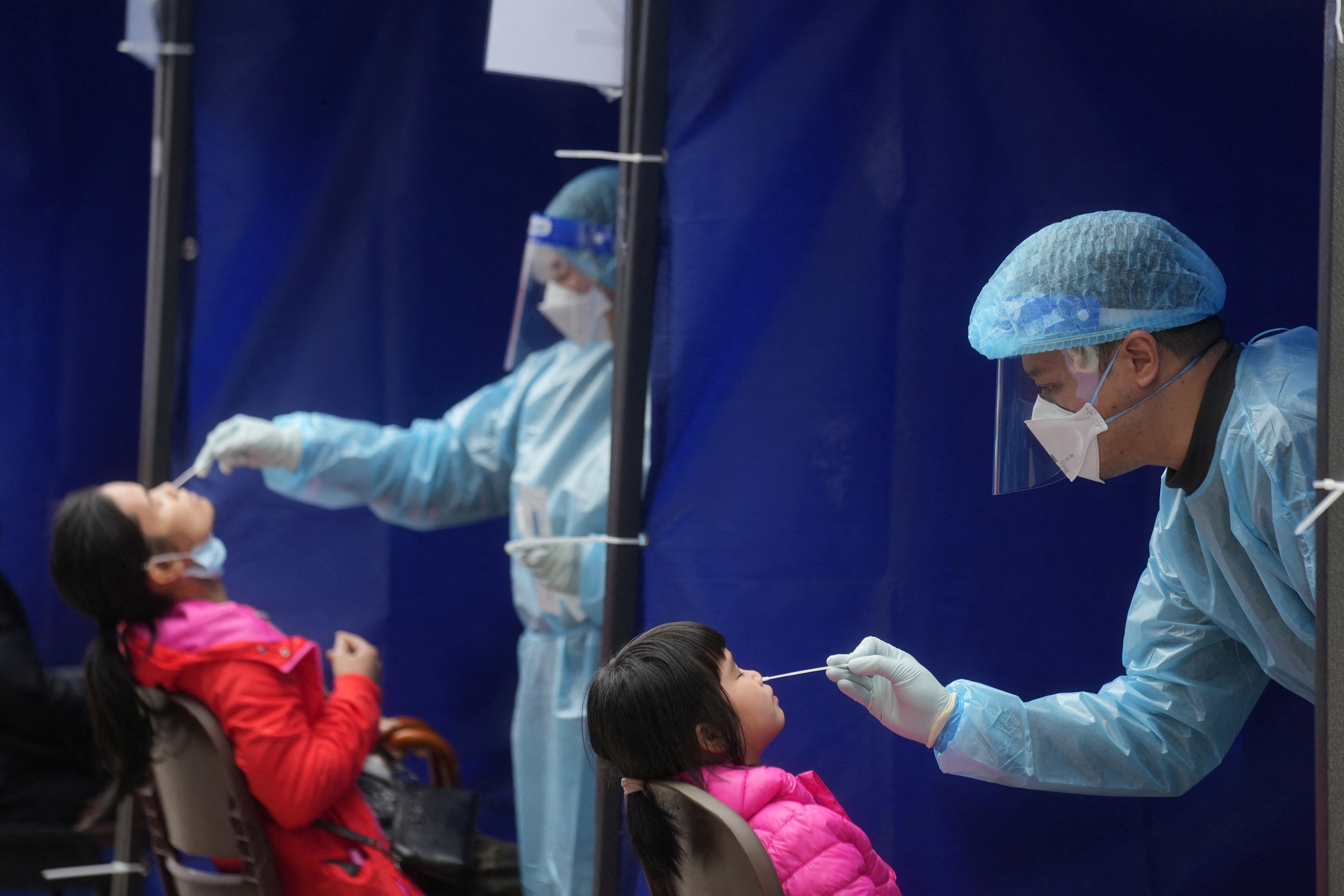
“The Omicron variant, which causes relatively mild disease in people with a normal immune system or vaccinated people, caused a deadly epidemic in Hong Kong. In the week of March 3, Hong Kong had the highest number of deaths per million inhabitants on the planet. The reason for this high mortality is the low vaccination of people over 50 years of age. This case shows us that the severity of the disease in the host can be reduced by vaccination,” he said.
Finally, the third element of the epidemic triad — the environment — will be determined by the public health policies defined by the authorities after analyzing the epidemiological data that are submitted. “In that sense,” he continued, “the situation of the coronavirus pandemic in China is of great concern, because due to the zero-covid policy that has been implemented since the beginning of the pandemic, the authorities of that country of 1.4 billion inhabitants are fighting outbreaks that have the potential to spread, causing infections that have the potential to spread may give rise to new variants”.
In short, experts say, it is very likely that the future of the pandemic will be determined by the emergence of variants of high contagiosity and ability to evade neutralizing antibodies. That will make us have to get vaccinated annually, as we do with the flu.
“The fact that we were able to modify the severity of the disease with the use of vaccines is very important and reinforces the need to educate the population about the benefits of the vaccine, because the new coronavirus has undoubtedly come to stay and will depend on each one, whether to protect themselves or not,” he concluded.
KEEP READING:
Últimas Noticias
Debanhi Escobar: they secured the motel where she was found lifeless in a cistern
Members of the Specialized Prosecutor's Office in Nuevo León secured the Nueva Castilla Motel as part of the investigations into the case

The oldest person in the world died at the age of 119
Kane Tanaka lived in Japan. She was born six months earlier than George Orwell, the same year that the Wright brothers first flew, and Marie Curie became the first woman to win a Nobel Prize

Macabre find in CDMX: they left a body bagged and tied in a taxi
The body was left in the back seats of the car. It was covered with black bags and tied with industrial tape

The eagles of America will face Manchester City in a duel of legends. Here are the details
The top Mexican football champion will play a match with Pep Guardiola's squad in the Lone Star Cup

Why is it good to bring dogs out to know the world when they are puppies
A so-called protection against the spread of diseases threatens the integral development of dogs


