

The German health authorities announced that, as of May 1, citizens who test positive will not have to quarantine on a mandatory basis, but will be an “urgent recommendation”.
Following an agreement between the state and federal ministers of health, the authorities will stop giving official instructions regarding isolation and will move on to recommending quarantines of about five days.
However, health professionals will not be able to benefit from this measure and will only be able to terminate their isolation as positive once they can prove that they have overcome the disease by presenting a negative test result.
One of the main objectives of this measure is to avoid mass absences of workers in the event that infections increase, something that has partly happened since the beginning of the year, when Germany entered fully into a large outbreak of positives caused by the omicron variant.
To date, current regulations stipulated that positives must be quarantined for ten days, although if they presented a negative test after seven days they could end their isolation.
The Robert Koch Institute, the official agency responsible for monitoring the pandemic in Germany, reported a total of more than 21.6 million coronavirus infections, as well as 130,052 deaths due to the virus.
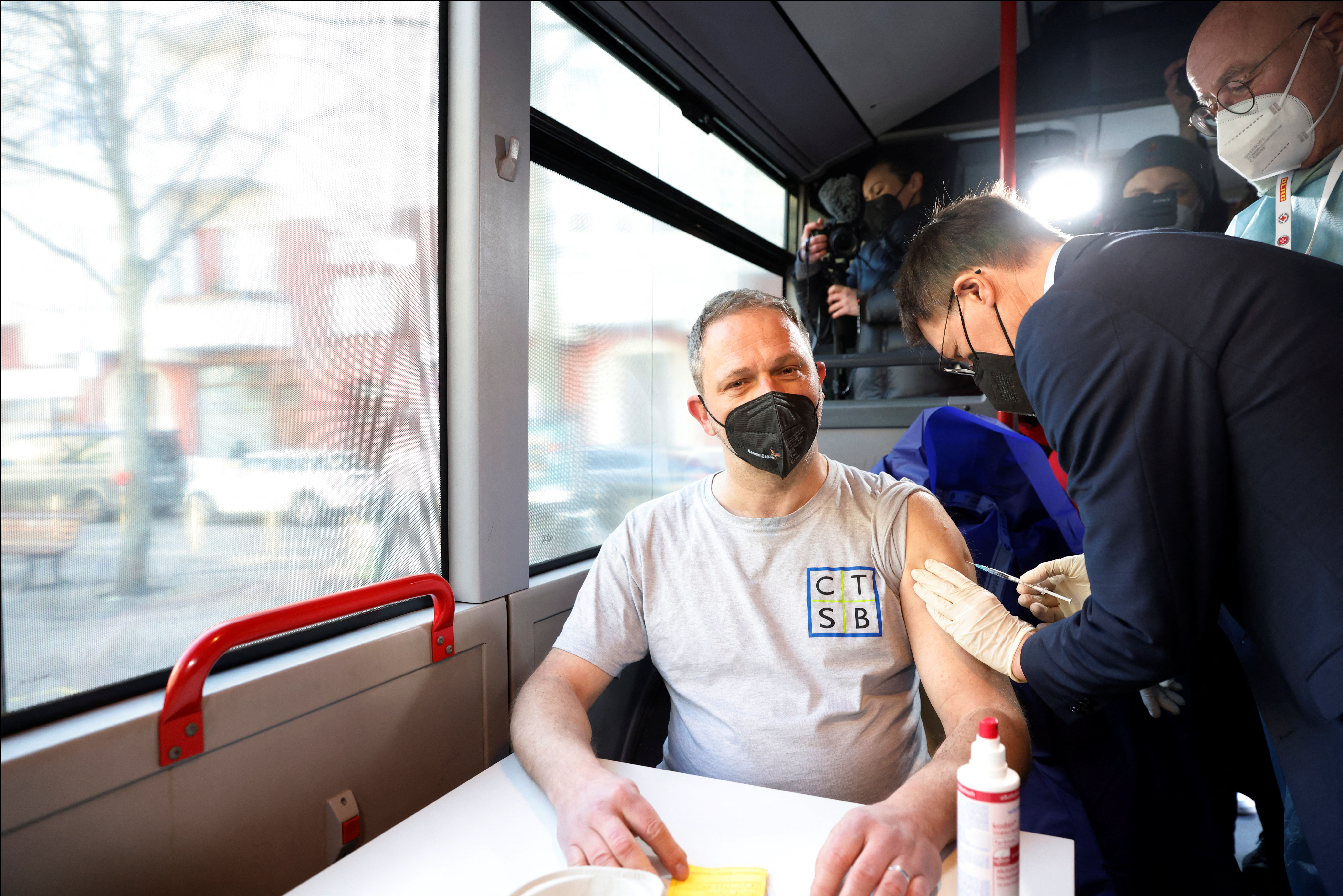
For their part, the promoters of the introduction of compulsory vaccination against covid-19 in Germany from the age of 18, including the Minister of Health, Karl Lauterbach, have given up submitting this initiative to the Bundestag (lower house) on the grounds that it does not have a majority support.
This proposal was one of those that would be put to the vote next Thursday before the Bundestag and was supported by the Social Democrats and the Greens, partners in Chancellor Olaf Scholz's coalition, but not by liberals, also in the governing alliance.
Another option is considered to be successful, also presented by deputies from the three coalites, plus a part of the conservative opposition, supporters of compulsory vaccination for those over 50.
The initiative for compulsory vaccination was initially advocated by Chancellor Scholz at the end of last year, although it was already announced at that time that it would not be presented as a coalition bill, but was invited to formulate different options in a suprapartisan way.
Last weekend Germany lifted virtually all restrictions due to covid, after months of rising incidence and coinciding with a decline in infections.
The obligation to wear a mask in transport and public buildings is generally maintained, while their use has been relaxed in non-essential shops, restaurants or cinemas, although with different criteria according to the authorities of each “Land”, who are responsible for their implementation.
The Robert Koch Institute of Virology (RKI) has passed the peak of the sixth wave of covid. The cumulative incidence per seven and 100,000 inhabitants on Monday stood at 1,424.6 cases, with a total of 41,129 new infections within 24 hours.
The hospitalization rate, in any case, falls, but many health centers claim to be at the limit of their capacity and have to delay planned operations, not because of the number of patients but because of the high casualties among staff.
In this regard, the Minister of Health and the RKI proposed this week to reduce the duration of isolation of infected persons to just five days, an idea that, like the easing of restrictions, has been the target of harsh criticism by organizations in the health sector and other sectors.
The rate of citizens with the full vaccine schedule is 76.0%, while 58.8% also received the booster dose.
(With information from Europa Press and EFE)
Keep reading:
Últimas Noticias
Debanhi Escobar: they secured the motel where she was found lifeless in a cistern
Members of the Specialized Prosecutor's Office in Nuevo León secured the Nueva Castilla Motel as part of the investigations into the case

The oldest person in the world died at the age of 119
Kane Tanaka lived in Japan. She was born six months earlier than George Orwell, the same year that the Wright brothers first flew, and Marie Curie became the first woman to win a Nobel Prize

Macabre find in CDMX: they left a body bagged and tied in a taxi
The body was left in the back seats of the car. It was covered with black bags and tied with industrial tape

The eagles of America will face Manchester City in a duel of legends. Here are the details
The top Mexican football champion will play a match with Pep Guardiola's squad in the Lone Star Cup

Why is it good to bring dogs out to know the world when they are puppies
A so-called protection against the spread of diseases threatens the integral development of dogs


