

A Venezuelan man and woman were selling pink cocaine and other synthetic drugs in Montevideo, the Uruguayan capital, and were charged this Sunday with a crime of “negotiation and production of prohibited substances”, which cost them four months of house arrest.
The seized cocaine was not pure, but was called “pink cocaine”, a substance that usually contains a mixture of ketamine, cocaine, tramadol, and caffeine. In Uruguay, this drug is known to be sold at electronic music parties for between 1,500 and 2,000 Uruguayan pesos (between 35 and 48 US dollars).
The narcotic drug has hallucinogenic potential, which means altering all the senses of the person who consumes it, maintaining the effect up to eight hours later. According to Uruguayan toxicologists, the use of pink cocaine can cause serious harm to health and in some cases may have contraindications that put the consumer's life at risk, Underslinado reported.
The Venezuelan woman was arrested last Friday at the Montevideo Center and carried with her 53 wrappers of pink cocaine or “Tussi”, another name used in the jargon to name this mixture of narcotics, a white substance stone, three crystal wrappers and 27 LSD pills.
Hours later, the Justice authorized the Police to carry out two daytime searches that allowed them to find the 32-year-old man, also involved in the sale of narcotics. In their homes, also in the Center and a few blocks from where they arrested the woman, the man possessed more pink cocaine, several wrappers with glass scraps, marijuana, pills and a 38-caliber firearm with six ammunition.
At that moment, both Venezuelans were detained and at the disposal of the narcotics prosecutor Mónica Ferrero. The 24-year-old woman was charged as “alleged perpetrator of a crime of negotiating prohibited narcotic substances”, while the 32-year-old man was charged as “alleged perpetrator of a crime of producing prohibited substances and a crime of internal trafficking in firearms”.
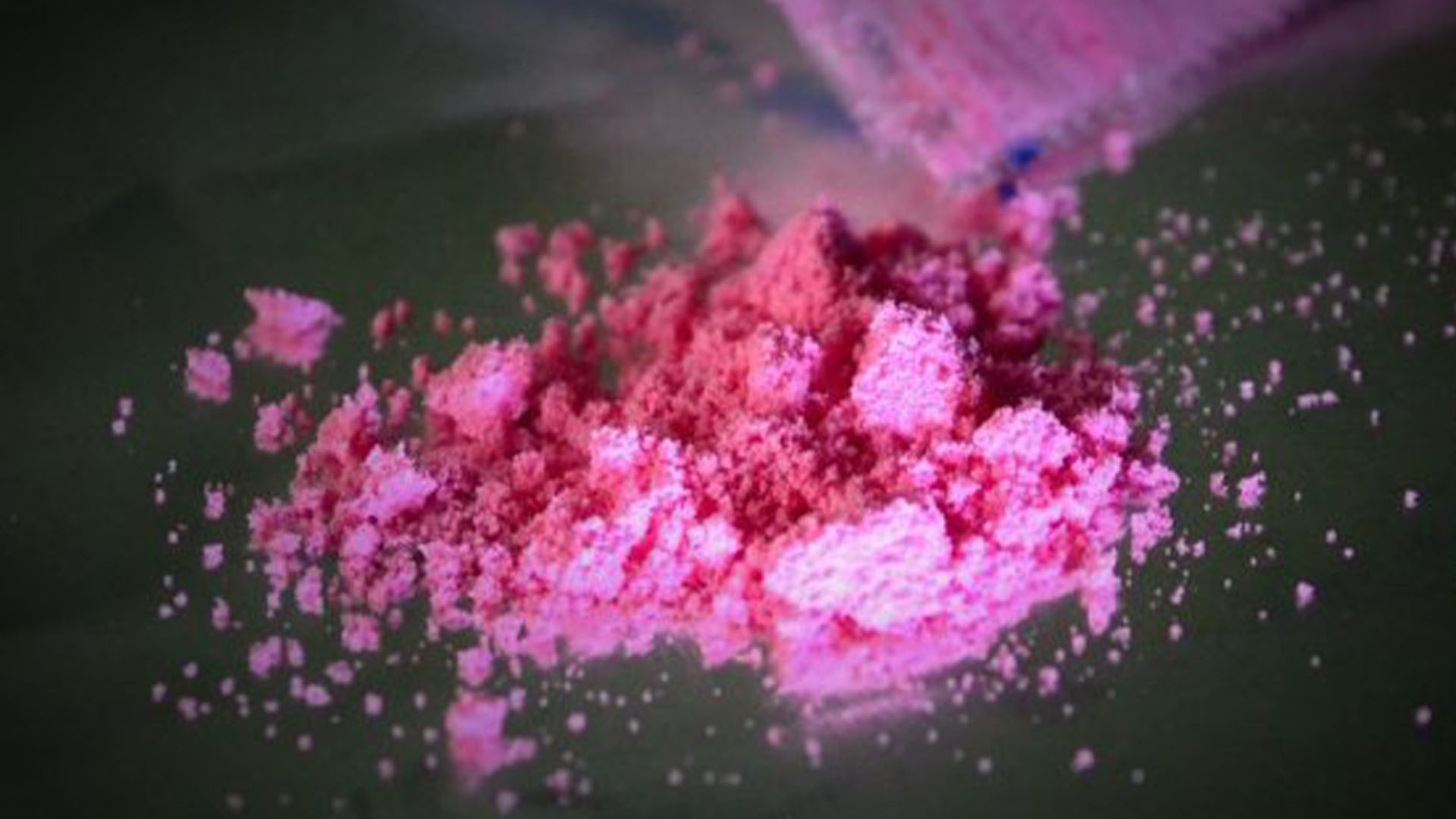
La Cocaine Rosa
In Uruguay, and in several Latin American countries, this type of narcotic drug is known as the “drug of the rich”, due to the socio-economic context where it was consumed, and it was created worldwide in the 1970s, but it resurfaced in 2019.
At that time, Uruguay detected the arrival of drugs in the country and was alarmed by the consequences that its use may have on health. In fact, on both sides of the Río de la Plata (Argentina and Uruguay), progress in the sale of so-called pink cocaine, from “Tuci”, “Tussi”, “Tucibi”, “Nexus”, “2C-B” (its chemical name) in the rest of Latin America, was noticed a year ago.
What happens with these types of compounds is that each change in their composition, in addition to being unknown to toxicology when it comes to treating patients, becomes a challenge for drug control.
Any alteration in the formula could cause the substance to escape international conventions and drug traffickers to rely on that legal vacuum. That is why countries such as Uruguay proposed a control of substances by group and not because of their particularity. Therefore, it is the phenylethylamine family that is illegal and not the specific compound in each pink cocaine formula.
Modifications to pink cocaine is one of the 12 alerts channeled by the SAT (Drug Early Warning System) last 2020, while in December 2021 the Uruguayan police broke up a microtrafficking gang installed in Montevideo. Six people were arrested in that instance, including two foreigners, one Colombian and one Venezuelan.
KEEP READING:
Últimas Noticias
Debanhi Escobar: they secured the motel where she was found lifeless in a cistern
Members of the Specialized Prosecutor's Office in Nuevo León secured the Nueva Castilla Motel as part of the investigations into the case

The oldest person in the world died at the age of 119
Kane Tanaka lived in Japan. She was born six months earlier than George Orwell, the same year that the Wright brothers first flew, and Marie Curie became the first woman to win a Nobel Prize

Macabre find in CDMX: they left a body bagged and tied in a taxi
The body was left in the back seats of the car. It was covered with black bags and tied with industrial tape

The eagles of America will face Manchester City in a duel of legends. Here are the details
The top Mexican football champion will play a match with Pep Guardiola's squad in the Lone Star Cup

Why is it good to bring dogs out to know the world when they are puppies
A so-called protection against the spread of diseases threatens the integral development of dogs


