


Juan Orlando Hernández does not yet know for sure how many more nights he will have to spend in the cell of the special battalion of the National Police where he hopes to be extradited to the United States for drug trafficking offenses. But he does know one thing for sure: that the next time he leaves there it will be to get on the plane that will take him away from Honduras, the country in which he ruled with an authoritarian hand for eight years, possibly forever.
“There is no longer any legal remedy in this procedure,” lawyer Melvin Duarte, spokesman for the Supreme Court of Justice of Honduras, confirmed to Infobae on Tuesday, who had decided to ratify Hernandez's extradition a day earlier.
On March 17, Judge Edwin Ortez gave the green light to the extradition of Hernández, who had been captured on February 15 earlier outside his private residence in the capital Tegucigalpa, after the US justice made the official request to the Honduran State. Following this resolution, Hernández's defense appealed to the plenary session of the Supreme Court of Justice
U.S. Justice Department prosecutors accuse Hernandez of conspiracy to import 500,000 kilograms of cocaine; of conspiracy to use firearms to import narcotics; and of conspiracy to instigate the use of weapons. The magistrates who heard Hernandez's appeal to extradition unanimously ruled that the former president must answer in the United States for the first count; on the other two counts the judges vote was divided, but the majority also voted for expatriating the former official.
Duarte, the spokesman of the CSJ, explained to Infobae that he expects the entire extradition file to reach the General Secretariat of the highest court within this week, from where they will issue official notifications to the other Honduran government offices that will take over the process, specifically the Secretariats of Security and Defense .
“Work is being done on the resolution of the plenary session and then it must pass the process of collecting signatures and then passing it to the natural (first instance) judge. The resolution is being drafted by a magistrate, at least today and tomorrow he will be in this task, trying to deliver the wording of the resolution between Thursday and Friday and then proceed to collect the 15 signatures of the plenary judges,” Duarte explained.
Another communication will be sent from the Ministry of Security to the Foreign Affairs Department, which will be responsible for passing the post to the government of the United States through Washington's diplomatic representation in Tegucigalpa.
“Foreign Affairs will be notified of what has been done by the judiciary, and then it will be the embassy that will commission the agents who will coordinate the delivery of the Honduran citizen,” Duarte said.
In the end, it will be the men in command of General Ramón Sabillón, Minister of Security in the government of President Xiomara Castro, who will coordinate the departure of Juan Orlando Hernández from Honduras. As Infobae has published, Sabillón was chief of the National Police when Hernandez came to power at the beginning of the last decade. The former president ended up forcing the general's exile after Sabillón began to disrupt the most powerful drug trafficking groups in Honduras, with whom Hernandez had allied.
There is no definite deadline for the final departure of Juan Orlando Hernandez from Honduras. Spokesman Duarte explained that similar extradition processes, once judicial remedies have been exhausted in Honduras, have taken anywhere from one to eight months to complete.
According to a diplomatic official who spoke to Infobae from Tegucigalpa and who receives regular information about this type of process, everything depends on the political times of the requesting government. In this case, the rhythms have gone faster than normal, according to this officer.
There was confusion in Tegucigalpa on the morning of March 29, when not even 24 hours had passed since the Supreme Court had ratified Hernandez's extradition. Shortly after 9:00 a.m., a twin-engine propeller plane took off from an air base in the Honduran capital with an extraditable on board.
Some thought, says Melvin Duarte, spokesman for the Supreme Court, that Juan Orlando Hernández was on that plane. But no. The extraditable who left Honduras is Oscar Fernando Santos Tobar, another Honduran cocaine kingpin claimed by the United States.
The Honduran CSJ had ruled in favor of Santos's extradition in October last year, but international coordination and logistics issues had delayed the final trip to the United States.
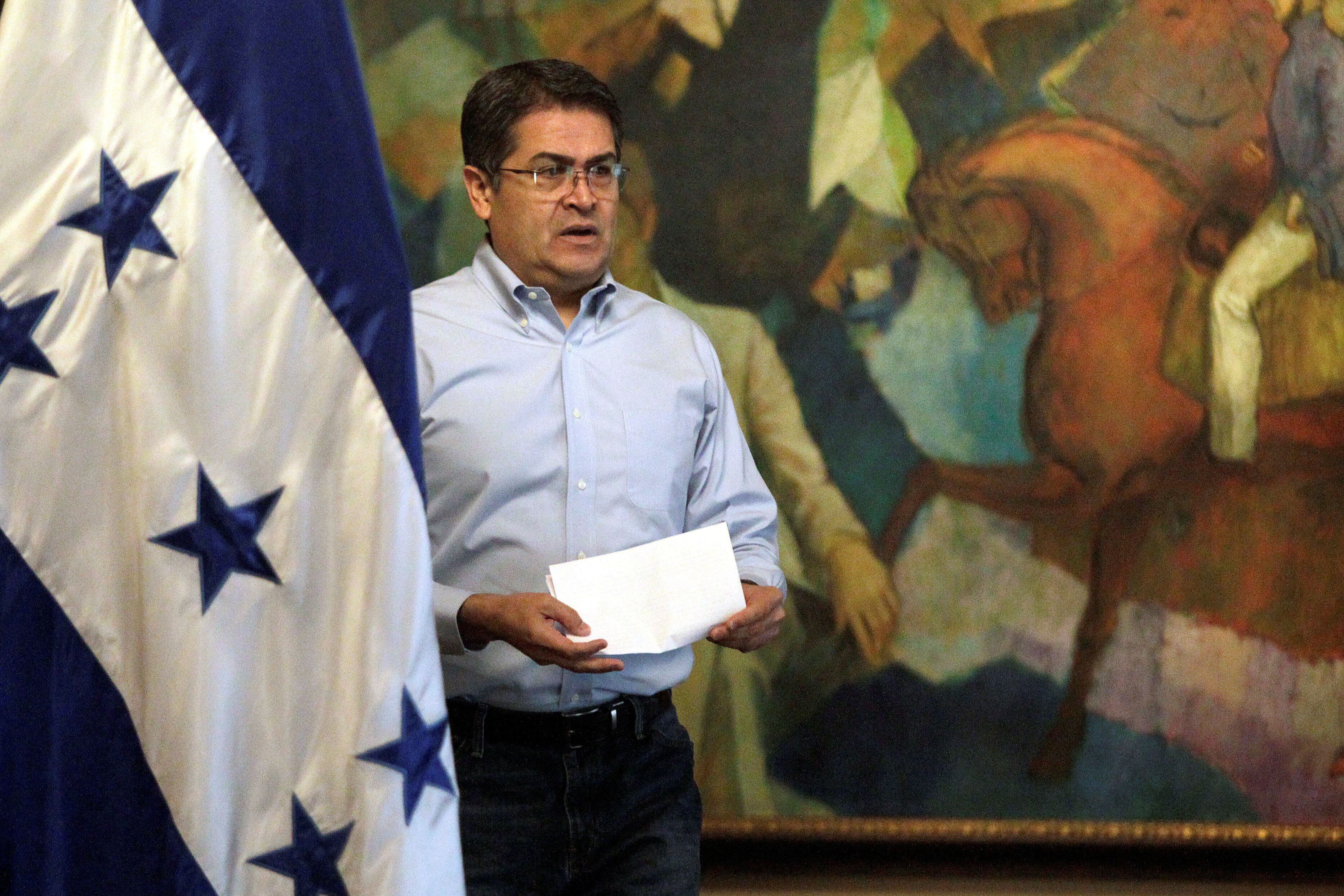
The waiting time for Juan Orlando Hernández to reach the New York court that requires it is also unclear, and the fact is that, according to US judicial sources consulted by Infobae in Washington, once on US soil, the former president's initial appearance in court and a eventual trial will not occur immediately.
Upon arrival, JOH, as he is known in Honduras, must appoint a defender, who will have time to learn all the details of the judicial process. The court will then call you to a hearing where the charges against you will be read and the possibility of being released on bail will be established, which is unlikely in the case of the former president.
Hernandez will have the power to plead innocent or guilty before the start of the trial, and even to reach prior agreements with prosecuting prosecutors to negotiate sentence times in exchange for information that may be useful in other judicial proceedings.
If the case of Juan Antonio “Tony” Hernández, brother of JOH and who has already been sentenced for drug trafficking, is a guide to how long these processes take, we would be talking about the fact that the whole process can take months. In Tony's case, it took seven months from the time he was arrested until the bail hearing took place, and another four months until the trial began. In total, just under a year.
For now, the next date on Juan Orlando Hernandez's calendar is that of his trip to the United States, which could happen in the coming days.
KEEP READING:
Últimas Noticias
Debanhi Escobar: they secured the motel where she was found lifeless in a cistern
Members of the Specialized Prosecutor's Office in Nuevo León secured the Nueva Castilla Motel as part of the investigations into the case

The oldest person in the world died at the age of 119
Kane Tanaka lived in Japan. She was born six months earlier than George Orwell, the same year that the Wright brothers first flew, and Marie Curie became the first woman to win a Nobel Prize

Macabre find in CDMX: they left a body bagged and tied in a taxi
The body was left in the back seats of the car. It was covered with black bags and tied with industrial tape

The eagles of America will face Manchester City in a duel of legends. Here are the details
The top Mexican football champion will play a match with Pep Guardiola's squad in the Lone Star Cup

Why is it good to bring dogs out to know the world when they are puppies
A so-called protection against the spread of diseases threatens the integral development of dogs


