


On the morning of this Friday, March 25, in the company of hundreds of his followers, and the entire legislative delegation of the Historical Pact, presidential candidate Gustavo Petro and his vice-presidential formula, Francia Márquez, were officially registered with the National Civil Status Registry to compete in the first round presidential meeting on May 29.
With fanfare, as well as different significant and cultural exhibitions, the senator and the environmental activist arrived at the premises of the electoral body in Bogotá, sent an emotional speech and proceeded to sign the document that endorses them as an official formula.
Marquez, for his part, handed a statement to Petro, who he said represents the victims, women, children and black peoples. “On behalf of the diverse LGBTIQ+ community, the Afro-descendant, peasant and indigenous peoples (...) we give you this effort so that together, everyone, and you Gustavo Petro and his sister Francia Márquez, can write a story for Colombia,” said the lawyer.
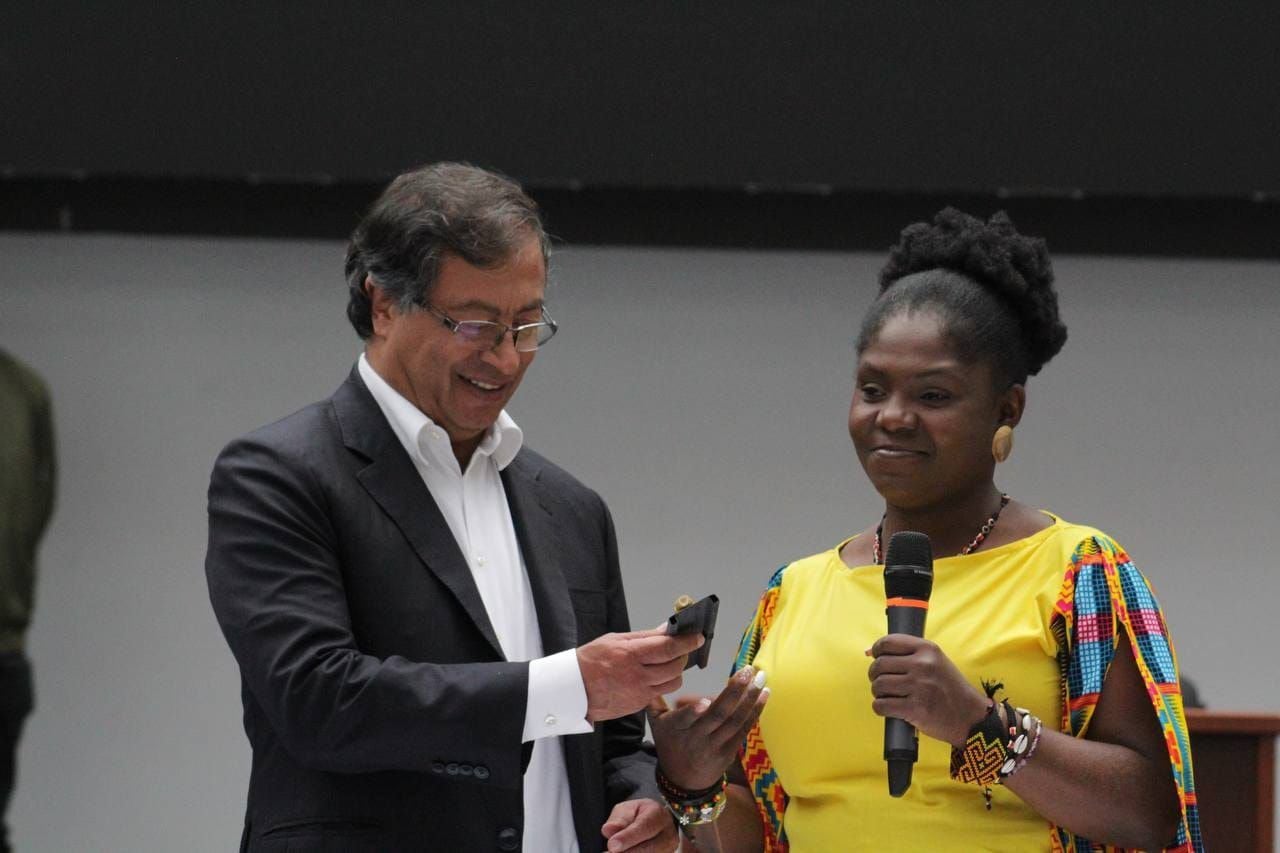
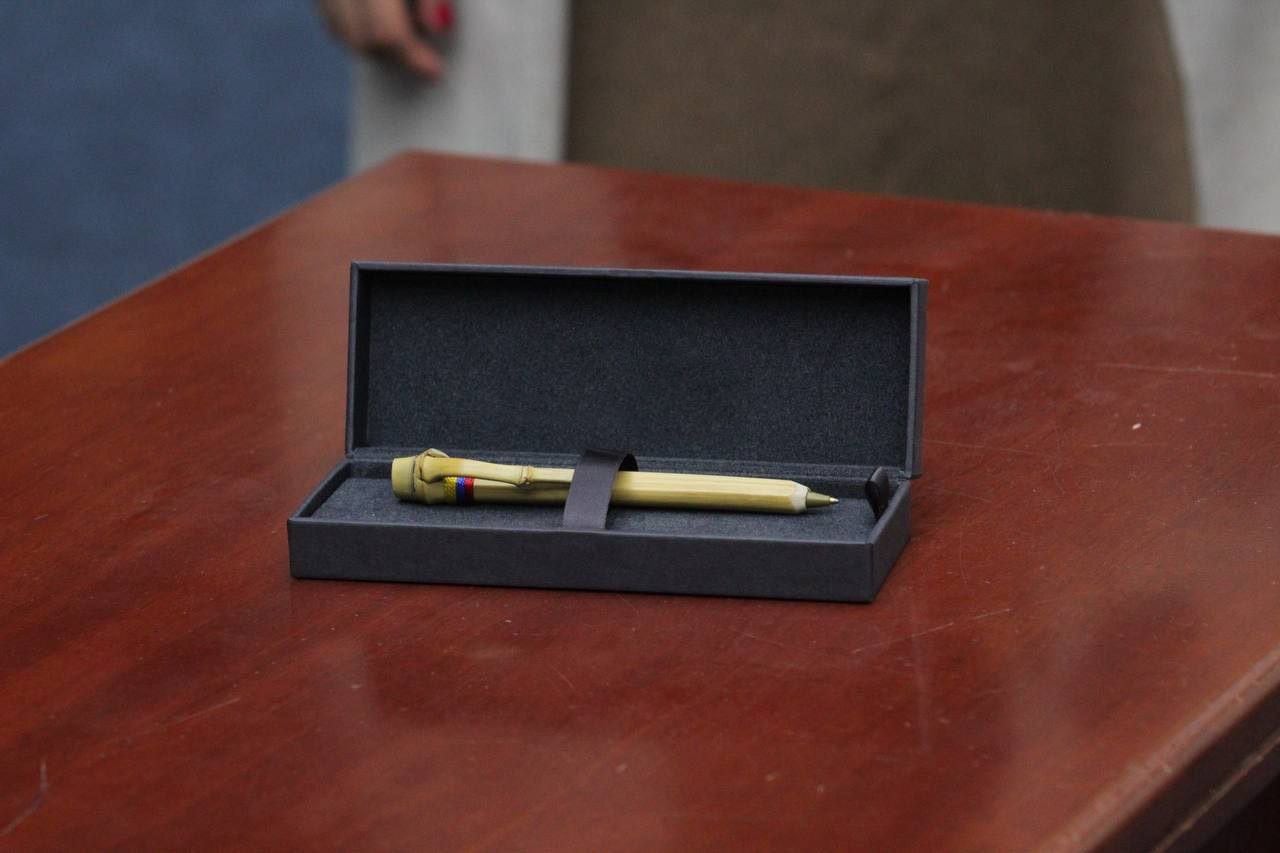
When he received the pen made of guadua, Petro assured that it was a “symbol of knowledge, knowledge and life”; in addition, he recalled the Colombian State's war with the guerrillas and said that this sphere represented change.
“It is the symbol of education. How much would Colombia change if this were the national symbol? The sphere of change, of life, that we receive from Colombian families,” said the leader of Human Colombia.
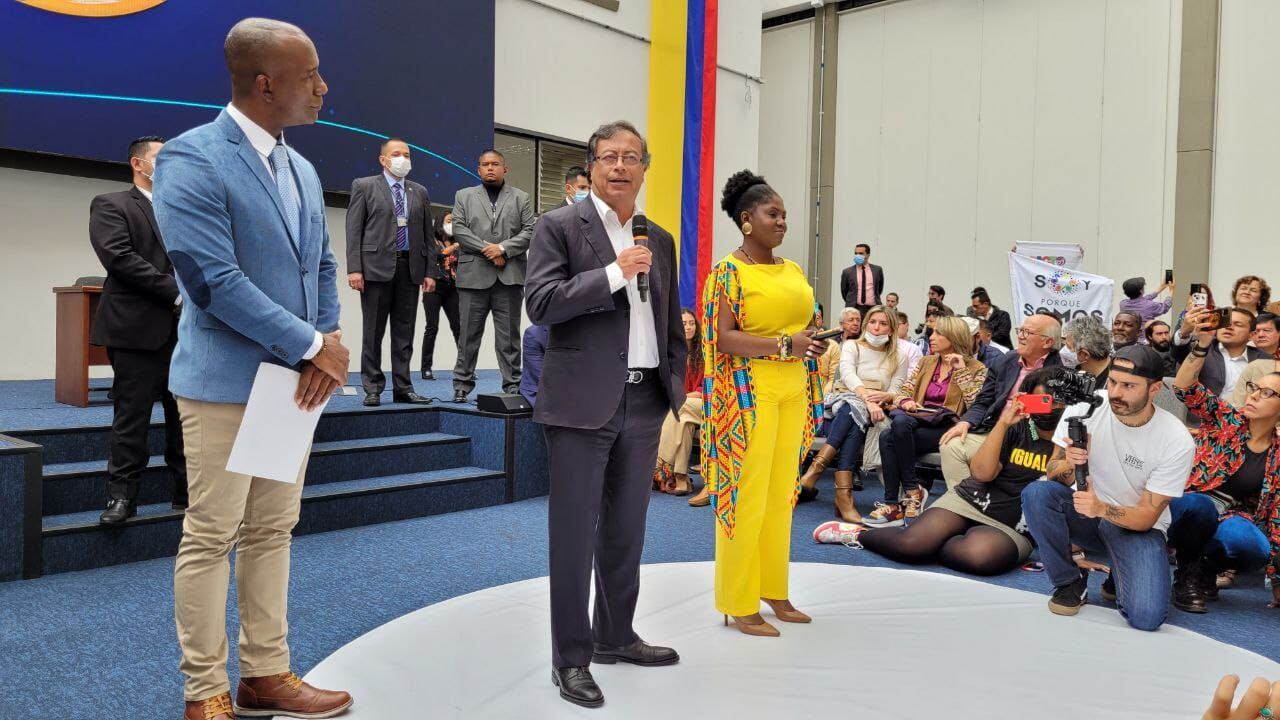
Subsequently, they went to the lectern and, amidst cheers and applause, proceeded to become official candidates for the Presidency and Vice-Presidency. “The day we take possession at the Casa de Nariño we will sign again with this sphere,” Petro said.
Once they filled out the form provided by the Registrar's Office, they both went on to speak. Francia Márquez said the task was just beginning and she hoped to have the support of Colombians in the first presidential round in May.
And he ended his speech with his well-known slogan: “The people don't give up, damn it”.
When Petro took the floor, he embraced his colleague and said that this day marked the beginning of “a campaign that promises to change Colombia's history” and said that, if he comes to power, he will take care of the country's natural resources such as water, ecosystems and even “Colombian families.”
To achieve this, the congressman also said that he will not “destroy peace” and reminded Uribism, a political group that referred to ending what was agreed between the government of former President Juan Manuel Santos and the former FARC guerrilla.
“Change is imposed as a categorical necessity for Colombian society. Keeping things as they are, politically, economically and socially, is suicide. Change, therefore, is an imperative,” said Gustavo Petro, in turn assuring that he would hold firm what was agreed in Havana, the Cuban capital, which ended more than 50 years of war between the guerrillas and the Colombian State.
In addition, he did not miss an opportunity to question President Iván Duque about the implementation of the peace agreement. For that reason, who today leads the voting intention said that, if he is president, his eventual government will tend to comply with what was agreed in 2016.
KEEP READING:
Últimas Noticias
Debanhi Escobar: they secured the motel where she was found lifeless in a cistern
Members of the Specialized Prosecutor's Office in Nuevo León secured the Nueva Castilla Motel as part of the investigations into the case

The oldest person in the world died at the age of 119
Kane Tanaka lived in Japan. She was born six months earlier than George Orwell, the same year that the Wright brothers first flew, and Marie Curie became the first woman to win a Nobel Prize

Macabre find in CDMX: they left a body bagged and tied in a taxi
The body was left in the back seats of the car. It was covered with black bags and tied with industrial tape

The eagles of America will face Manchester City in a duel of legends. Here are the details
The top Mexican football champion will play a match with Pep Guardiola's squad in the Lone Star Cup

Why is it good to bring dogs out to know the world when they are puppies
A so-called protection against the spread of diseases threatens the integral development of dogs


