


The key to the war in Ukraine remains in Kiev. Southern ports are essential for the economy. Progress in the east can consolidate and isolate the Russian-speaking separatist zone. But in order to win a victory politically and militarily, Russian forces need to seize the Ukrainian capital and overthrow the government of President Volodymyr Zelensky.
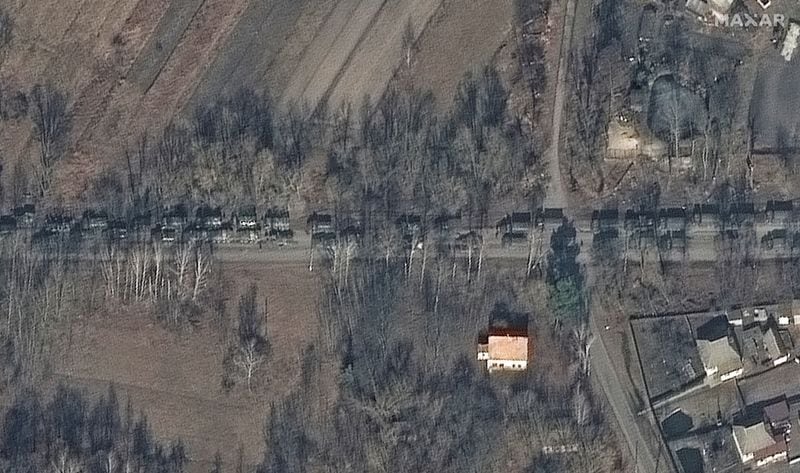
That was the primary objective of the troops that entered from Belarus and the special forces that emerged from behind the defensive lines in the early hours of the invasion. They had the objective of taking Hostomel airport, where they planned to build an airlift with Ilyushin planes with at least 100 soldiers each. It failed. Ukrainian defenses shot down the first plane attempting to land on the spot and from there, they had to withdraw. Then came the death convoy with 60 kilometers of war paraphernalia that was bogged down in the mud and with young conscripts surrendering themselves to the enemy. Since then, they bomb Kiev from several kilometers away and move with extraordinary slowness.
“They are having enormous difficulties. Its logistics and supply problems remain unresolved throughout the northern Ukrainian campaign. Of course, it is so incomprehensible that this should happen to an army of the size and firepower like the Russian that we would have to ask ourselves the question of whether Russia really intends to storm Kiev. Otherwise it is not understood”, is the analysis of the situation made by a British intelligence source consulted by the Telegraph newspaper.
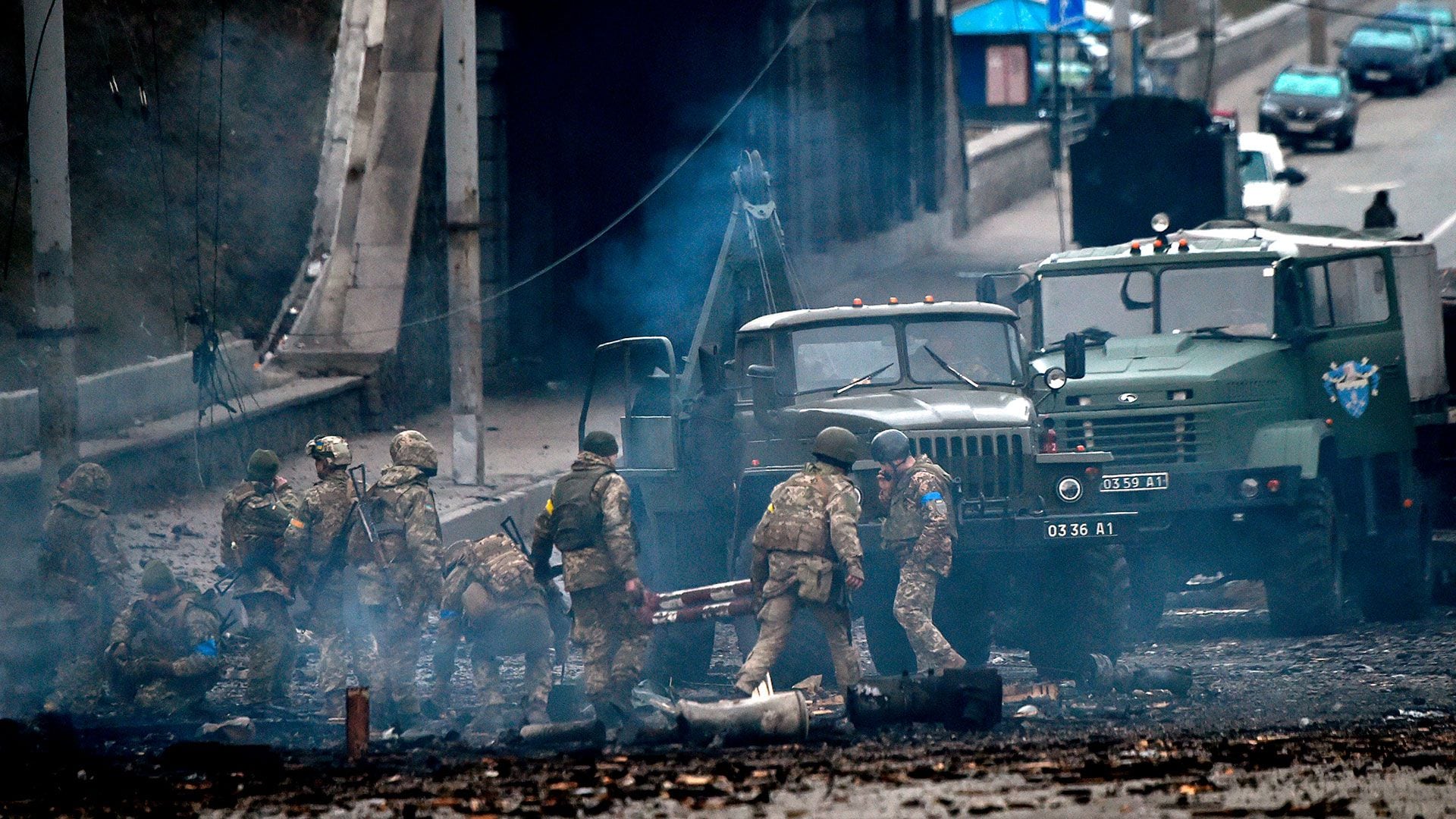
It is estimated that 7,000 Russian soldiers have been killed in the fighting so far — Ukrainians more than double that figure — and that 10% of the invading army equipment was also destroyed, “which raises the question whether the army on the ground is willing to continue fighting,” the analyst continues. “The assault on Kiev would be extremely costly in lives and equipment. Aviation would have to be decisively involved. And be willing to turn into rubble a city that is endearing to Russian history.”
In recent hours, images of Russian forces leaving the occupied territory of Ossetia, Georgia, in the direction of the Ukrainian front, appeared on social networks in a thunderous convoy of tanks and other heavy armored vehicles. Moscow is trying to strengthen its forces with fresh and more experienced troops. If he wants to isolate and control Kiev, he will need twice as many soldiers and equipment as he has in the vicinity of the Ukrainian capital. Retired General David Petraeus, architect of the US troop surge in Iraq in 2007-8, and other military analysts argue that Russia lacks the necessary forces for counterinsurgency. And to occupy a city of six million inhabitants (three in the central quarter and another three on the outskirts) you will need them.
“Russia is increasingly seeking to generate additional troops to reinforce and replace its personnel losses in Ukraine,” is the analysis made yesterday by the British Ministry of Defense. “To this end, Moscow is redistributing forces from as far away as Russia's Eastern Military District, the Pacific Fleet and Armenia. It is also increasingly trying to exploit irregular sources, such as private military companies, Syrians and other mercenaries.”
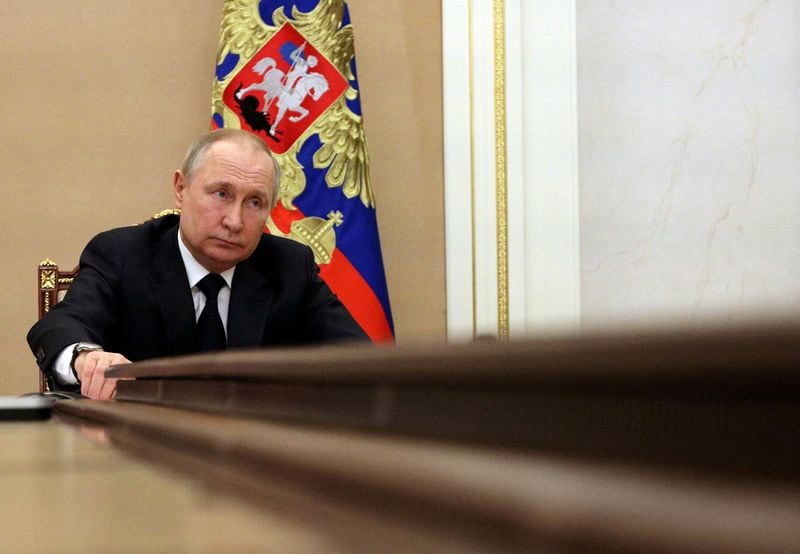
“The Russians are desperately understaffed,” Jack Watling, a researcher at the Royal United Services Institute (RUSI), told the Guardian. “They have advanced along multiple axes and have divided their forces. If they were operating at a high pace and were able to do what they set out to do, then it would make sense, but given the low motivation of the troops, what they have actually managed is to focus on several independent urban battles, and in each of them they lack the mass necessary to take over the cities they are besieging by assault.”
Ukrainian defense is being effective thanks to the armament it is receiving from Europe and the United States. A €1 billion aid package was approved in Brussels. The Baltic republics and the Scandinavian countries gave up the anti-aircraft batteries they had purchased from Washington. President Joe Biden announced yesterday an additional $800 million in addition to the $350 million last month. The package includes Javelin anti-tank missiles and Stinger anti-aircraft missiles, which proved to be extremely effective in the hands of defenses. The rest comes from the firm will of the overwhelming majority of Ukrainians who joined the popular militias.
Although Russian troops continue to advance in the south and southeast, Ukrainian counterattacks stopped the Russian pincer's attempt on Kiev. In response, Russian forces stepped up the pace of artillery discharges, as in other cities, such as Kharkiv.
Chris Donnelly, who was NATO's adviser on Soviet and Russian military tactics, wrote that “Russia's personnel problems go back decades.” He says that Russian military planners have long been aware of the limitations of using an army of recruits and of the low morale that troops tend to have as a result. “For years, in a sense, the Russians tried to build an army without soldiers, mainly because they were aware of the vulnerability of their own troops and their willingness to fight,” Donnelly said, but clarified that the invasion of Ukraine had highlighted the flaws of that approach. “There has been a serious miscalculation from the point of view of the General Staff.”
Other analysts cited by the specialized site Defense One believe that the arrival of the 16,000 Syrians who were enlisted by the Russian Defense Ministry as mercenaries to reinforce the lack of professional soldiers will be of little help in this regard. “The Syrians are very good at fighting in the desert. But in Ukraine the terrain is totally different. In principle, they have to endure a cold of several degrees below zero that they are not used to. “None of their combat experiences will carry over. They are not familiar with the terrain and do not have a strong bond or commitment to the cause,” said Jack Watling of RUSI. “Although there is one component in which the Russians are cynically thinking that this is going to be bloody and bleak and that there will be an internal political problem with the casualties, so if it is not Russians who return in body bags, then it is much better for Putin.”
In this context, military analysts put the peace talks with 15 basic points that are currently taking place between representatives of the two governments. They think it's a distracting maneuver on the part of Putin so that Russian forces can regroup and sort out their logistics. The announcement of a failure or a simple postponement of this process could mark the beginning of the final assault on Kiev or the Russian impotence of not being able to carry it out.
KEEP READING:
Últimas Noticias
Debanhi Escobar: they secured the motel where she was found lifeless in a cistern
Members of the Specialized Prosecutor's Office in Nuevo León secured the Nueva Castilla Motel as part of the investigations into the case

The oldest person in the world died at the age of 119
Kane Tanaka lived in Japan. She was born six months earlier than George Orwell, the same year that the Wright brothers first flew, and Marie Curie became the first woman to win a Nobel Prize

Macabre find in CDMX: they left a body bagged and tied in a taxi
The body was left in the back seats of the car. It was covered with black bags and tied with industrial tape

The eagles of America will face Manchester City in a duel of legends. Here are the details
The top Mexican football champion will play a match with Pep Guardiola's squad in the Lone Star Cup

Why is it good to bring dogs out to know the world when they are puppies
A so-called protection against the spread of diseases threatens the integral development of dogs


