


Historic increases, rarely seen after World War II. The exit of the coronavirus pandemic and now the conflict over the Russian invasion of Ukraine have returned rates of price increases that manage to crack the pockets of Europeans. Inflation is accelerating markedly in the eurozone.
In the last 12 months, consumer costs have risen by 7.5 per cent, according to Eurostat, the European Institute of Statistics. This figure is much higher than what economists at the European Central Bank (ECB) expected when they last projected less than a month ago. It therefore exerts maximum pressure on the financial institution of European partners.
PUBLICIDAD
The shooting first has an explanation in energy prices, which are rising faster than before due to the war in Ukraine and European sanctions against Russia. In the eurozone, energy prices rose 44% year-on-year in March, after registering a 32% increase in February. Food, tobacco and alcohol prices also rose by 5% in March, as did industrial products.
And inflation is becoming a real problem in many European countries. The Dutch saw prices rise by 11.9% last month and the Spaniards by 9.8%. In the Baltic countries, inflation rates are double digits. Germany recorded a rise of 7.3 per cent, the highest since reunification in 1990. With 4.5% inflation, France has been among the least hit.
PUBLICIDAD
In this context, European governments have multiplied measures to support purchasing power in the face of the rise in the price of hydrocarbons, although no one is sure that this will be enough.
Fuel discounts
PUBLICIDAD
As of this Friday, in France, the government discount ranging from 15 to 18 cents per liter of fuel is effective throughout the country, which hopes will be enough to relieve motorists who face sky-high prices in the replacement of their tanks.
Faced with prices that have exceeded 2 euros per liter on average, and among other measures against inflation, the Chief of Staff, Jean Castex, announced this four-month reduction in mid-March.
PUBLICIDAD
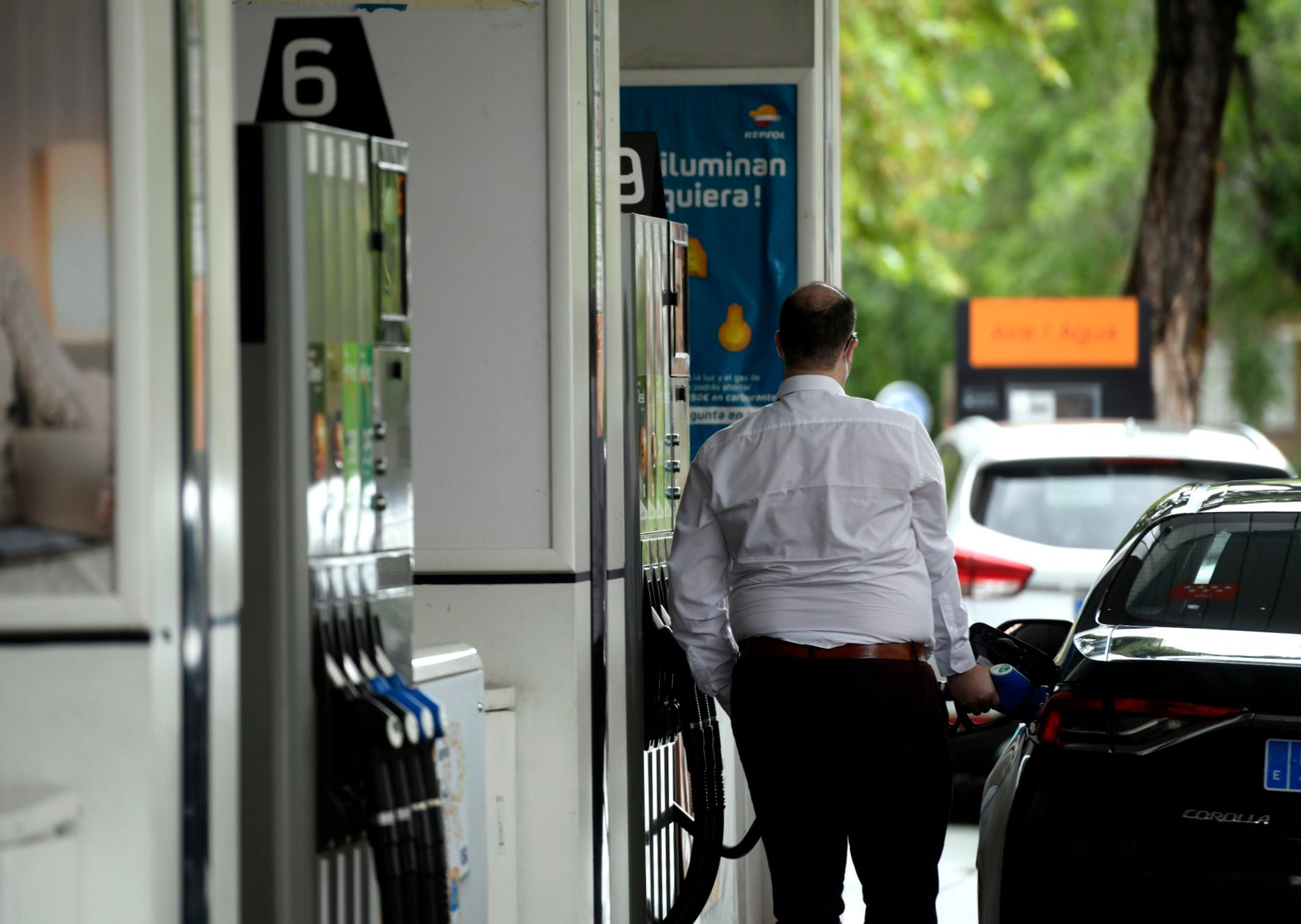
Some distribution networks add their own promotions tailored to the Government, which will dedicate three billion euros to it. After July 31, the date on which this device will expire, another device will take over, “which will be more specific, in particular for large cyclists, modest households”, the Government predicted.
PUBLICIDAD
Fallen systems, closed stations and long lines, in Spain, for the same return measure, in this case 20 cents for the Spaniards' cars. According to the media in the country this morning, the first day of application of the bonus was turning out to be the chaos that many feared.
The filling stations have been overwhelmed by the influx of thousands of vehicles that have postponed the replenishment in the previous days to benefit from the aid today, which is causing long queues to form behind the pumps.
PUBLICIDAD
In addition, the Italian Government approved in mid-March a decree that will reduce excise duties on the price of petrol and diesel by 25 cents per liter, as announced by Italian Prime Minister Mario Draghi. The objective, he said, is to alleviate the escalation in energy prices.
Germany was the last to join the long list of countries that have approved energy rescue plans to help citizens cope with rising fuel and electricity prices.
PUBLICIDAD
The government team of Chancellor Olaf Scholz has decided to approve the reduction of the fuel tax for three months, so that the price of gasoline will be reduced by 30 cents per liter. Diesel will be cheaper than 14 cents, placing Germany among the countries with the lowest taxation in the European Union.
The dispute over electricity generation
PUBLICIDAD
“There may be a situation where there is no more Russian gas,” French Economy Minister Bruno Le Maire warned Thursday night during a press conference with his German counterpart, Robert Habeck.
“It's up to us to prepare these scenarios. We're doing them,” he said. The two ministers reiterated their opposition to any payment for ruble deliveries, as this would require a change in foreign currency contracts with Gazprom, Russia's giant and state monopoly for the export of natural gas.
But it's not just the payment, it's the problem. There is the doubt about the supply of the supply, at least the Russian threat of cutting it off. And finally the price of the input. For many countries, depending on their energy matrix, all this can have a different impact. However, no one is immune.
With the approval of the European government in Brussels, after the last extraordinary summit, the proposal by Spain and Portugal to limit the price of gas for thermal power plants would be gaining strength after achieving what they call “Iberian exceptionality”. A measure only for their countries.
The governments of Pedro Sánchez and Antonio Costas have submitted to the European Commission an initiative to limit the maximum price of gas for power generation plants to 30 euros per megawatt hour (MWh), compared to the 120 euros quoted today.
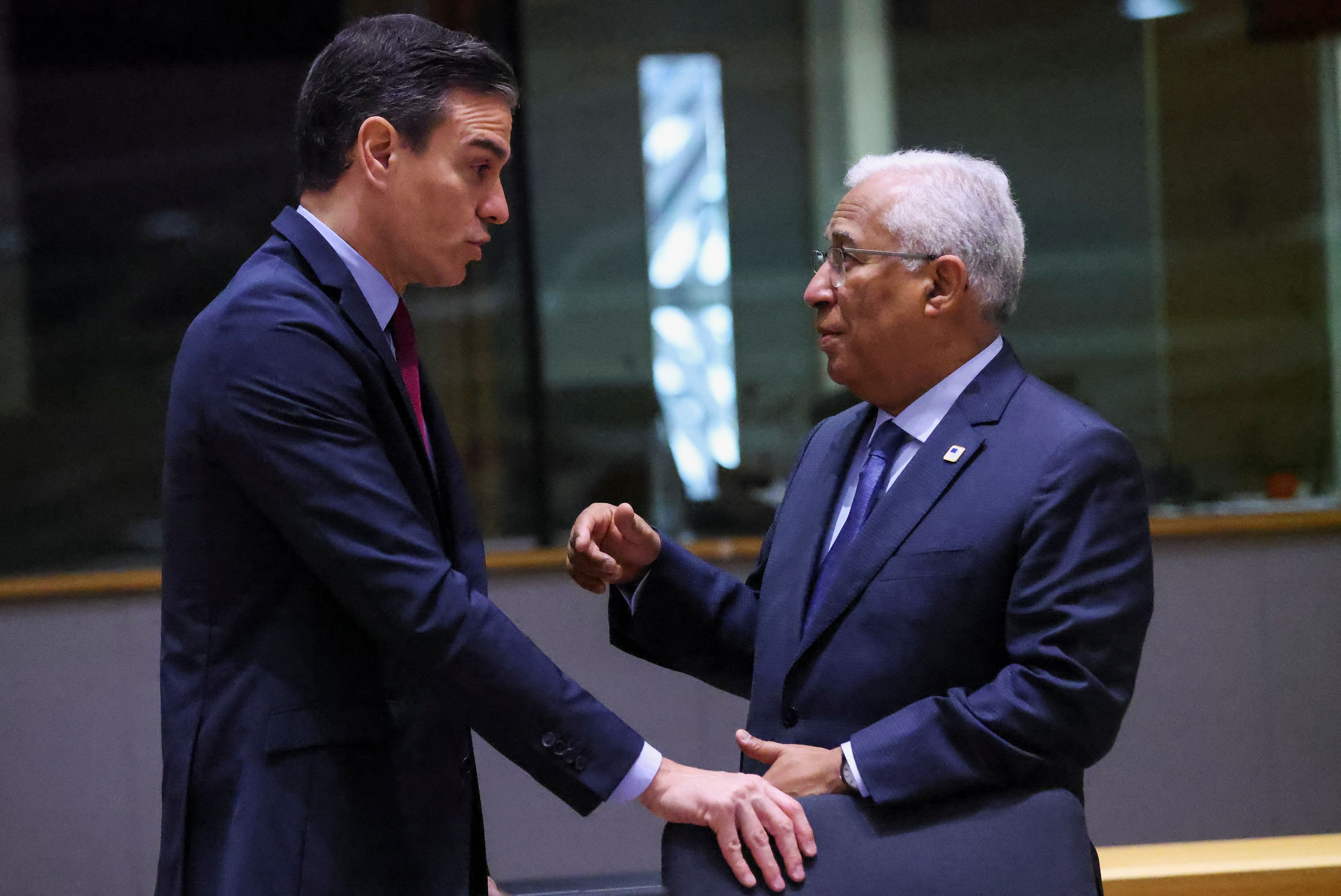
The increase in gas prices, a vital input for energy production in most countries on the continent, is the main factor behind the escalation in electricity prices in recent months, which in some places has led to a five-fold increase in electricity bills in just 12 months.
However, it will not be easy to get the go-ahead. In Brussels, it is feared that such a measure for Spaniards and Portuguese will be imitated by other European countries. A cascading effect that involves changing the functioning of the common energy market, something that is not shared by Germany and Austria. Germany, like other countries, has called for rationalization of use. Other countries have stepped on the increases, absorbing cost increases in subsidies.
Increase in the minimum wage
Another path, as a result of high inflation, is the pressure for adjustments in wages. For example, the minimum wage in France will automatically increase in May between 2.4 and 2.6 per cent, according to the first estimates of the Ministry of Labour. A lower rise to inflation in a country where purchasing power is the main concern of the population.
Currently at 1,603 euros gross per month for 35 hours of work per week, the minimum wage should be in a range between 1,641 and 1,645 euros on 1 May.
On the first day of work of the Legislature in Portugal, among a number of initiatives, specifically aimed at increasing wages in the public and private sectors, an adjustment for workers was also presented. Of the set of proposals presented, we highlight the increase in the national minimum wage to 850 euros and the right to collective bargaining.
For his part, the President of the Government, Pedro Sánchez, last Monday, who will increase the amount of the Minimum Living Income (IMV) by 15% until June 30. This is one of the social measures that includes the war response shock plan that will mobilize 16 billion euros. Thus, in cases of cohabitation units consisting of two adults and three or more minors, the IMV will rise to 1,243.83 euros per month.
Keep reading:
PUBLICIDAD
PUBLICIDAD
Últimas Noticias
Debanhi Escobar: they secured the motel where she was found lifeless in a cistern
Members of the Specialized Prosecutor's Office in Nuevo León secured the Nueva Castilla Motel as part of the investigations into the case

The oldest person in the world died at the age of 119
Kane Tanaka lived in Japan. She was born six months earlier than George Orwell, the same year that the Wright brothers first flew, and Marie Curie became the first woman to win a Nobel Prize

Macabre find in CDMX: they left a body bagged and tied in a taxi
The body was left in the back seats of the car. It was covered with black bags and tied with industrial tape

The eagles of America will face Manchester City in a duel of legends. Here are the details
The top Mexican football champion will play a match with Pep Guardiola's squad in the Lone Star Cup

Why is it good to bring dogs out to know the world when they are puppies
A so-called protection against the spread of diseases threatens the integral development of dogs


