


The update of the Report of the United Nations High Commissioner for Human Rights, Dr. Michelle Verónica Bachelet Jeria, had little new and much commonplace and repetition of elaborate phrases, highlighting that of expressing “concern”. Most notable were the omissions, the weak argument in the face of the brutal torture and repression in Venezuela, since she visited the country; on the same day she left, several active and retired soldiers were arrested, who were tortured and one of them killed. Bachelet acknowledges that her representation in Venezuela has grown, and she already has nine people.
It should be noted that there were recurrent mentions by the Fact-Finding Mission, whose report was presented by its president, Marta Valiñas, and by several representatives of countries on the need to investigate and elaborate on the causes of the death of General Raúl Isaís Baduel.
They also referred, and Bachelet, Amnesty International and the International Federation for Human Rights (FIDH) joined the case of the director of Fundaredes, Professor José Javier Tarazona Sánchez, who was arrested by the Bolivarian Intelligence Service (Sebin) at the headquarters of the Public Prosecutor's Office in Coro, where he went to denounce the persecution of police officers in Falcón state.

Allied countries of the Venezuelan regime agreed to highlight the importance of Bachelet's commission in Venezuela while disqualifying the Fact-Finding Mission. The representative of Venezuela even expressed annoyance that, he said, the Mission was allocated a great deal of financial resources instead of being given to the Bachelet Office in Caracas, insisting that all human rights were fully enjoyed in Venezuela and any violation was punished without distinction.
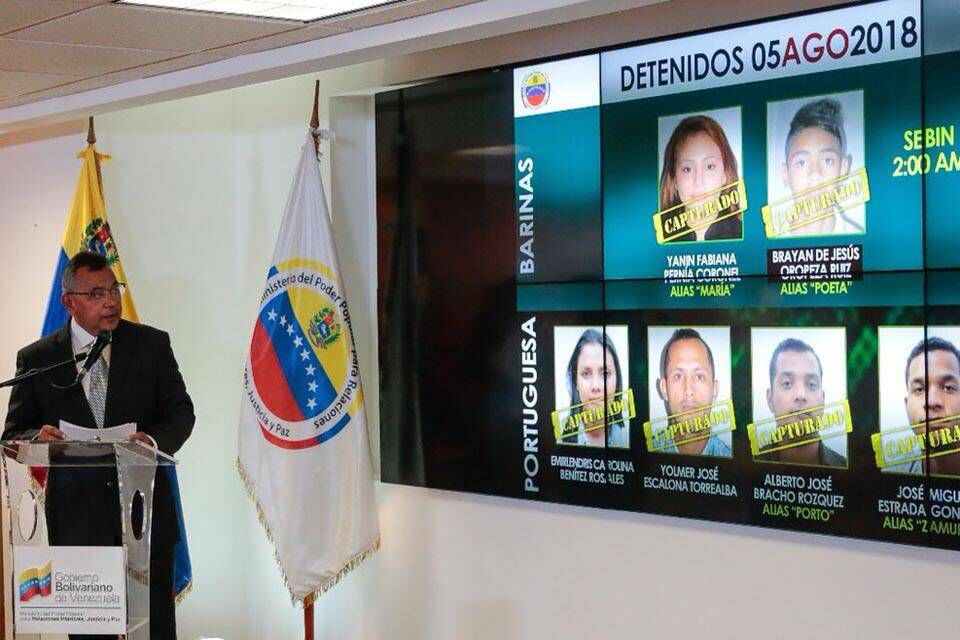
The Mission mentioned the situation of Emilendris Carolina Benítez Rosales, “one of the women arrested in connection with the drone case and subjected to torture in the facilities of the Dgcim and who has not had access to effective medical treatment, so as a result her health has deteriorated significantly, leaving her bedridden in a wheelchair.”
The death of Baduel
Bachelet forgot to mention the death in prison at the hands of the Bolivarian Intelligence Service (SEBIN), of the retired Chief General, former Minister of Defense and former Army Commander Raúl Isaías Baduel. Although the representative of Germany said that the senior officer died a day before serving his sentence, Baduel was actually sentenced to 8 years, serving six years in prison (2009-2015), when he came out with presentation measures, until in 2017 he was arrested again before serving his entire sentence and charged with conspiracy, he was sent to La Tumba, then to the prison of Fuerte Tiuna and to El Helicoide, where he died without being brought to trial.
It should be noted that although Dr. Bachelet was not aware of the Baduel case, representatives of several countries such as Paraguay urged the Venezuelan State to open a thorough investigation into the cause of General Baduel's death.
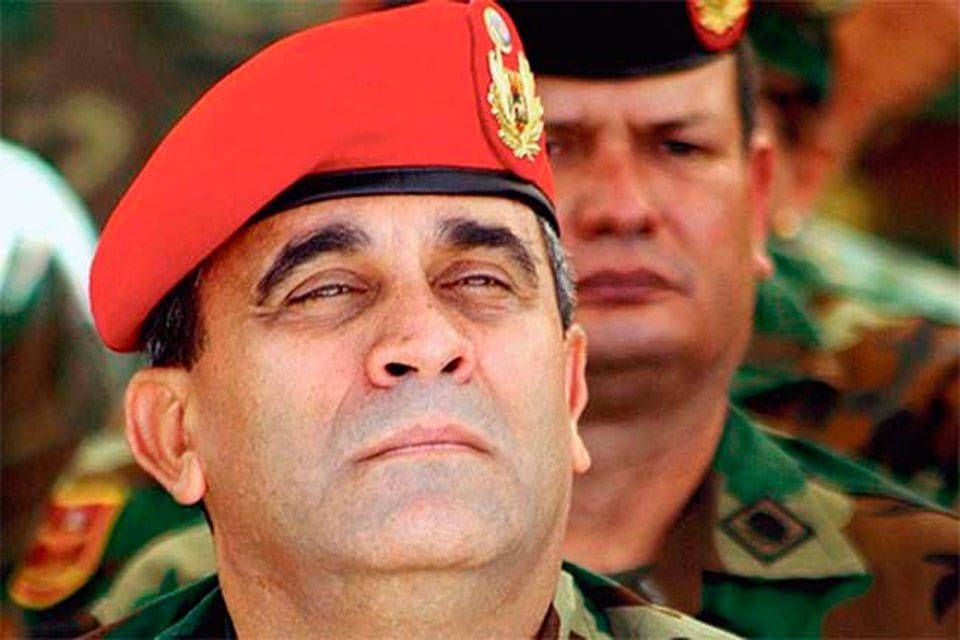
The Fact-Finding Mission said in this regard that “in the second half of 2021 there have been two deaths in custody of persons opposed to the Government, perceived as such, both selected with lack of medical care; one of them is the death of General Raúl Baduel, a case previously documented by the Mission, of his son Josnars who remains detained in El Helicoide”, who requires immediate medical attention. “It is worrying that people identified in our previous reports have not received adequate medical care despite repeated requests.”
Reform and Law
One of the strategies adopted by the Venezuelan regime is to pretend that it makes changes, whether legal or institutional, when there are violations of the Law or Human Rights. One of them was the announcement of reforms in the legislation and the Organic Code of Criminal Procedure (COPP).
The High Commissioner, Bachelet Jeria, starts her report by saying that “some reform initiatives open up opportunities for the implementation of important human rights recommendations. The reform of the justice system and the restructuring of the National Police are promising steps, in particular the prohibition of the prosecution of civilians by military tribunals, as well as measures to address overcrowding in pre-trial detention centres and to dissolve the Special Action Forces (FAES) which are in line with previous recommendations and can lead to significant institutional transformation”.
The three points mentioned by the High Commissioner need to be broken down: (1) Police restructuring is a wildcard, used again. In 2011, the Bolivarian revolution ended the elimination of the Caracas Metropolitan Police, which had been created in 1969; in the strategy of monopolizing the various municipal and state police; two years earlier the Bolivarian National Police (PNB) had been created and thunderous propaganda was made announcing that they would only enter the best men, the most tested and prepared, and 13 years later numerous PNB officials were denounced for extortion, robbery and even kidnapping and murder.
(2) It seems exaggerated that Dr. Bachelet considers a “promising step” the prohibition of the prosecution of civilians by military tribunals, because the Constitution of the Bolivarian Republic of Venezuela, adopted in 1999, establishes within the framework of due process, article 49, paragraph 4: 'Everyone has the right to be tried by his or her natural judges in ordinary or special jurisdictions, with the guarantees provided for in this Constitution and in the law... '. In that case, the High Commissioner should urge civil, military and police authorities to comply with the Constitution.
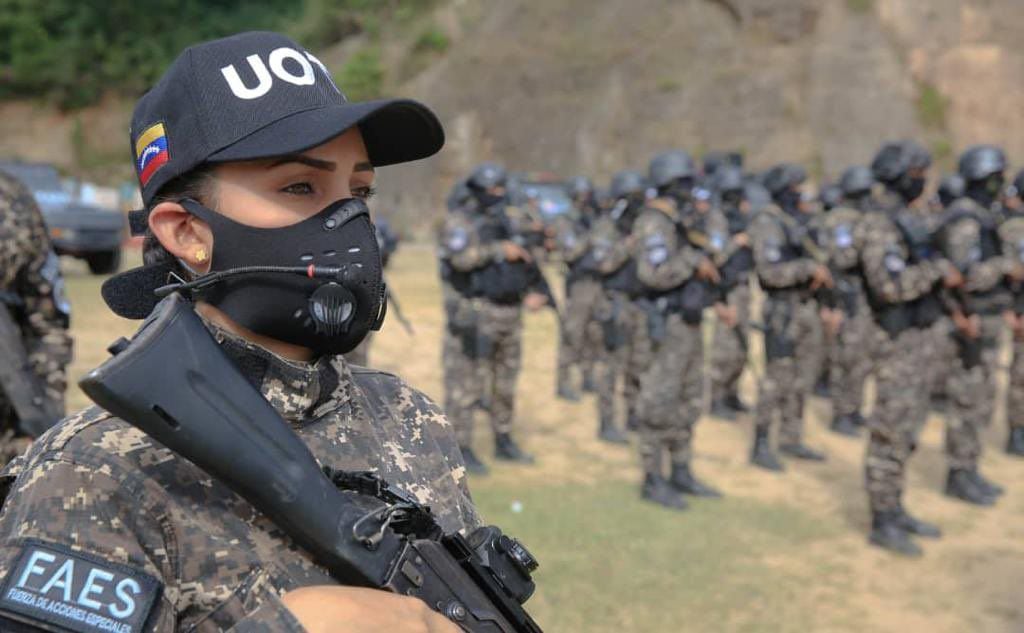
3) As for the dissolution of the Special Actions Forces (FAES), they have already created a new name for it, to which they have migrated, as they did before with the PLO (called Operation Liberation of the People, then Operation for the Liberation and Protection of the People and, finally, Humanist People's Liberation Operation). Abuses of power, disappearances and murders were reported by several organizations such as Human Rights Watch and Provea, during the years 2015 and 2016. The allegations against the PLO by the then Attorney General of the Republic, Luisa Marvelia Ortega Díaz, were decisive for the abbreviation to disappear, after the Barlovento Massacre: since then PLO became FAES and now a part is called the Directorate Against Organized Crime (DCDO), while the regions are Directorate of Intelligence and Strategy (DIE).
On the contrary, the conclusion of the Fact-Finding Mission considers that “legal reform alone is insufficient if it is not properly implemented. As part of this package, the legislator amended 19 articles of the Organic Code of Criminal Procedure (COPP), in September 2021 reducing several deadlines applicable to criminal proceedings, including the length of pretrial detention in accordance with article 230. In accordance with the reforms, we have made some positive progress in the cases investigated by the mission, however there are still dozens of people who have been detained without trial for more than 3 years well above the limits imposed by both the previous and the amended Act.”
Bachelet welcomed “the extension of the deadline for candidatures to the Supreme Court of Justice (TSJ), which has allowed a greater number of candidates, this process is an opportunity to strengthen the independence of the Venezuelan judiciary and I call on the authorities to carefully evaluate the impartiality, independence and professional conduct of candidates in the selection process”.
The assessment made by the Mission of Determination was another. “In our last report, we expressed our concern about political influence in the selection of judges. In January 2022, the National Assembly approved amendments to the Organic Law of the Supreme Court of Justice. Unfortunately, some of these not only do not reduce, but increase the political influence on the judiciary, for example, the balance in the composition of the judicial nominations committee is disturbed as 2 members of the Assembly Nacional are now the majority over members of civil society,” said Valiñas.
Organizations
It is important to note that the World Organization against Torture (OMCT) said that “the Venezuelan State recorded 1246 cases of alleged extrajudicial executions, it also acknowledged to the United Nations that over the past four years 4,890 investigations into extrajudicial executions have been initiated and that only 16% have been able to get a conviction. The Venezuelan State has not yet complied with recommendations such as the dissolution of the FAES and the establishment of an independent investigation mechanism in case of serious violations.”
María Corina Machado also participated, who stressed: “We have been fighting for freedom and for our lives; this Council knows this reality very well, they have heard stories of crimes against humanity from victims of enormous courage and human rights defenders, they have read the accounts of the The United Nations and its Fact-Finding Mission, but they also know the magnitude of the operation that has been deployed in the country to block justice internationally, the great financial and geopolitical interests that seek to give Maduro and his tyranny a fact-lift to withdraw international sanctions.”
Keep reading:
Últimas Noticias
Debanhi Escobar: they secured the motel where she was found lifeless in a cistern
Members of the Specialized Prosecutor's Office in Nuevo León secured the Nueva Castilla Motel as part of the investigations into the case

The oldest person in the world died at the age of 119
Kane Tanaka lived in Japan. She was born six months earlier than George Orwell, the same year that the Wright brothers first flew, and Marie Curie became the first woman to win a Nobel Prize

Macabre find in CDMX: they left a body bagged and tied in a taxi
The body was left in the back seats of the car. It was covered with black bags and tied with industrial tape

The eagles of America will face Manchester City in a duel of legends. Here are the details
The top Mexican football champion will play a match with Pep Guardiola's squad in the Lone Star Cup

Why is it good to bring dogs out to know the world when they are puppies
A so-called protection against the spread of diseases threatens the integral development of dogs


