


The pandemic brought scientists together across the planet. To confront a common enemy, COVID-19, specialized magazines took the decision to eliminate subscriptions. Anyone could navigate, and still can, in the countless works done by researchers around the world. However, Russia's invasion of Ukraine put this “microclimate” of pandemic harmony in check. What is the position of these publications in the face of the war conflict.
Beyond the condemnation of Russian action by the international scientific community, the truth is that more than 7,000 Russian scientists, mathematicians and academics faced fines or directly imprisonment to reject Vladimir Putin's decision.
“We, scientists and scientific journalists from Russia declare: Our determined protest against the military actions launched by the armed forces of our country on the territory of Ukraine,” they stated in a letter published on March 4. In that sense, they assured that “there is no reasonable justification for this war.” “It is obvious that Ukraine does not pose a threat to the security of our country. The war against it is unjust and frankly useless,” they stressed. “Many of us have relatives in Ukraine, friends and colleagues in scientific work. Our parents, grandparents and great-grandparents fought together against Nazism. Waging a war for the sake of the geopolitical ambitions of the Russian leadership, driven by dubious pseudo-historical fantasies, is a cynical betrayal of their memory,” they stressed.
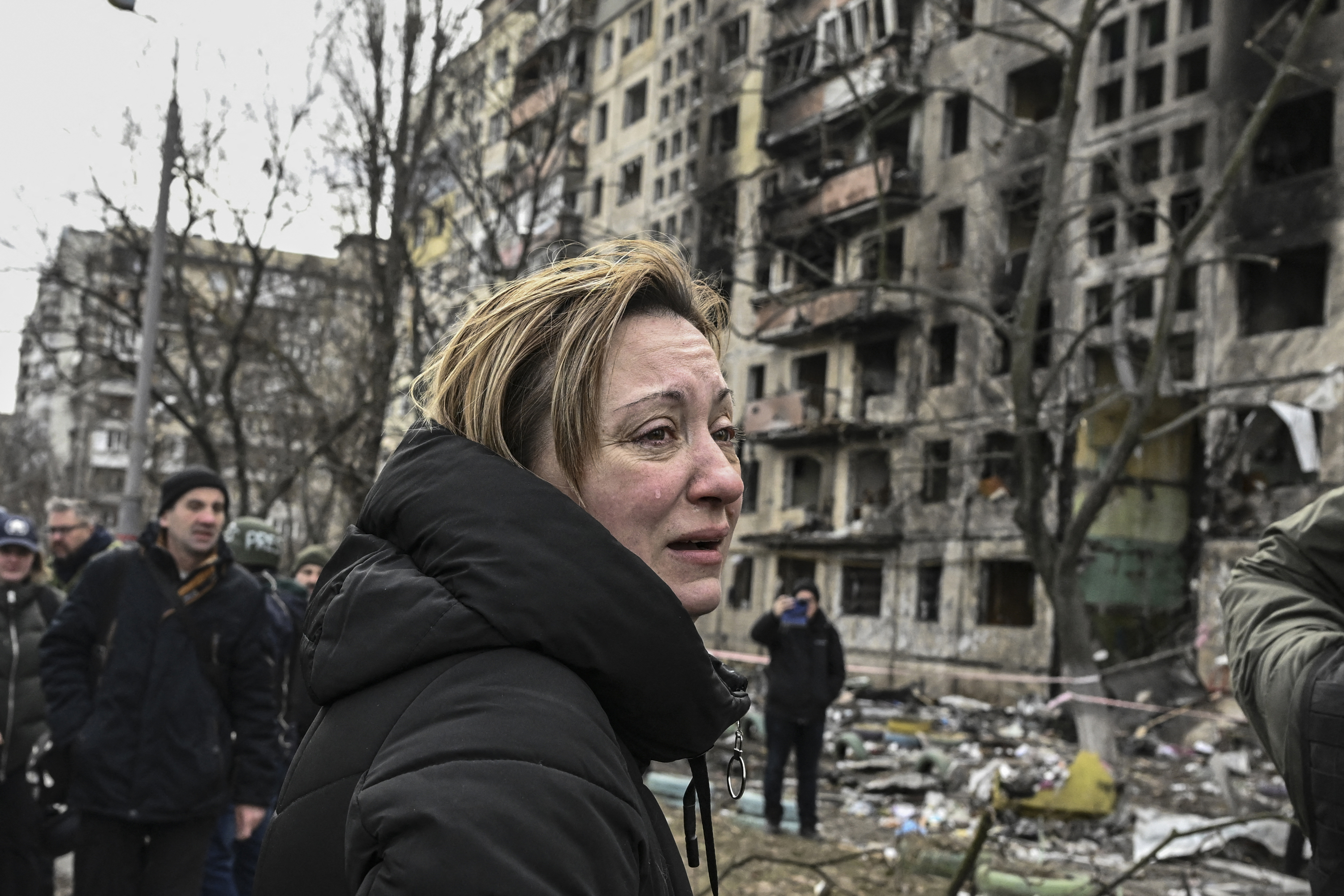
Likewise, as if it were an omen, they affirmed that with this decision “Russia condemned itself to international isolation”. “We scientists will not be able to do our job normally now: after all, conducting scientific research is unthinkable without full cooperation with colleagues from other countries.” In the same vein, the mathematicians expressed themselves: “We are convinced that no geopolitical interest can justify sacrifices and bloodshed. The war will only lead to the loss of the country of its future, for which we work.”
Despite this position, many organizations that promote scientific research have defined cutting funding and collaboration with Russian researchers. That is why the debate began to be made about whether they should continue to publish in specialized journals. “Russian scientists have no moral right to relay any message to the world scientific community,” said Olesia Vashchuk, director of the Ukrainian Council of Young Scientists at the Ministry of Education and Science, in two letters dated March 1 that was collected by Nature magazine.
Meanwhile, Richard Sever, co-founder of prepress servers BioRXIV and MedRXIV, showed himself the opposite side and questioned the objectives of penalizing scientists, who had already spoken out against Putin's decision, “We have to wonder what will be achieved by this. Is it about sending a signal? If so, there are better ways,” he argued.
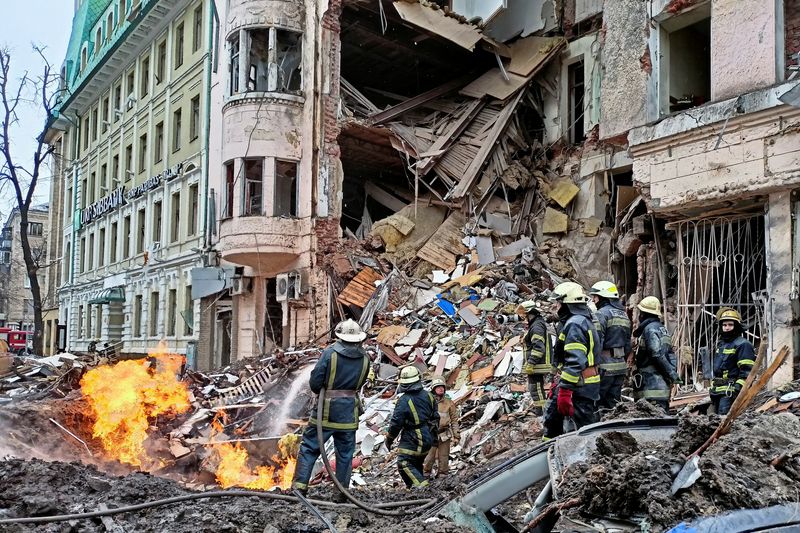
Condemnation of the international scientific community, but without isolation of Russian scientists
Both Nature and Science, two of the most prestigious journals in terms of disseminating academic work and scientific advances, condemned the decision of the Russian Government. These statements were in line with what was stated by different organizations, societies and scientific groups. However, these publications warned that they would not isolate Russian scientists.
“Together with the global scientific community, Nature condemns this horrific invasion in the strongest terms and calls on Russia to immediately end its attack. We support and stand in solidarity with the people of Ukraine, including their research community,” he stated in his editorial Nature. In addition, he recounted what was already seen on Ukrainian soil about the civilian population, noting that “Ukrainian researchers are among those who endure excessive violence and suffering. Many have bravely taken up arms to defend their country. Others stay in cities that are being bombed, to take care of their families.”
Despite the pressure, this magazine took a stand: “Some scientists are calling for a complete and worldwide boycott of all Russian research, and that scientific journals refuse to consider articles by researchers from Russia. Given the horror of what is happening in Ukraine, such calls are understandable; but Nature, like many other journals, will continue to consider manuscripts of researchers from anywhere in the world. That's because we think that at this time such a boycott would do more harm than good,” since it would “divide the global research community and restrict the sharing of academic knowledge, which has the potential to harm the health and well-being of humanity and the planet.”
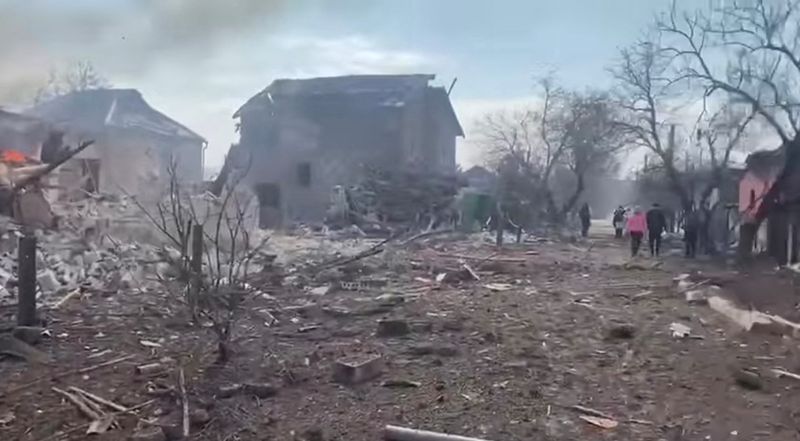
Meanwhile, Science, signed by Marcia McNutt and Juan Hildebrand (president and international secretary, respectively, of the United States National Academy of Sciences, Washington-United States), explained its position. “This war sets back progress in establishing a peaceful and sustainable world and addressing the important issues facing all of humanity, including climate change, environmental degradation, public health and inequality. The international scientific community cooperates extensively to address the challenges of our time, and a war that is destroying a stable and healthy nation and causing a refugee crisis is no exception,” they said.
“Many Ukrainian scientists are women who have left with their families while their husbands stay to fight for their country. Many of the families of male scientists also need a cozy home outside Ukraine, at least for now,” they said. And they warned: “While the world seeks to support Ukrainian scientists, it must also be careful not to indiscriminately condemn Russian scientists by assuming that they all support this conflict. Many, at great personal risk, have spoken out against the invasion.”
Who have already defined turning their backs on Russian science
Far from the positions of Nature and Science, the journal of Molecular Structure, belonging to Elsevier, asserted that it will not consider scientific work carried out by Russian researchers or institutions. “It is not aimed at Russian scientists, who undoubtedly deserve all our appreciation and respect, but at Russian institutions,” said Rui Fausto, editor of the journal and chemist at the University of Coimbra in Portugal. Meanwhile, the editorial itself told Nature that this position had not been extended. “We won't apply our preferred approach if individual editors have a very strong opinion on this issue,” they said from Elsevier.
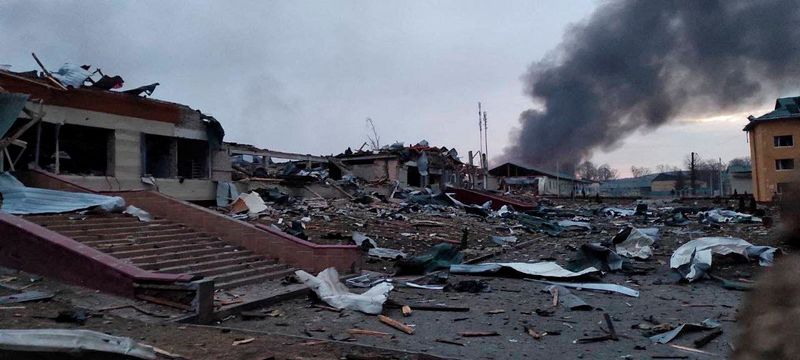
“[By] rejecting manuscripts written by Russian authors and excluding Russian journals from Scopus and Web of Science, Elsevier and Clarivate (NDeR: a company that provides information and data analysis to scientists) can contribute to the end of this war,” said Myroslava Hladchenko, a student in the political career of higher education at the National University of Life and Environmental Sciences of Ukraine, Kiev. He noted that isolating Russian authors and journals will force these academics to “re-evaluate their activity and make a contribution to the development of civil society in their own country.”
The Kremlin's response to this international stance came on 7 March. At that time, Russian Deputy Prime Minister Dmitry Chernyshenko announced that the requirement to publish in international journals with reference, such as those previously presented, would be eliminated in order to advance the scientific career pursued by his researchers. He even urged that the Russian Ministry of Science and Higher Education promote its own evaluation system.
The letters are drawn and the position of scientific journals is still under the international spotlight.
KEEP READING:
Últimas Noticias
Debanhi Escobar: they secured the motel where she was found lifeless in a cistern
Members of the Specialized Prosecutor's Office in Nuevo León secured the Nueva Castilla Motel as part of the investigations into the case

The oldest person in the world died at the age of 119
Kane Tanaka lived in Japan. She was born six months earlier than George Orwell, the same year that the Wright brothers first flew, and Marie Curie became the first woman to win a Nobel Prize

Macabre find in CDMX: they left a body bagged and tied in a taxi
The body was left in the back seats of the car. It was covered with black bags and tied with industrial tape

The eagles of America will face Manchester City in a duel of legends. Here are the details
The top Mexican football champion will play a match with Pep Guardiola's squad in the Lone Star Cup

Why is it good to bring dogs out to know the world when they are puppies
A so-called protection against the spread of diseases threatens the integral development of dogs


