


A new report published by Human Rights Watch (HRW) revealed that Russian military forces committed violations of the laws of war against civilians in occupied areas of the Chernihiv, Kharkov and Kiev regions of Ukraine. The information released collected several cases that occurred between February 27 and March 14.
Hugh Williamson, director for Europe and Central Asia of the organization explained that the cases they documented, thanks to the help of witnesses, victims and local residents of the territories occupied by Russia, “amount to unspeakable and deliberate cruelty and violence against Ukrainian civilians.” He also warned that “Rape, murder and other violent acts against persons in the custody of Russian forces should be investigated as war crimes.”
In the face of continuous allegations of crimes against the civilian population of Ukraine, HRW said that one of the most brutal actions was summary executions.
STARYI BYKIV
One of the first was the one that occurred on 27 February in the village of Staryi Bykiv, in the Chernihiv region. Witnesses claimed that Russian forces arrested six men and killed them, after blowing up the bridge between the villages of Novyi Bykiv and Staryi Bykiv. In the face of the bombing by the military, hundreds of people sought refuge in the basements of their homes.
“Most people were hiding in their basements because of the shelling, and the soldiers were going door to door,” explained a woman from Novyi Bykiv. The soldiers “took six men from three different families. A mother was taken from [and shot] her two children. Another young man was in his early twenties, his name was Bohdan, I know his mother well,” he said, explaining that the soldiers told the family to wait near their home while they took their son for questioning. “They said the same thing to other families. Instead, they took these six men, took them to the other end of the village and shot them.”
Victoria, Bohdan's mother, spoke to HRW and said that they took her son and brother-in-law, after they went out to smoke after the ceasefire. After a few minutes, he said that a neighbor “ran and said he saw them taking Bohdan and Sasha, and some other guys.”
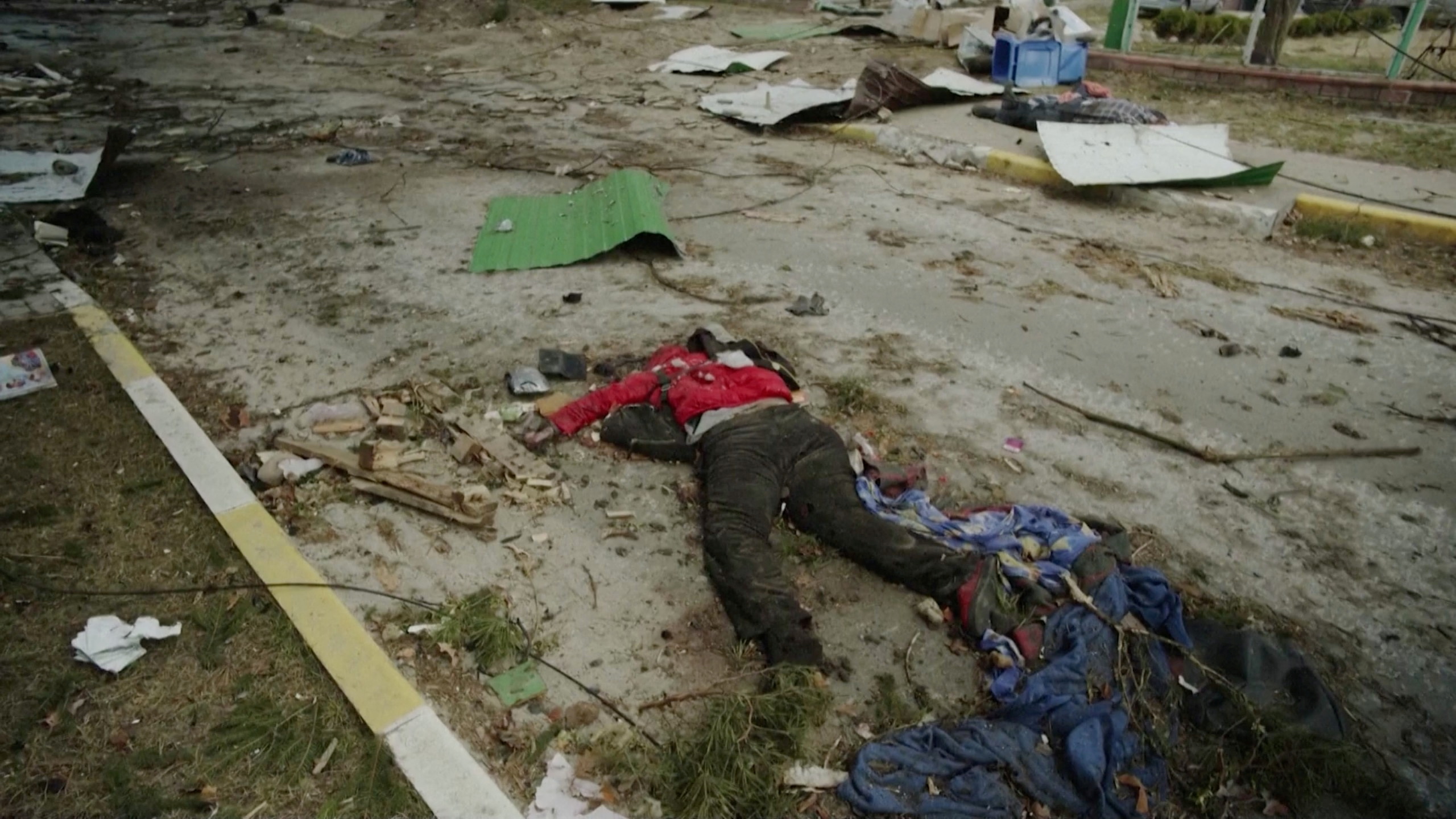
Victoria ran to the street to ask the Russian soldiers at the checkpoint what had happened. “They told us not to worry, that they would scare them a little and then let them go,” he explained. “We drove about 50 meters away... and he heard gunshots. It was around 6:20 p.m.”
The next day they found the bodies near a meadow and a large building.
“Three of the six men were on one side of the building, but not my son and my brother-in-law. We walked to the other side and saw Bohdan and Sasha, with one more. They were lying there. We found shots in their heads. Their hands were tied behind their backs. I looked at my son's body, his pockets were empty, he didn't have his phone, no keys or ID.”
After the Russians' refusal to hand over the bodies to them, heavy shelling continued in the following days.
It wasn't until March 7 that they returned to the checkpoint to ask for the bodies, there “they told us to go to the cemetery, that they would bring us the bodies... All the neighbors attended, there were like 75 people... We buried them all on the same day, in separate graves.”
The 6 victims were Volodymyr, 40, another Olexander, 40, and two brothers, Ihor, 31, and Oleh, 33, his son Bohdan, 20 and his brother-in-law Sasha Olexander, 39.
BUCHA
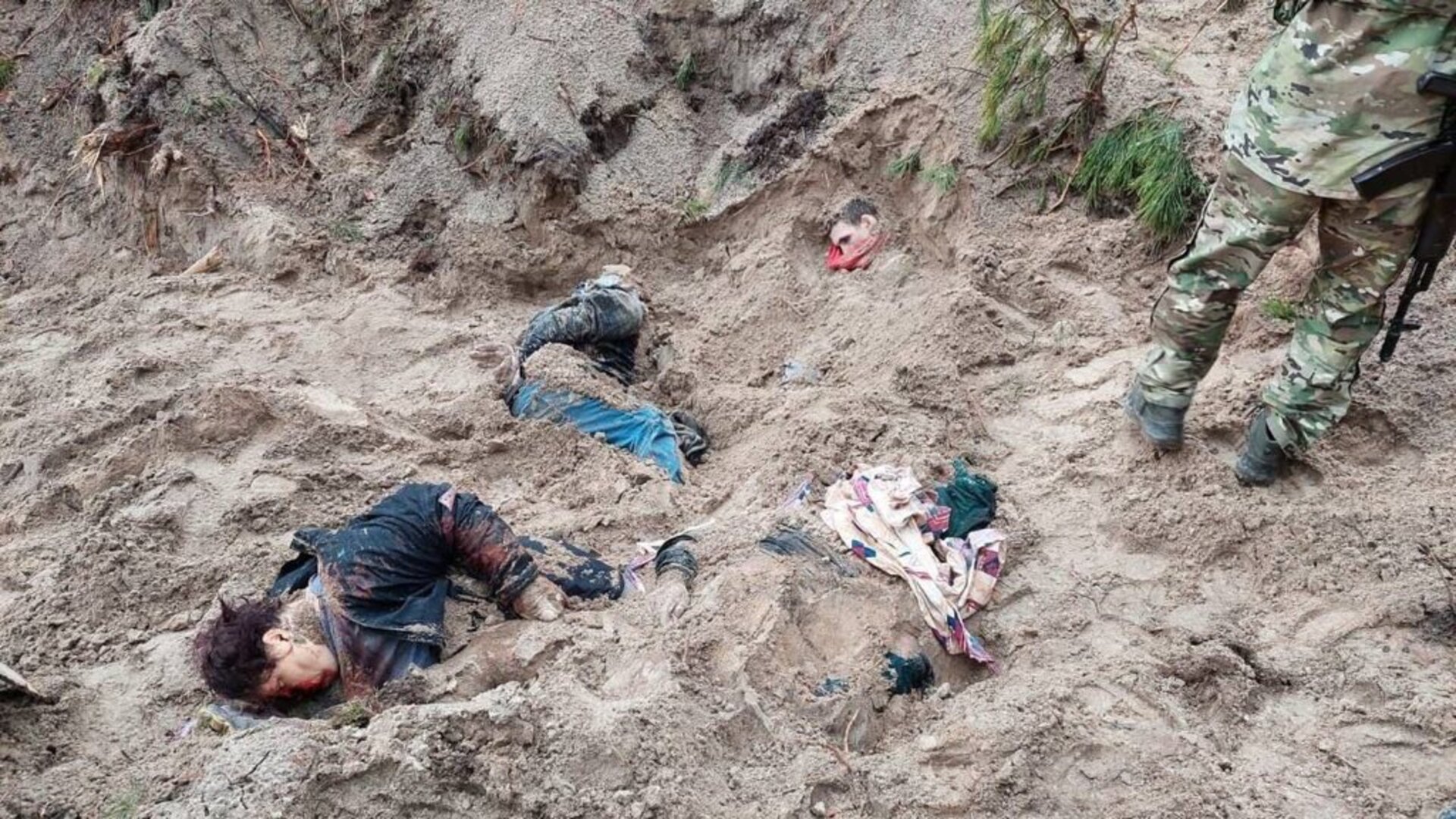
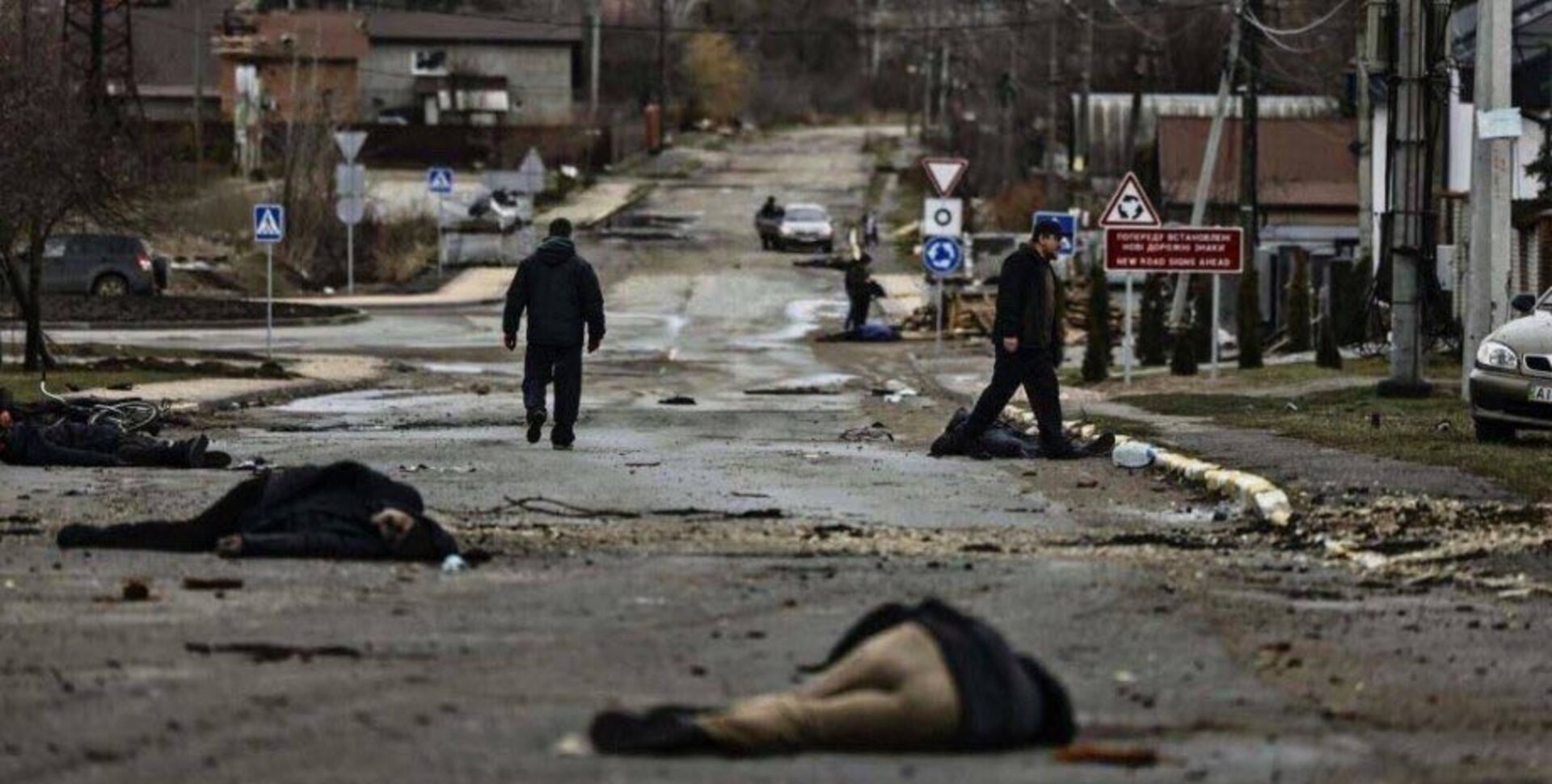
Similar events occurred on 4 March in Bucha, 30 kilometers north-west of Kiev. The Russians killed one man and threatened four others.
A teacher witnessed the incident and explained that she heard gunshots around 7 a.m. and saw three Russian armored vehicles next to four Kamaz [Russian brand] trucks driving down her street. Minutes later, as she sheltered in the basement with her two dogs, she heard the windows breaking and then the door of her house opened violently. From the outside he heard voices saying to him in Russian, “Come outside right now or we'll throw a grenade.”
Faced with the threat, she shouted that she was alone in the basement and came out with her hands up.
“There were three men outside, two soldiers and a commander.” “They took my phone and checked it, then told me to grab my identification documents and go with them,” he said. As he walked down the street with the soldiers, he saw that they were also rounding up his neighbors and ordering them to walk.
They took them to a square. There were a total of 40 people, most of them women and some men over 50, surrounded by 30 Russian soldiers, who gathered civilians' phones, reviewed documents and asked who were involved in territorial defense or local self-defense units.
The woman said that at one point, they brought in one young man, then four more. The soldiers ordered them to remove their boots and jackets. “They made them kneel on the side of the road, took out their shirts from behind and placed them over their heads. One was shot in the back of the head. He fell and the women present began to scream. The other four men were kneeling there.”
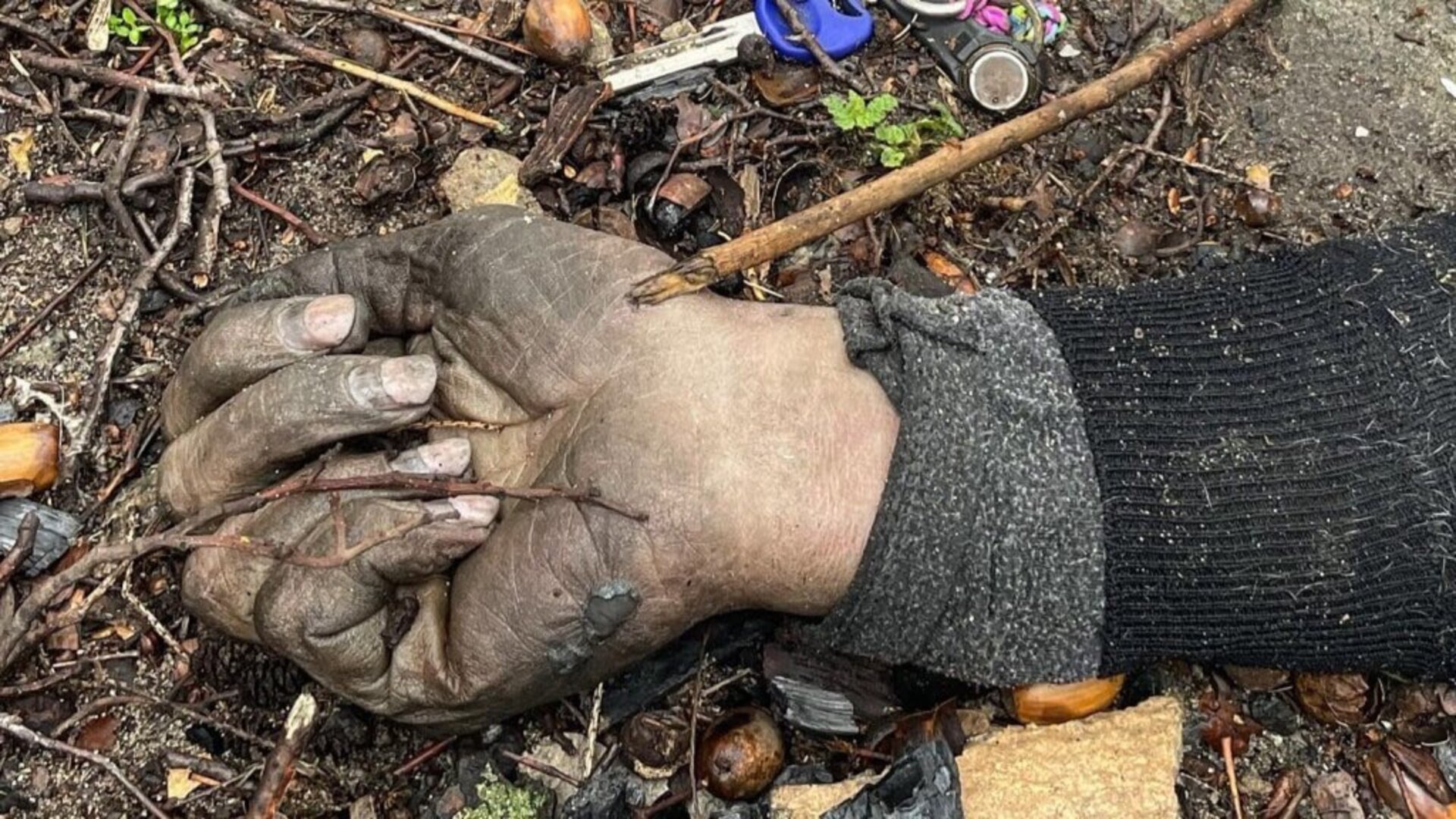
After what happened, the commander told the rest of the people in the square not to worry, “You are all normal, and this is dirt. We are here to clean you from dirt.”
After several hours, they were released and escorted by the soldiers to their homes. The other four men remained kneeling when she left.
The teacher left town on March 9, and the young man's body was still lying where he had been shot.
ZABUCHCHYA
On March 4, Russian forces threatened to execute a man and his son in Zabuchchya, a town outside the city of Irpin, northwest of Kiev.
A resident of the village explained that 13 soldiers entered a house where several people were sheltering to search it. “The soldiers asked about my 34-year-old son, who is in territorial defense. He went out to meet her and they asked him who was in the house and then they searched it and turned it upside down... In the backyard, they found my hunting rifle and a bottle of gasoline, and they went crazy,” said the witness.
The commander ordered a group of soldiers to take him and his son outside and shoot them. “They took us outside. One of the soldiers opposed it. They took us back inside and ordered my son to strip because they said they wanted to look for nationalist tattoos. Other soldiers also went to houses on our street, including the house of a judge and the deputy of the local council.”
“They broke the window of the judge's house to enter. We saw them taking bags and bags of things out of the house. After that, they left. I took my family and everyone in the basement, and we ran away in two cars. My wife, son and mother, 80 years old, are now staying at my daughter's house in Khodosivka southwest of Kiev,” he concluded.
VORZEL
On March 6, Russian soldiers entered the village of Vorzel, about 50 kilometers northwest of Kiev. There they threw a smoke grenade into a basement, people who were sheltering there ran out and encountered a gunfight aimed at them. The Russians shot a woman and a 14-year-old boy.
The young man died instantly after being hit on the head, the woman succumbed to her chest and leg injuries two days after the attack. Several local residents buried them outside the bomb shelter.
KEEP READING:
Últimas Noticias
Debanhi Escobar: they secured the motel where she was found lifeless in a cistern
Members of the Specialized Prosecutor's Office in Nuevo León secured the Nueva Castilla Motel as part of the investigations into the case

The oldest person in the world died at the age of 119
Kane Tanaka lived in Japan. She was born six months earlier than George Orwell, the same year that the Wright brothers first flew, and Marie Curie became the first woman to win a Nobel Prize

Macabre find in CDMX: they left a body bagged and tied in a taxi
The body was left in the back seats of the car. It was covered with black bags and tied with industrial tape

The eagles of America will face Manchester City in a duel of legends. Here are the details
The top Mexican football champion will play a match with Pep Guardiola's squad in the Lone Star Cup

Why is it good to bring dogs out to know the world when they are puppies
A so-called protection against the spread of diseases threatens the integral development of dogs


