


Russian forces have begun to withdraw from the Chernobyl nuclear plant after taking control of the facility on Feb. 24, a senior US defense official said Wednesday.
“Chernobyl is (an) area where they are beginning to reposition some of their troops, leaving, moving away from Chernobyl facilities and entering Belarus,” the official said.
“We think they're leaving, I can't tell you they're all gone,” he added.
On 28 March, new fires broke out in the exclusion zone around the Chernobyl nuclear power plant.
“Significant fires started in the exclusion zone and could have very serious consequences,” said Deputy Prime Minister Iryna Vereshchuk Sunday night in the Telegram network. “However, today it is impossible to control and extinguish the fires due to the capture of the exclusion zone by the Russian occupation forces,” he added.
The occupation by Russian troops of the facilities could cause a catastrophe that would not only affect Ukrainians, Vereshchuk, Minister for the Reintegration of the Temporarily Occupied Territories of Ukraine, said on her Telegram account. “The occupiers continue to militarize the Chernobyl exclusion zone. This poses a very serious risk of damaging the insulation structures built on the fourth unit of the station after its explosion in 1986,” the minister clarified.
The official assured that “such damage will inevitably lead to the entry into the atmosphere of a significant amount of radioactive dust and will contaminate not only Ukraine but also other European countries”.
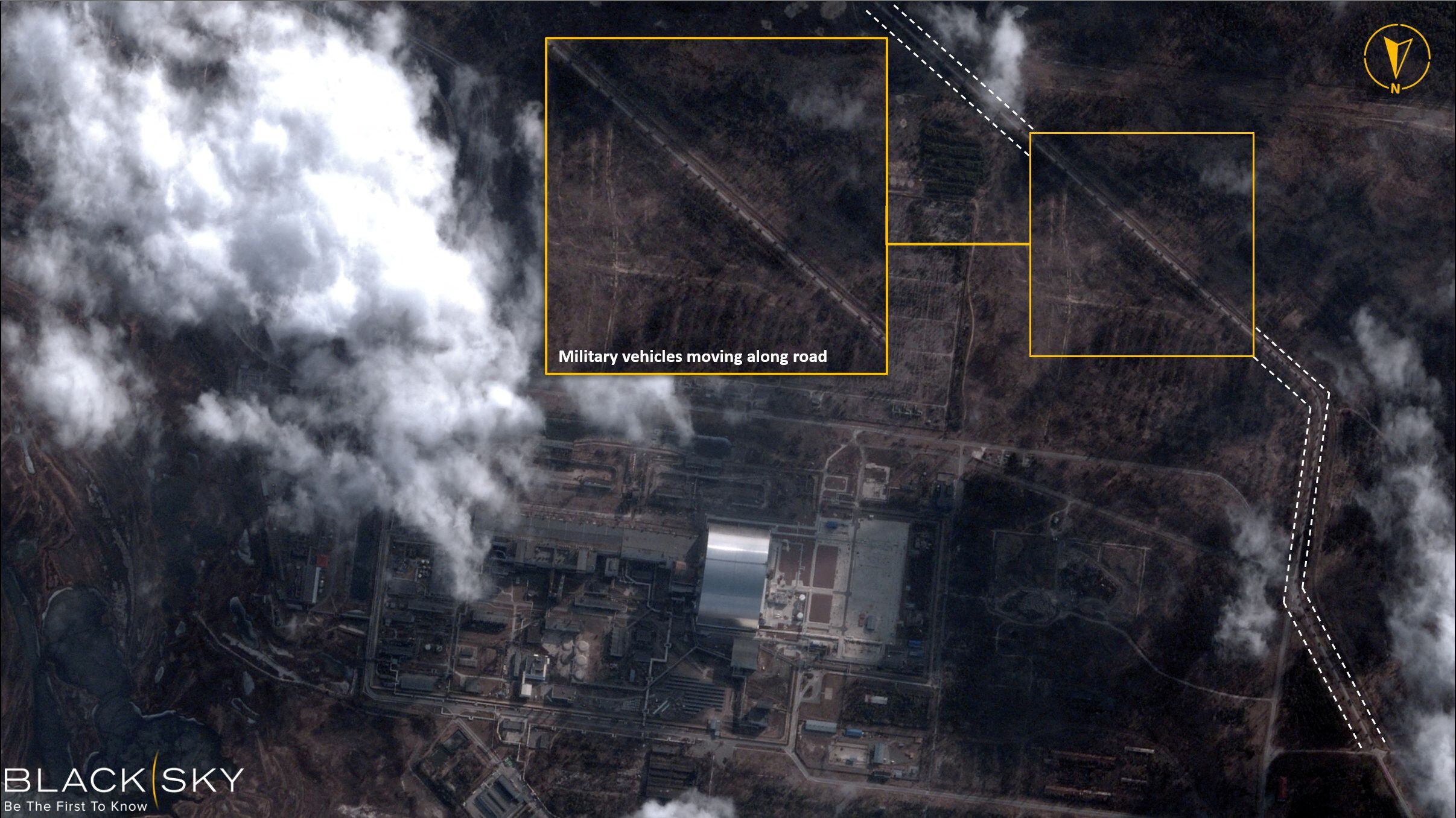
Russian troops, who invaded the country on February 24, have ignored “these threats and continued to transport and store a significant amount of ammunition in the vicinity of the nuclear power plant,” says Vereschuk.
Two senior employees of the plant that monitors pollution levels in Chernobyl told Reuters that they observed a considerable increase in radiation to from February 24, the day the Russian invasion began. The soldiers are not equipped with radiation suits and the vehicles were not decontaminated. The radioactive dust was probably inhaled by the troops and tanks and trucks continue to spread it wherever they travel. One of the inspectors said he had spoken to a group of very young Russian soldiers who “had no idea where they were or knew that there had been a nuclear explosion in Chernobyl.”
The International Atomic Energy Agency (IAEA) said on Sunday that “the situation remains unchanged” with regard to safeguards services in Chernobyl and other nuclear plants in Ukraine.
Since 9 March, IAEA has not received any live information from Chernobyl. The nuclear power plant was taken over by Russian forces on February 24, the first day of the invasion.
The number 4 reactor in Chernobyl exploded on April 26, 1986, causing the worst nuclear accident in history, which left hundreds of people dead and spread radioactive contamination in Europe. The building of reactor number 4 is contained in a massive double sarcophagus to contain radioactive contamination.
The original sarcophagus, built by the Soviets, deteriorated over the years. A new one, completed in 2019, was built on the outside. The plant's other three reactors were gradually shut down after the disaster, the last of which was in 2000.
(With information from AFP)
Keep reading:
Últimas Noticias
Debanhi Escobar: they secured the motel where she was found lifeless in a cistern
Members of the Specialized Prosecutor's Office in Nuevo León secured the Nueva Castilla Motel as part of the investigations into the case

The oldest person in the world died at the age of 119
Kane Tanaka lived in Japan. She was born six months earlier than George Orwell, the same year that the Wright brothers first flew, and Marie Curie became the first woman to win a Nobel Prize

Macabre find in CDMX: they left a body bagged and tied in a taxi
The body was left in the back seats of the car. It was covered with black bags and tied with industrial tape

The eagles of America will face Manchester City in a duel of legends. Here are the details
The top Mexican football champion will play a match with Pep Guardiola's squad in the Lone Star Cup

Why is it good to bring dogs out to know the world when they are puppies
A so-called protection against the spread of diseases threatens the integral development of dogs


