


The Minister of Justice and Human Rights of the Nation, Martín Soria, spoke this afternoon before a plenary of the committees on Constitutional Affairs and Justice and Criminal Affairs of the Senate of the Nation, to defend the project of the Executive Branch for the composition of the Council of the Judiciary.
The Council of the Magistracy is the body that selects and dismisses national and federal judges. Following a ruling by the Supreme Court of Justice of the Nation last December, the law that determined in 2006 the composition of the Council of the Judiciary was declared unconstitutional. The ruling granted 120 days, until April 16, for Congress to determine a new conformation of the Council. If no reform is achieved by a law, the former composition will enter into force, leaving the leadership to the President of the Court, a position held today by Horacio Rosatti.
In view of this situation, several bills were submitted to modify the current composition. The draft reform sent by the Executive Branch increases the number of members of the Council from 13 to 17. The initiative adds a judge, two lawyers and an academic or scientist. It also addresses the issue of gender, so that at least half of the positions must be held by women. But, mainly, it states that the Presidency must be elected by the members of the Council.
Together for Change, he presented a consensus draft proposing that the Council be chaired by the President of the Supreme Court and a number of 20 members.
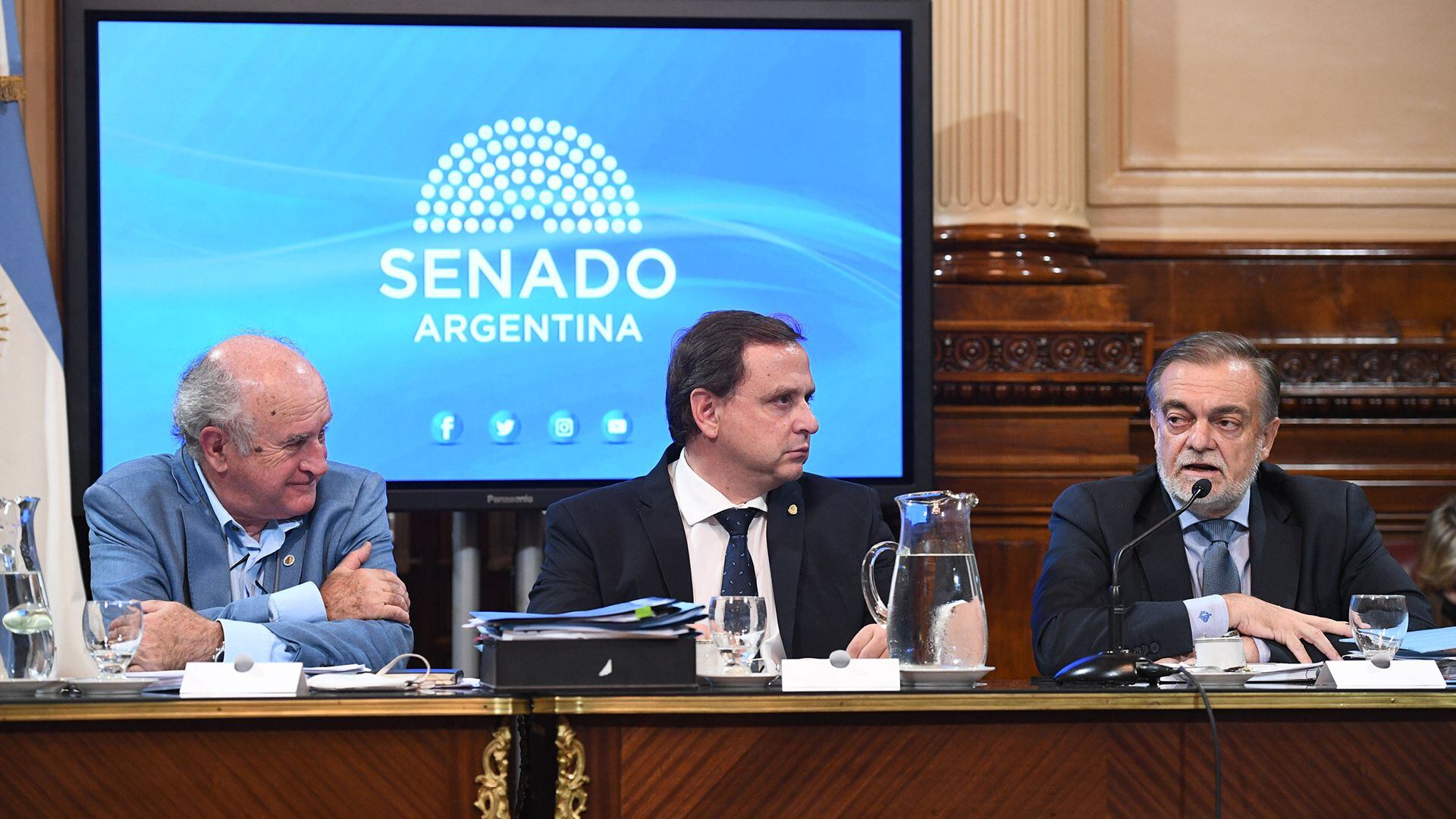
The Committee on Constitutional Affairs is chaired by the official Jujuy Senator Guillermo Snopek and that of Justice and Criminal Affairs, by the Neuquén official Oscar Parrilli. Both committees met in the Arturo Illia Hall of the Senate to hear the Minister of Justice. When supporting the project of the Executive Branch Soria sharply criticized the highest Court of Justice: “The Supreme Court ruling obliges legislation. It is an unprecedented extortion in the history of our country. This ruling puts the division of powers in jeopardy. It is a political act, an extortive political act. Because the Court, I said it when they issued the ruling, established a virtually unfulfillable deadline of 120 days, there are less than four weeks before the Council of the Judiciary is paralyzed.”
He added: “The Court extorts us until the Council adapts. Seventy per cent of the serving judges were appointed by the Council who declared unconstitutional. Congress should outright reject and repudiate the Court's interference as it is prohibited from legislating.” Before the senators, Soria cited the partial dissent of Court Judge Ricardo Lorenzetti when he voted in December, when he warned that “a repealed law cannot be restored in its validity” and that such a decision “contradicts the basic principles of law.”
Soria said: “Congress cannot endorse this very serious fact as it would set a precedent for the future. The Court wants to preside over the Council of the Judiciary through the window. They revived a 2006 dossier and decided that the Council should be presided over by the presiding officer of the Court.
“Do we want a more democratic and less corporate Council or do we want to concentrate power in the presidency of the Court?” Soria wondered. He argued: “That is dangerous because of what this court is like. The election of the authorities was a scandal, it was an embarrassment. This is the Court that can get through the window in the Council of the Magistracy. The Court settles 7000 cases per year out of the 28,000 that enter. They have a lot of work, if they have so much work for what they want to go out the window in the Council of the Magistracy. They cannot administer the Social Work of Justice and they want to administer the Council of the Judiciary.” The Minister of Justice and Human Rights criticized the fact that the presidency of the Council remains in the hands of the Court: “It is undemocratic because the members of an agency cannot elect their authorities, for the President of the Court to preside over the Council of the Judiciary would be a grave mistake. This system has already failed,” he said. And he recalled that it was the late judge of the Court Enrique Petracchi who asked that “the Court be removed from the presidency of the Council of the Judiciary in 2006.”
Without naming them, Soria alluded to Horacio Rosatti and Carlos Rosenkrantz, who were appointed judges of the Court by decree by Mauricio Macri and then appointed with the Senate agreement mechanism. “Those judges who were appointed by decree want to be put to administer the resources of the judiciary or decide on the removal of judges,” said the Casa Rosada official. Rosatti is the current president of the Supreme Court of Justice. Soria, who was accompanied by Deputy Minister Juan Martín Mena, recalled that the draft amendment of the Council of the Judiciary presented during Macri's time did not propose to the President of the Court as president of the body: “We do not change”.
Soria said: “In the ruling party there are no differences when it comes to criticizing the malfunctioning of the judiciary. We need to improve the judiciary.”
After Soria, the president of the Council of the Judiciary, the judge of the Federal Chamber of San Martín, Alberto Lugones, spoke. “I will not allow the Council to stand still. I'm going to do what I can to keep the judiciary going. I was an advisor to the Council of the Magistracy, I took almost four as a member of the Council, some of this I understand,” he said. Then he talked about everything that was done by the Council during the health crisis resulting from the coronavirus pandemic: “We managed to make the judiciary work during the pandemic because it was our obligation.” And then he talked about the slowness of appointing judges. He gave as an example what happened in recent weeks: “Politics has stopped the elevation of the list of Comodoro Py's positions. And that's why the process was stopped. We need politics to approve the trios.”
From the opposition they criticized the ruling party because the draft reform of the Council of the Judiciary was not dealt with in extraordinary sessions after the Court's ruling that took place last December. There was a crossing between Soria and opposition senators when the Minister of Justice accused the Macri government of “coping with justice”. There was an exchange of views. And before that, after 18.30 and more than two hours after the hearing began, Snopek announced the end and called an intermediate room until tomorrow at 10.
KEEP READING
Últimas Noticias
Debanhi Escobar: they secured the motel where she was found lifeless in a cistern
Members of the Specialized Prosecutor's Office in Nuevo León secured the Nueva Castilla Motel as part of the investigations into the case

The oldest person in the world died at the age of 119
Kane Tanaka lived in Japan. She was born six months earlier than George Orwell, the same year that the Wright brothers first flew, and Marie Curie became the first woman to win a Nobel Prize

Macabre find in CDMX: they left a body bagged and tied in a taxi
The body was left in the back seats of the car. It was covered with black bags and tied with industrial tape

The eagles of America will face Manchester City in a duel of legends. Here are the details
The top Mexican football champion will play a match with Pep Guardiola's squad in the Lone Star Cup

Why is it good to bring dogs out to know the world when they are puppies
A so-called protection against the spread of diseases threatens the integral development of dogs


