


“Every campaign or battle must have a plan that outlines the military objectives, the allocation of resources and the intensity required. The strength and disposition of the enemy must also be known. Having a plan does not ensure victory, but not having one leads to defeat.” It was written by the great theorist of war, Carl Von Clausewitz, and it was published by his wife Marie under the title “Of War” when she died of cholera in 1832. Since then, it has been the Bible of any military man or political strategist. Surely Vladimir Putin read it when he was at the Soviet KGB spy academy.
Putin went to war with a precise plan: to take Kiev in a matter of days, to overthrow Zelensky's government and to occupy East Ukraine. From that position of strength he intended to negotiate with the United States the total disarmament of NATO in that territory and other former Soviet republics.
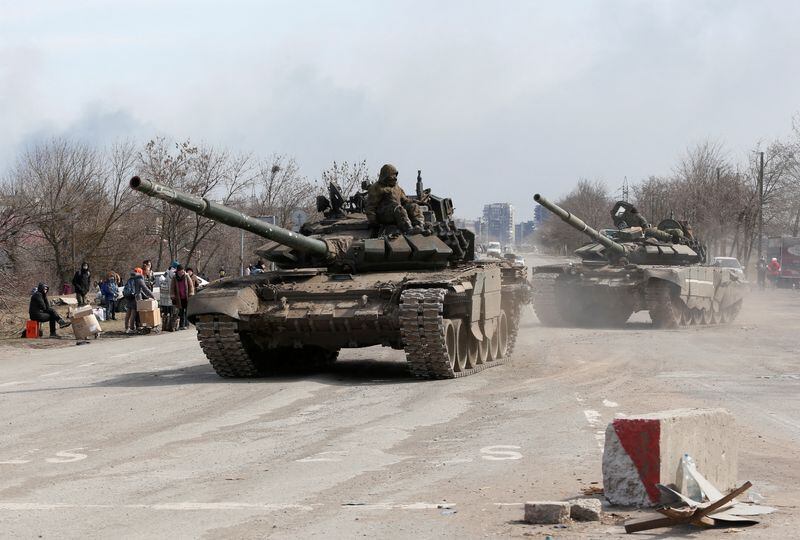
It failed. The surprise factor of having elite troops hidden behind the Ukrainian defense lines did not produce the desired effects. There was no panic or flight from the government, as I had calculated. Zelensky turned out to be much tougher and more determined than he had shown so far. And he dismissed the defense capability of the Ukrainian army and people. The beachhead that I had imagined to quickly accumulate troops in northern Kiev was dismantled by defense missiles. The column that came from Belarus was bogged down in the mud.
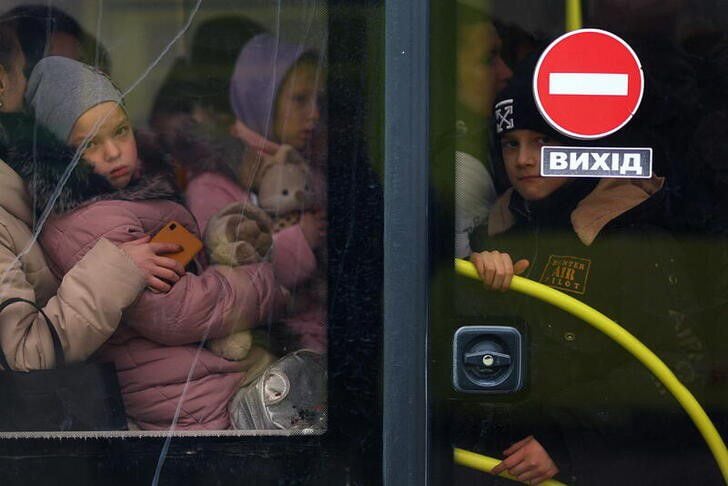
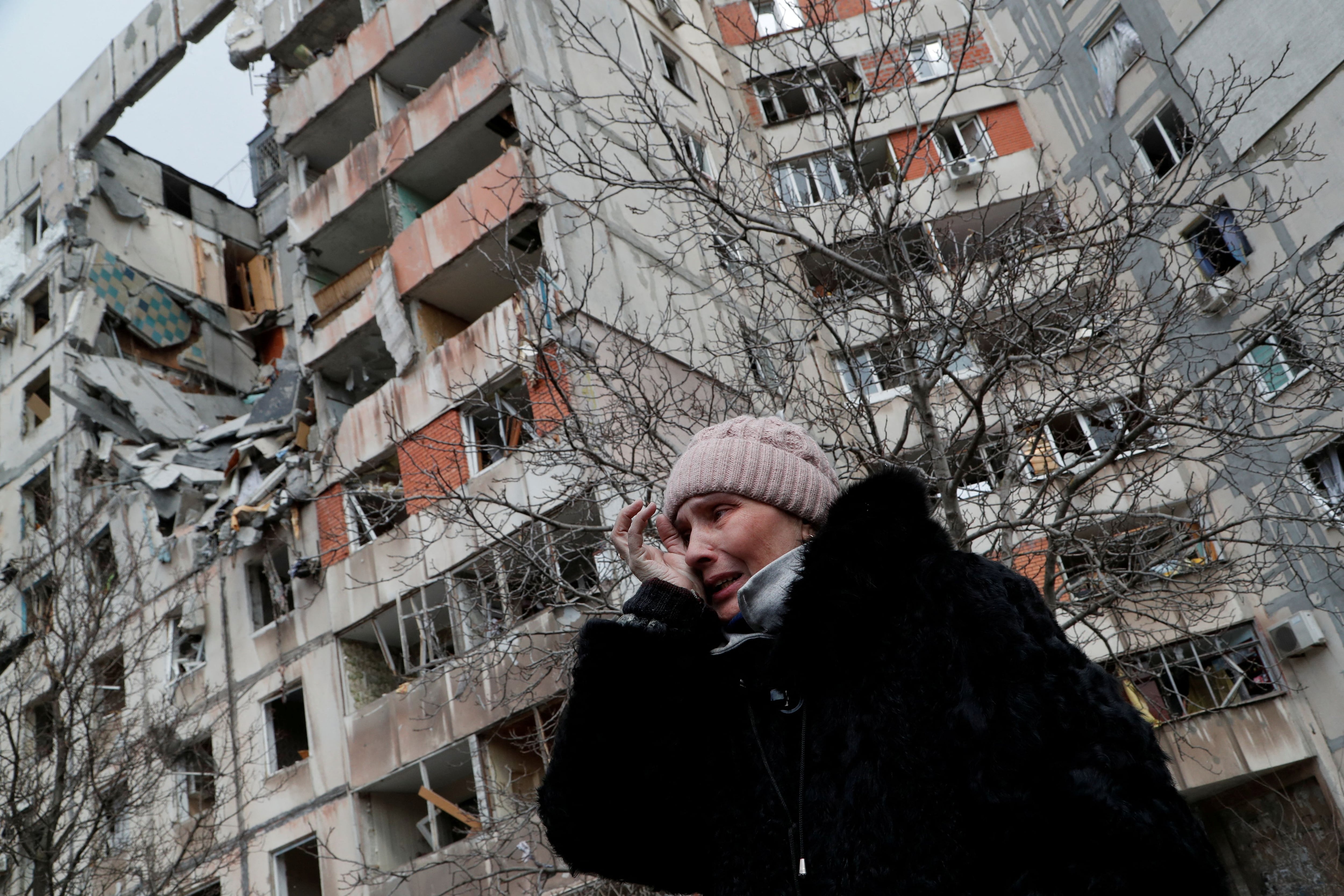
He had to go to a second option: to bomb large cities without respite to provoke a huge humanitarian crisis. There are already 3.5 million Ukrainian refugees in neighbouring countries and they are settling in all over Europe. Another 6.5 million are internally displaced persons. Lviv, the Ukrainian de facto capital of the West, is already feeling pressure from those fleeing the East, but do not want to leave the country. The purpose Putin seeks is for European leaders to pressure Zelensky to surrender so as not to continue the Ukrainian exodus that could destabilize their own countries.
If this doesn't go as Putin hopes, as Thomas Friedman wrote in the New York Times, “I'm afraid it would be a cornered animal and could choose to drop chemical weapons or the first nuclear bomb from Nagasaki. It's a difficult phrase to write, and even worse to contemplate. But to ignore it as a possibility would be extremely naive.”
Putin already feels threatened by his home front. There are reports that the sanctions provoked reactions against them by the economic elite of Moscow. They say there could be some kind of palatial coup and Putin would be replaced by the head of the Russian Federal Security Service (FSB), Oleksandr Bortnikov. It is probably just a wish emanating from Kiev rather than a reality from Moscow, but it cannot be ignored either.
For now, as expected, Putin is not willing to negotiate anything other than unconditional surrender. The rounds of consultations over the last few days, which had Turkey's President Recep Tayyip Erdogan as mediator, came to nothing. “Zelensky is willing to meet, but Putin believes that the positions for holding this meeting at the leadership level are not yet close enough,” said Ibrahim Kalin, senior advisor and Erdogan spokesman who had already given details of the talks.
Turkey is a member of NATO and Erdogan maintains good relations with Putin, despite the Russian leader's outrage towards the Western military alliance of 30 countries. Last Thursday, the Turkish leader spoke with Putin and Zelensky and then there were several other interventions by Turkish diplomats over the weekend, but nothing concrete was reached.
Kalin now says that the conditions for a Putin-Zelensky summit to negotiate the terms of a peace agreement are not yet in place. “Putin wants to be in a position of strength when he does, and not look weak, weakened by military losses or economic sanctions,” Kalin explained in an interview with US media. “That moment hasn't come yet, and it may not be soon. But economic sanctions are probably the ones that most influence Putin's thinking.”
What lies at the heart of this war and in any peace negotiation is the territorial integrity and sovereignty of Ukraine, which Zelensky and his Western allies are not willing to sacrifice. And that includes the Crimean peninsula, which Russia annexed eight years ago. “Crimea is `de facto Russian', no one will grant the annexation `de jure'”, they say from Washington and Brussels.
Kalin believes that “at best, the solution will be found in some new version of the Minsk agreements”, which gave significant autonomy within Ukraine to the separatist enclaves of Donetsk and Luhansk, supported by Russia. Although the situation was complicated by the Russian Duma (parliament)'s recognition that these enclaves are “independent states” encompassing lands that are not under its control, as Russia did with South Ossetia and Abkhazia in Georgia after a similar war in 2008.
The Turkish negotiator warned that in any case Putin's position must be taken into account for a post-war scenario. “The Russian case must be heard, because after this war, there will have to be a new security architecture established between Russia and the western bloc,” Kalin commented. “We cannot afford another Cold War: it will be bad for everyone and costly for the entire international political and financial system.”
This would be a later plan and only viable if some of the previous levels of confrontation raised by Putin work. One must always take into account Von Clausewitz's great definition: “Victory in battle should not obscure. Every command must know what the limit of their forces is and not go beyond it, at the risk of losing what they have won. In wars, we must also distinguish between encroachment and destruction. This limit has to be made clear at the time of planning.” We will soon know what Putin's limit is.
KEEP READING:
Últimas Noticias
Debanhi Escobar: they secured the motel where she was found lifeless in a cistern
Members of the Specialized Prosecutor's Office in Nuevo León secured the Nueva Castilla Motel as part of the investigations into the case

The oldest person in the world died at the age of 119
Kane Tanaka lived in Japan. She was born six months earlier than George Orwell, the same year that the Wright brothers first flew, and Marie Curie became the first woman to win a Nobel Prize

Macabre find in CDMX: they left a body bagged and tied in a taxi
The body was left in the back seats of the car. It was covered with black bags and tied with industrial tape

The eagles of America will face Manchester City in a duel of legends. Here are the details
The top Mexican football champion will play a match with Pep Guardiola's squad in the Lone Star Cup

Why is it good to bring dogs out to know the world when they are puppies
A so-called protection against the spread of diseases threatens the integral development of dogs


