

Sleep is a ubiquitous behavior that exists in the animal world. It is usually characterized by immobility and poor response.
Despite the inherent fragility of sleep, the persistence of evolutionary time suggests that it performs one or more basic functions. The hypothesis of this central function is that sleep plays an important role in saving energy by improving relaxation and reducing the metabolic rate of awakening.
Energy savings during sleep have been reported in various animals, including humans, cats, rats, birds, and fruit flies, but it is not known whether energy consumption has decreased during fish sleep.
According to a study by a group of researchers from the Australian scientific institution, sharks maintain sleep hours to save energy.
For a study conducted by Michael Kelly of the University of Western Australia, seven checkerboard sharks were collected in Hauraki Bay in northeastern New Zealand and kept them in an outdoor aquarium under natural light conditions. The animals were fed with sardines and kept them for at least 2 weeks.Before starting the experiment to determine if the animal reached the post-absorption condition.
After this period, these checkerboard sharks (they are named because the color pattern of dark spots on the skin is similar to the checkerboard pattern) were placed individually in a closed respiratory laboratory. Before data collection began, an automatic intermittent flow respirator and video recording began 48 hours later to allow each animal to adapt to the new conditions. Each protocol then lasted 24 hours and was exposed to 12 hours of light and 12 hours of darkness.
During this period, they evaluated changes in oxygen consumption rates to see if sleep was a decisive factor in energy savings in cold-blooded vertebrates.
The condition of the eyes was assessed as open or closed, and the body posture of inactive sharks was evaluated as flat (lying on the bottom of the tank) or standing (sitting on the pectoral fins). The sharks were keeping their eyes open while swimming, but during sleep they discovered that the eyes of these animals were closed.
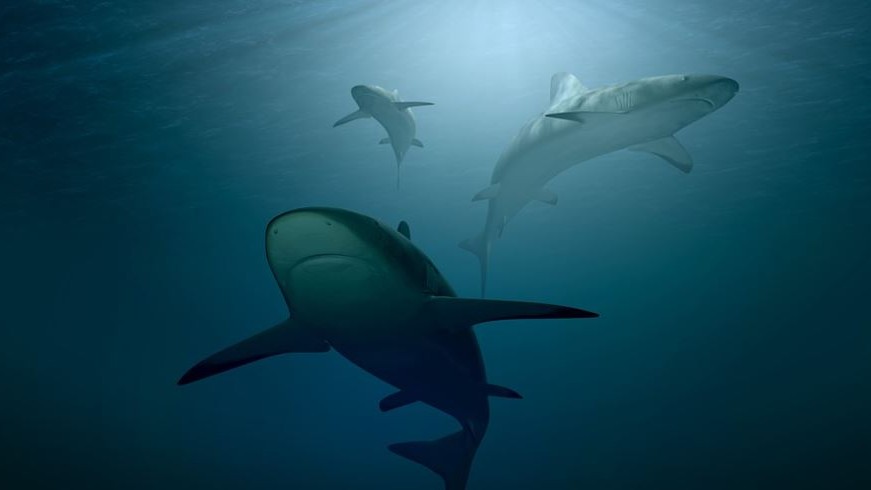
Activity states have been categorized as swimming, resting (less than 5 minutes of inactivity), or sleeping (5 minutes of inactivity or more). Studies have shown that oxygen levels in sharks were significantly lower during sleep and lasted about 5 minutes. Another sign that they are sleeping is that a high level of oxygen was recorded during the animal's activity period, that is, when swimming.
Regarding body position, scientists have observed that during sleep they take a flat body position rather than rest. Thanks to this study, an ancient theory was shot down that sharks did not fall asleep.
Keep reading:
Últimas Noticias
Debanhi Escobar: they secured the motel where she was found lifeless in a cistern
Members of the Specialized Prosecutor's Office in Nuevo León secured the Nueva Castilla Motel as part of the investigations into the case

The oldest person in the world died at the age of 119
Kane Tanaka lived in Japan. She was born six months earlier than George Orwell, the same year that the Wright brothers first flew, and Marie Curie became the first woman to win a Nobel Prize

Macabre find in CDMX: they left a body bagged and tied in a taxi
The body was left in the back seats of the car. It was covered with black bags and tied with industrial tape

The eagles of America will face Manchester City in a duel of legends. Here are the details
The top Mexican football champion will play a match with Pep Guardiola's squad in the Lone Star Cup

Why is it good to bring dogs out to know the world when they are puppies
A so-called protection against the spread of diseases threatens the integral development of dogs


