


Juan Orlando Hernández will spend his next few nights in the same cells where the big Honduran drug traffickers were before traveling extradited to the United States.
Not a month had passed since JOH, as he is known in Honduras by his initials, left the presidency of the republic when on February 16 a Judge, Edwin Ortez, decided that Hernández should remain until March 16 in a cell in the police precinct that serves as the base of the Cobra special force in Tegucigalpa, the country's capital.
The United States accuses Hernandez of three crimes: conspiracy to import controlled substance (drugs) into the United States”, specifically 500,000 kilograms of cocaine; conspiracy to use firearms to import narcotics into the United States; and conspiracy to instigate the use of weapons.
If extradited, tried and convicted, Hernandez could face prison terms ranging from 10 years to life imprisonment.
And if the cases of other Honduran drug traffickers tried and sentenced in the United States for drug trafficking are any indication, it is very likely that Juan Orlando Hernandez will have to spend the rest of his life in a US federal prison. His brother, Juan Antonio “Tony” Hernández, was sentenced in March 2021 to life imprisonment plus 30 years in prison on the same charges that the former president faces.
Ironic. Hernández will be subject to legal extradition rules that he himself promoted in 2012, when he was president of Congress and the political rise that would lead him, two years later, to the presidency of the republic began.
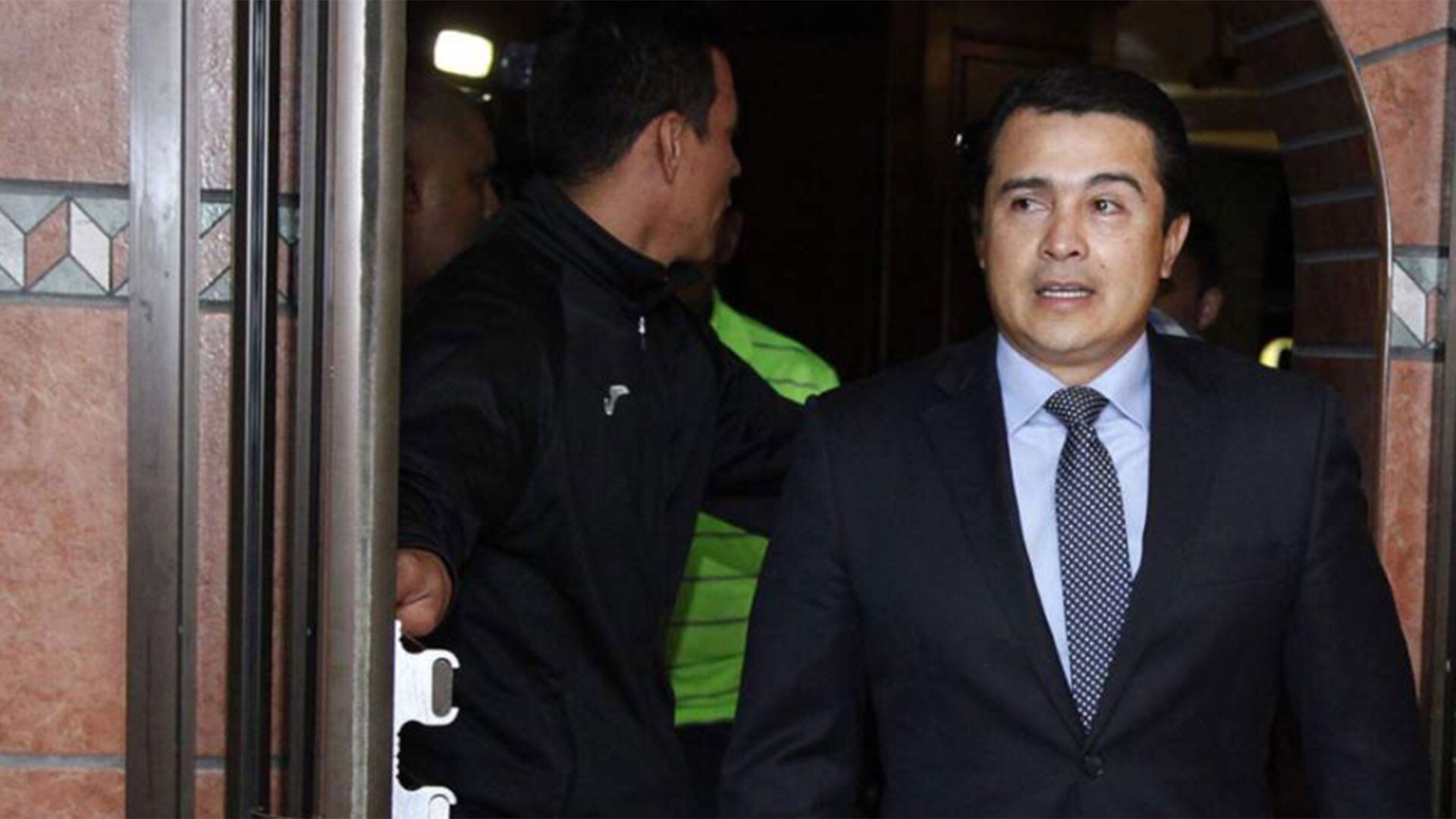
On January 19, 2012, Hernandez signed a legislative decree amending article 102 of the Honduran Constitution, which until then stated: “No Honduran may be expatriated or handed over by the authorities to a foreign State.” With the amendment, an exception was added for “drug trafficking offences of any type”.
When Hernández signed that amendment, Honduras had just experienced the trauma of a coup d'état that, in 2009, deposed then-President Manuel Zelaya, Hugo Chávez's ally of Venezuela and who had flirted with re-election. After the fall of Zelaya, Hernandez's National Party came to power, both in Congress and in the Executive in 2010, when Porfirio “Pepe” Lobo, now also targeted for drug trafficking, was elected president.
The United States, which then had Barack Obama as president, supported the rise of the National Party in exchange, among other things, for the new Honduran government showing firmness in the fight against regional drug trafficking. Honduras was already in those years the main bridge of drugs that traveled from Venezuela and Colombia to the US markets.
Since the beginning of his first presidential term - he was re-elected in 2017, again, with Washington's support - Hernandez used extradition to get rid of drug traffickers who, would later be known from US judicial investigations, were allies of the Hernandez brothers in the cocaine business.
Shackles and an old acquaintance
Fate has played tricks on Hernandez in recent days. It's not just that the United States requires it, it's also the characters and places he has to face, today as a prosecuted prisoner.
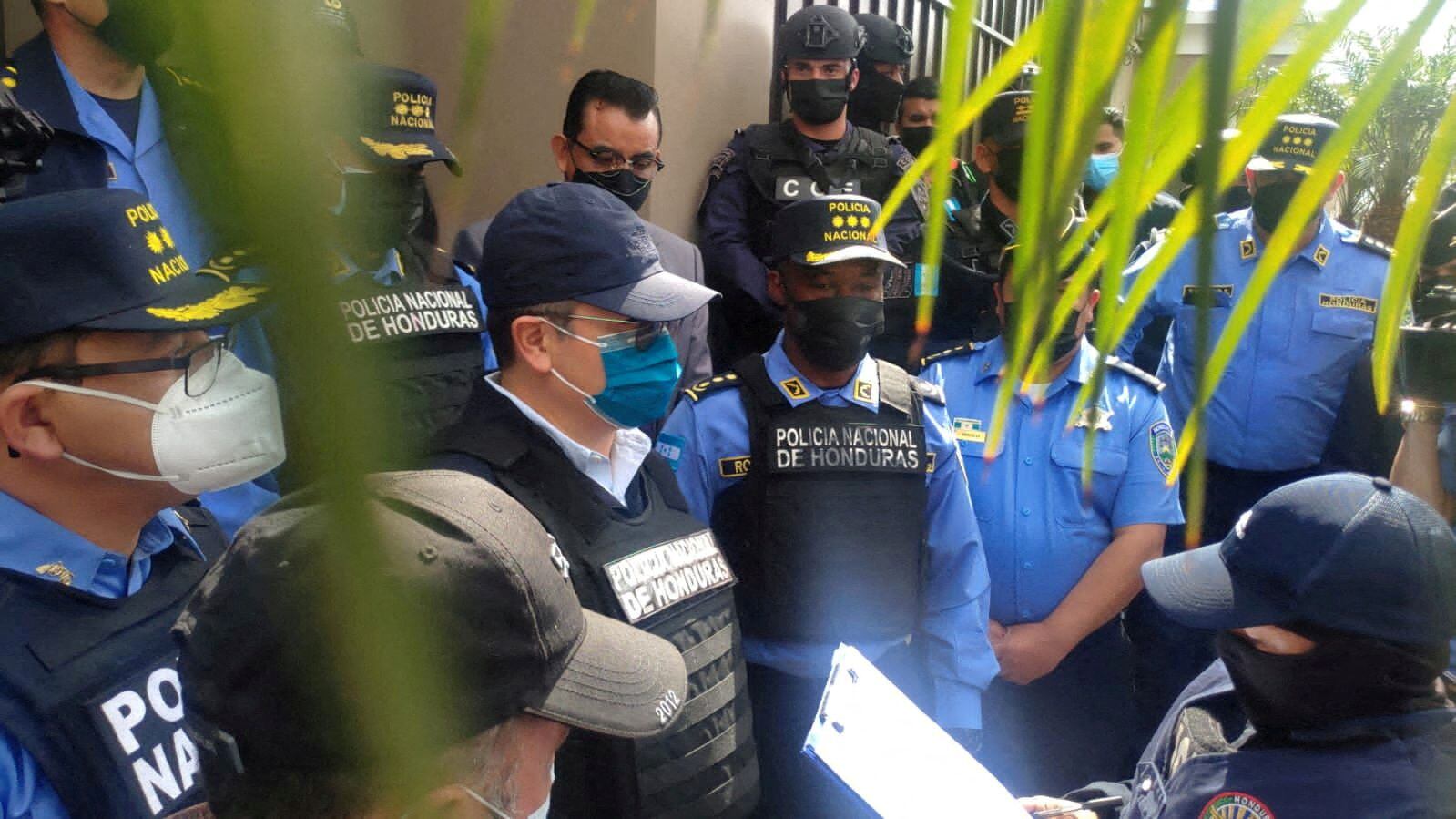
On the afternoon of February 15, when he left his home in an exclusive neighborhood of Tegucigalpa to surrender to the authorities, Hernández came across a familiar face, that of General Ramón Sabillón, a former head of the National Police whom he defended when he was president and who is today the minister of security in the government of Xiomara Castro.
“We are here to give you every guarantee and ensure your safety,” Sabillón told Hernandez on the morning of February 15, when the former president, after saying goodbye to his wife, walked out the main gate onto the street, where dozens of police officers led by the general were waiting for him.
Hernandez and Sabillón shook hands before an agent put the shackles on the hands and feet with which he would travel to the Cobras cell.
The general and the politician have a long and conflicting history. The president did not trust the policeman, but he had to put up with it for a few months of his first term because Sabillón was the man trusted by US agencies deployed in Honduras, in a context that, as was said, was marked by Washington's surveillance of the fight against drugs.
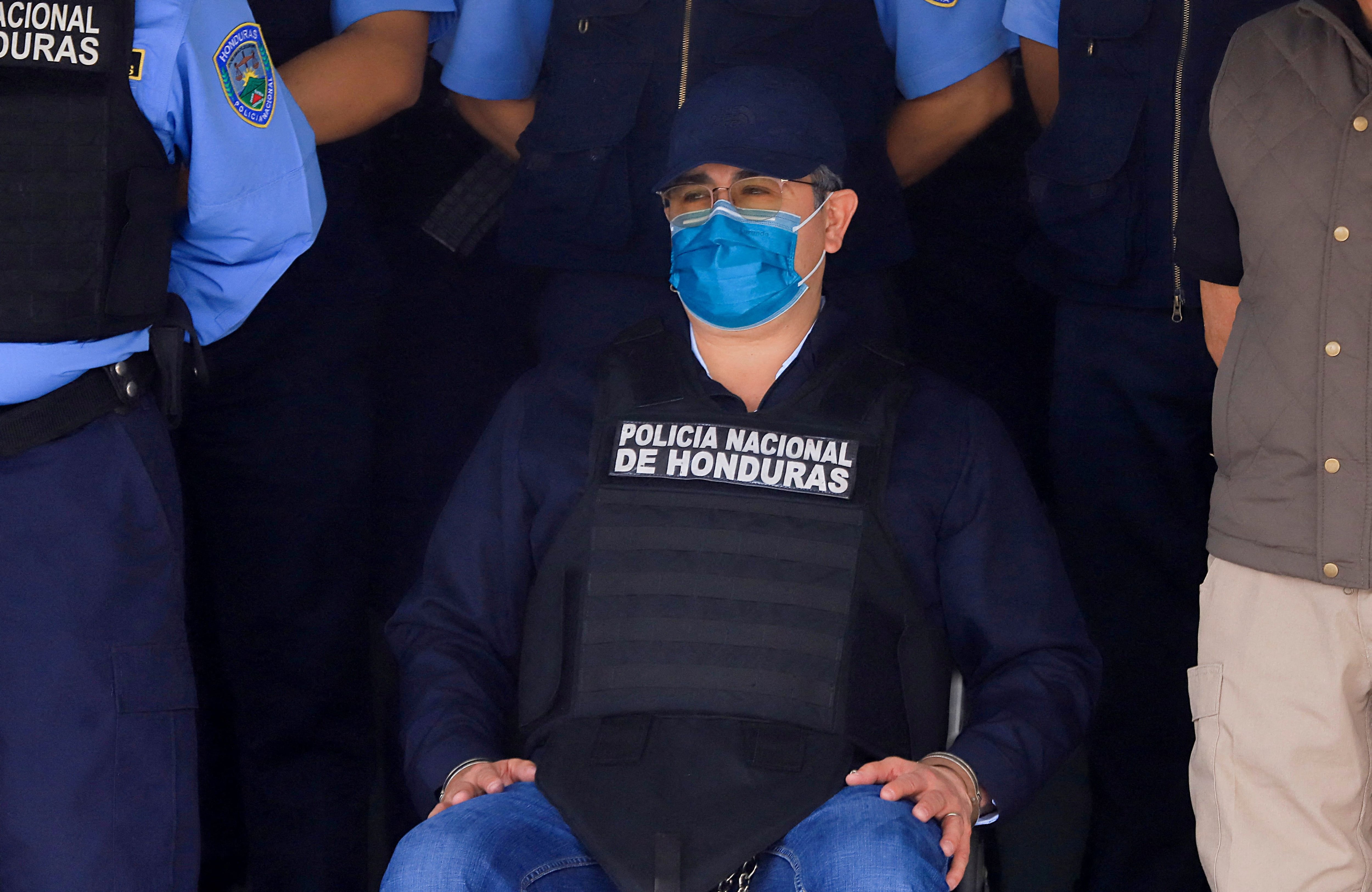
When, in 2013, JOH consolidated pacts with drug traffickers in western Honduras, from which he and his family originate, the United States Drug Control Agency (DEA) and General Sabillón's men were already closely following the footsteps of capos such as the Valle Valle and Alexander Ardón, a mayor of the National Party also involved in drug trafficking and who was one of the main allies of the Hernandez.
It was Ardon, also an expatriate to the United States, who gave details of Juan Orlando and his brother Tony's involvement in the business to US judicial authorities. He said, for example, that Joaquín Guzmán Loera, el Chapo, gave one million dollars for JOH's presidential campaign in 2013.
Sabillón, as Infobae said, was the architect of the operation to capture the Valle in 2014. The president, said two senior officials who worked hand in hand with the general in those years, wanted to eliminate the capos to prevent them from ending up extradited and eventually offering testimony in US courts. Sabillón, without telling Hernández, captured the Valle and took them to the Cobra cells in Tegucigalpa.
It was there, in those cells, that the Valleys explained to Sabillón the participation of Tony Hernández and his brother in the map of drug trafficking in western Honduras. The general then gave clues to this testimony to a Honduran journalist. When the matter became public, Juan Orlando Hernández removed Sabillón from the police. The police chief fled to the United States. One of his first public events after being appointed Minister of Security by the newly promoted President Xiomara Castro: coordinating the capture of JOH.
A long list of partners
So far, US prosecutors who have prepared the indictment of Juan Orlando Hernandez have not released all the details of the case they will file against the former president in the New York court, but the same testimonies that served to convict his brother Tony give clues to all the accusations that JOH could hear during the trial.
In addition to the incursion into the routes that dominated the Valle Valle in the west, former President Hernandez allied with Giovanny Fuentes, a kingpin from northern Honduras who served as a link between the Valle and the Los Cachiros gang, the most powerful gang in the northeast of the country, where most of the cocaine shipments from Colombia arrive and Venezuela.
Fuentes, also an expatriate to the United States, had a drug laboratory in Choloma, an industrial city between San Pedro Sula and Puerto Cortes, the most important in the country, which produced between 300 and 500 kilos of cocaine per month. Fuentes told US prosecutors that JOH was his partner in that company and that he too had donated to the political campaigns of the former president and his party.
Another drug trafficker who talked about JOH is Devis Leonel Rivera Maradiaga, one of the bosses of Los Cachiros, also prosecuted in the United States. He said, in March 2021, that he too had sent money to Juan Orlando Hernandez in 2012: $250,000 for the presidential campaign the following year. Rivera Maradiaga said she had given the money to Hilda Hernández, Juan Orlando's sister, and who was head of her presidential campaign.
As early as 2018, when his brother Tony faced trial in New York, JOH knew that U.S. prosecutors singled him, the president, as a co-conspirator in the drug trafficking company, and accused them both of facilitating the conditions for creating a narco-state in Honduras. Even earlier, when Los Cachiros and Los Valle began to testify, JOH knew that the matter reached him.
Juan Orlando's response was always to appeal to his friendship with Washington and to invoke all the times that senior U.S. officials, from diplomatic envoys to Tegucigalpa to the command of Southern Command in Florida, elevated him to a “strategic partner” in the fight against drug trafficking. When the circle narrowed and Joe Biden's administration included him on a list of corrupt and undemocratic actors, in February 2022, it seemed that fate was unavoidable.
KEEP READING:
Últimas Noticias
Debanhi Escobar: they secured the motel where she was found lifeless in a cistern
Members of the Specialized Prosecutor's Office in Nuevo León secured the Nueva Castilla Motel as part of the investigations into the case

The oldest person in the world died at the age of 119
Kane Tanaka lived in Japan. She was born six months earlier than George Orwell, the same year that the Wright brothers first flew, and Marie Curie became the first woman to win a Nobel Prize

Macabre find in CDMX: they left a body bagged and tied in a taxi
The body was left in the back seats of the car. It was covered with black bags and tied with industrial tape

The eagles of America will face Manchester City in a duel of legends. Here are the details
The top Mexican football champion will play a match with Pep Guardiola's squad in the Lone Star Cup

Why is it good to bring dogs out to know the world when they are puppies
A so-called protection against the spread of diseases threatens the integral development of dogs


