


Colonel General Mikhail Mizintsev is furious. It is not known whether due to the fact that a soldier wearing an unregulated uniform had caused the death of a comrade under strange circumstances or whether this is an expression of his enormous frustration that his troops have not yet taken over the resilient city of Mariupol.
- Look at that scum there, frowning with his bovine eyes, showing me his unhappy face, his stinking face! , shouts Mizintsev on the phone with a lieutenant in charge of an assault unit of the Russian army.
- (…)
- Why are you still serving in my army? And why do I have to waste my time with your scum? If you are the head of a unit, then step up.
- (…)
- Why hasn't his face been mutilated yet? Why hasn't anyone cut off his ears? Why isn't this jerk limping yet?
The brutal audio showing what kind of general Mizintsev is, was recorded this week by the Ukrainian intelligence services and released by Olexander Scherba, former Ukrainian ambassador to Austria. A monologue that brings to light what had been dubbed “the butcher of Aleppo”, the Syrian city that was reduced to rubble in 2016, and which now became “the butcher of Mariupol”, the port city on the Sea of Azov that has been resisting the onslaught of Russian forces and indiscriminate bombardments for a month.
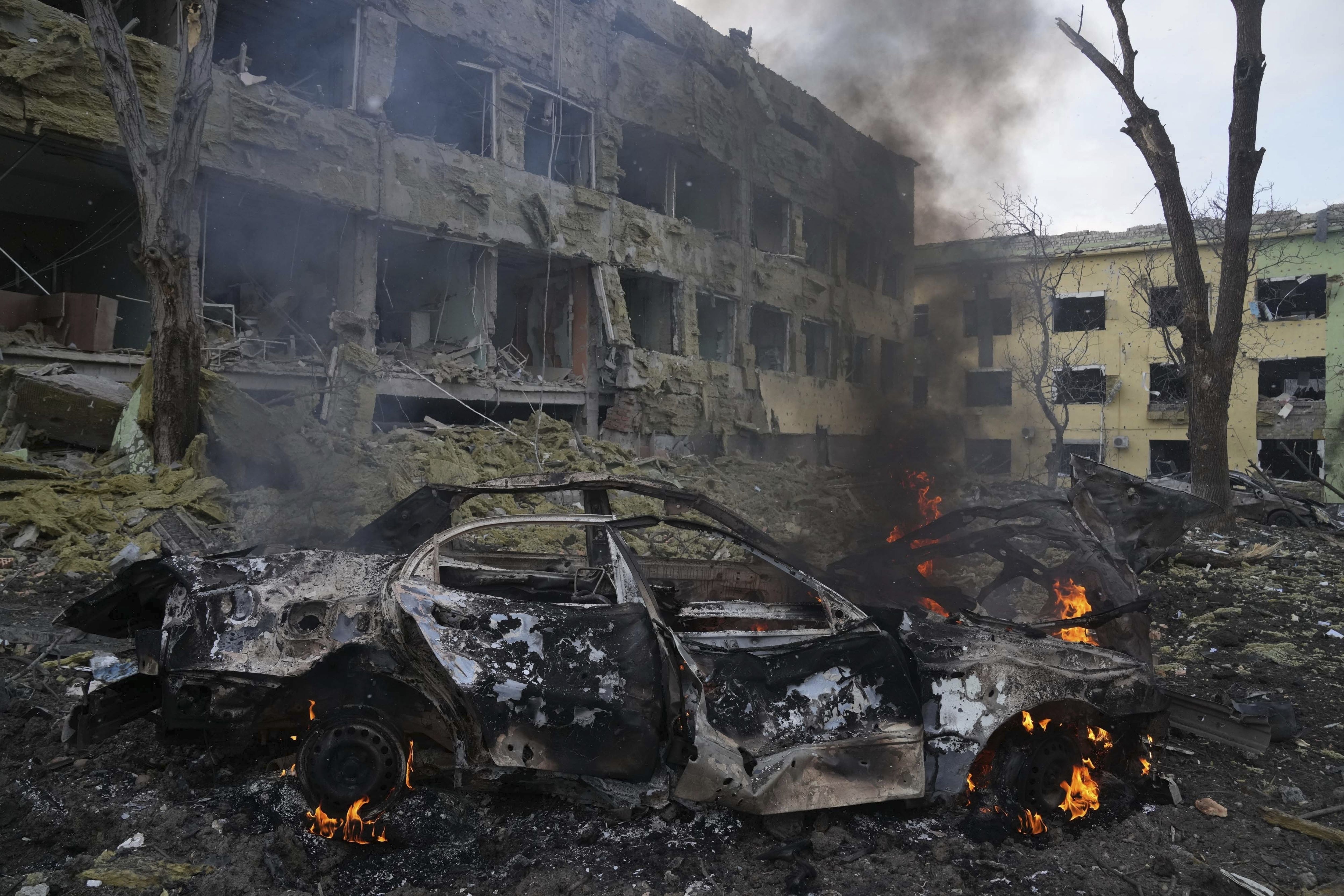
Russian forces, which joined Bashar al-Assad in his efforts to reclaim Syria from various rebel groups - some of them backed by the West - that had divided the country during the civil war, helped the dictator to besiege and eventually reconquer the northwestern city of Aleppo from the troops of the Free Syrian Army. In total, the battle to retake the city lasted more than four years, but the most intense period occurred at the end of 2016, when Russian and Syrian forces surrounded the eastern half while 270,000 civilians remained inside and bombed it for months before deploying troops and tanks to capture it.
The Syrian Network for Human Rights estimates that at least 23,000 civilians died during this period, although the exact number is difficult to obtain and could be higher. Military analysts at the Institute for the Study of War said the siege was “marked by an unprecedented degree of savagery and suffering.”
Russian forces used cluster bombs, chemical weapons and incendiary bombs - all prohibited by international charters - during the siege. Hospitals were shown to have been systematically attacked, and were eventually completely destroyed in the bombings. Frequent ceasefires were declared, but pauses in fighting were often used by Russian and Syrian forces to rearm and reposition themselves before resuming the assault. Others were not respected at all, or were used for propaganda purposes, accusing the rebels of violating them as a pretext to redouble the attacks.
In the end, humanitarian corridors were offered to civilians wishing to escape the fighting, and although thousands of them managed to flee, others said they were arrested trying to get out, while some were executed or died along supposedly “safe” routes. Observers documented more than 100 summary executions during the siege, while the Syrian Human Rights Network stated that nearly 2,500 people were arbitrarily detained and tortured, dozens of them children.
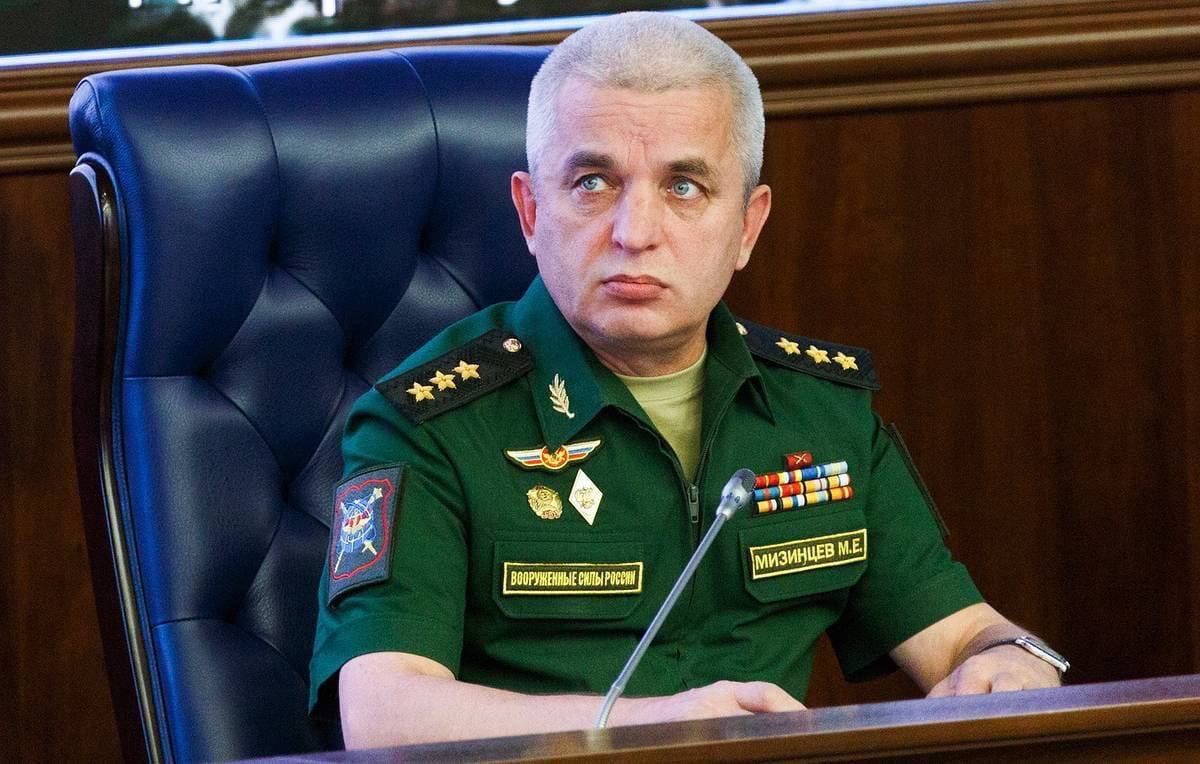
The population of Mariupol is suffering a similar fate, albeit on a larger scale. Before the Russian invasion, this strategic port had 400,000 inhabitants. It is estimated that about 150,000 managed to flee. Those killed by the bombings could be more than 20,000, including the babies and women in labor of the city's main maternity hospital and the hundreds who took refuge in the drama theater that were torn apart by the bombs.
General Mizintsev does not shake his hand when he has to order a bombardment even though he knows that the target is only civilians. He seems to enjoy provoking terror among those left in besieged cities. He believes that in this way the defence troops are demoralized. He didn't mind using cluster bombs or phosphorus bombs, banned by all international conventions of war.
He even launched a “reverse mirror” operation on 21 March to accuse Ukraine of using chemical weapons. He ordered to attack the chemical plant at Sumykhimprom, in Sumy. “As a result of the bombardment, a tank with ammonia was damaged and there was a loss of which we do not yet know the consequences,” said the mayor of the nearest town.
Two days earlier, Mizintsev spoke to a group of Russian journalists and referred specifically to the Sumykhimprom chemical plant, stating that the “Ukrainian Nazis” would participate in a “false flag” operation. According to Mizintsev, “they mined storage facilities containing ammonia and chlorine to massively poison the inhabitants of the Sumy region if units of the Russian Armed Forces enter the city.” Mizintsev also stated that “these Nazis were preparing provocations with poisons” in Kotlyarovo, near Mykolaiv. “For this, containers with toxic chemicals have already been delivered to the local primary school building, which is planned to blow up when Russian troops approach,” the general added. None of this happened.
Mizintsev occupies one of the highest military positions in Russia. He is director of the National Defense Control Center (NDCC), which oversees the joint operations of the Ministry of Defense and the Armed Forces. It also controls a large part of the army hackers working on the Astra Linux and Rusbitech systems. He assumed that position in 2014. It has its office on Znamenka Street in Moscow. Report directly to Vladimir Putin. It is Putin's “ear” in the corridors of the barracks.
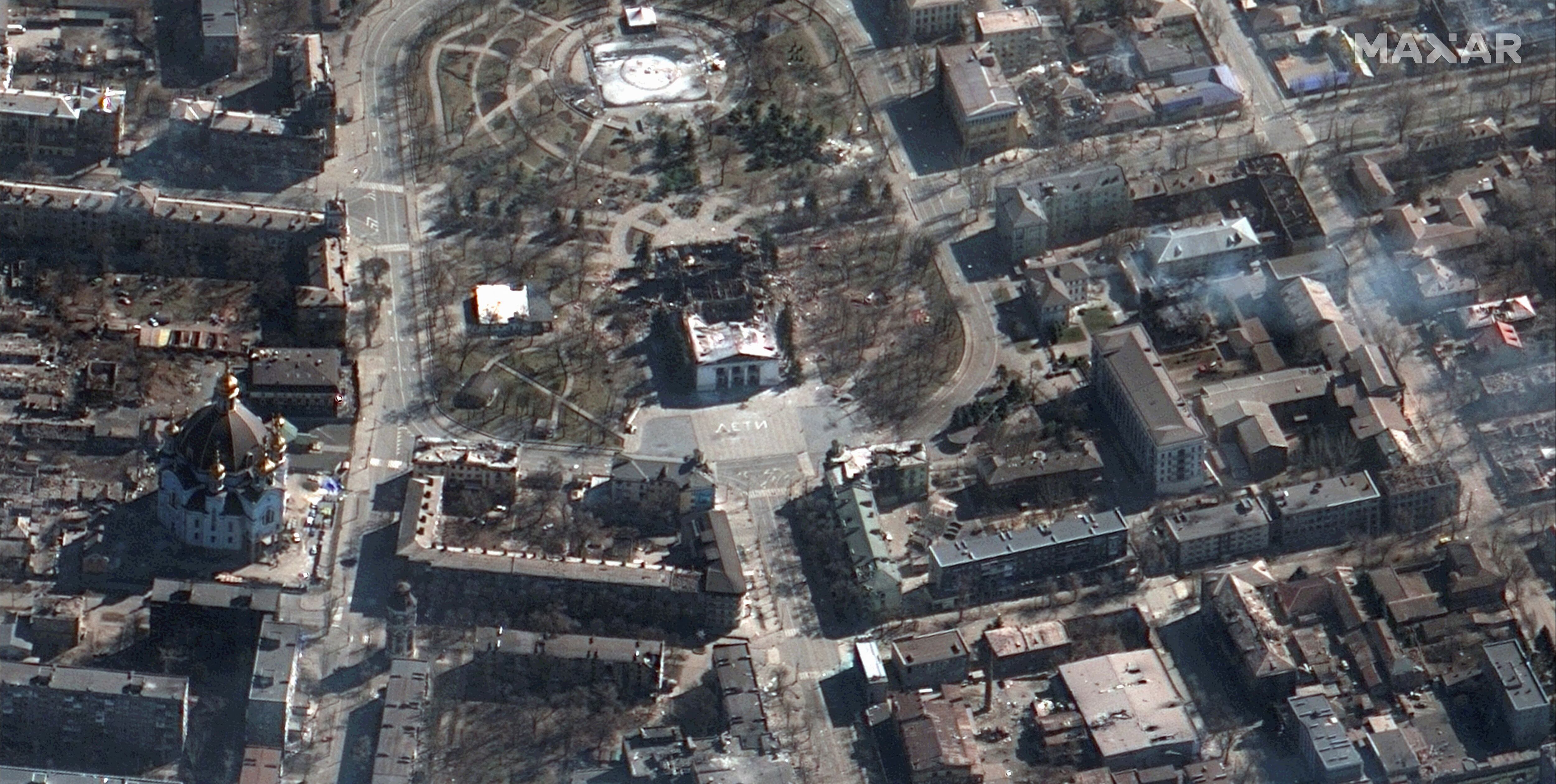
A native of the 'oblast' of Vologda, north of Moscow, Mizintsev - like so many other Soviet soldiers of his generation - was paradoxically trained at the Kiev military academy, before being assigned to East Germany. He then specialized in tactical reconnaissance and commanded Russian troops in the Transcaucasus. It was Valery Gerasimov, chief of staff of the Russian Armed Forces, who looked at Mizintsev's capabilities. His rise, which began in 2011, was meteoric. He led operations in the North Caucasus in 2013, becoming a two-star lieutenant general, until he reached his current position at the NDCC. From there he led the Russian operation in the Syrian war between 2015 and 2016. It left 23,400 civilians dead and another 41,000 injured. Also thousands of cases of torture and children used by Russian troops to go ahead of them in mined areas.
The colonel general came to light last week when he launched the Russian ultimatum to the Mariupol authorities: “Put down your arms. All who do so will be guaranteed safe passage outside the city. The municipal authorities have the opportunity to make a decision and side with the people. Otherwise, the military court that awaits them will be only a small part of what they deserve for the terrible crimes committed that the Russian side is carefully documenting.”
The Ukrainian response was not long in coming. Kiev essentially rejected Russia's ultimatum demanding the surrender of the besieged city. “Ukraine can never accept an ultimatum from Russia. We will all have to be dead, only then can we fulfill the ultimatum for Kharkiv, Mariupol or Kiev,” President Volodymyr Zelensky thundered.
It was when Mizintsev redoubled the stakes and launched the brutal attack on Mariupol. Turned 80% of the city into stones and twisted irons. One hundred thousand civilians, most of them elderly, are under the bombs.
KEEP READING:
Últimas Noticias
Debanhi Escobar: they secured the motel where she was found lifeless in a cistern
Members of the Specialized Prosecutor's Office in Nuevo León secured the Nueva Castilla Motel as part of the investigations into the case

The oldest person in the world died at the age of 119
Kane Tanaka lived in Japan. She was born six months earlier than George Orwell, the same year that the Wright brothers first flew, and Marie Curie became the first woman to win a Nobel Prize

Macabre find in CDMX: they left a body bagged and tied in a taxi
The body was left in the back seats of the car. It was covered with black bags and tied with industrial tape

The eagles of America will face Manchester City in a duel of legends. Here are the details
The top Mexican football champion will play a match with Pep Guardiola's squad in the Lone Star Cup

Why is it good to bring dogs out to know the world when they are puppies
A so-called protection against the spread of diseases threatens the integral development of dogs


