


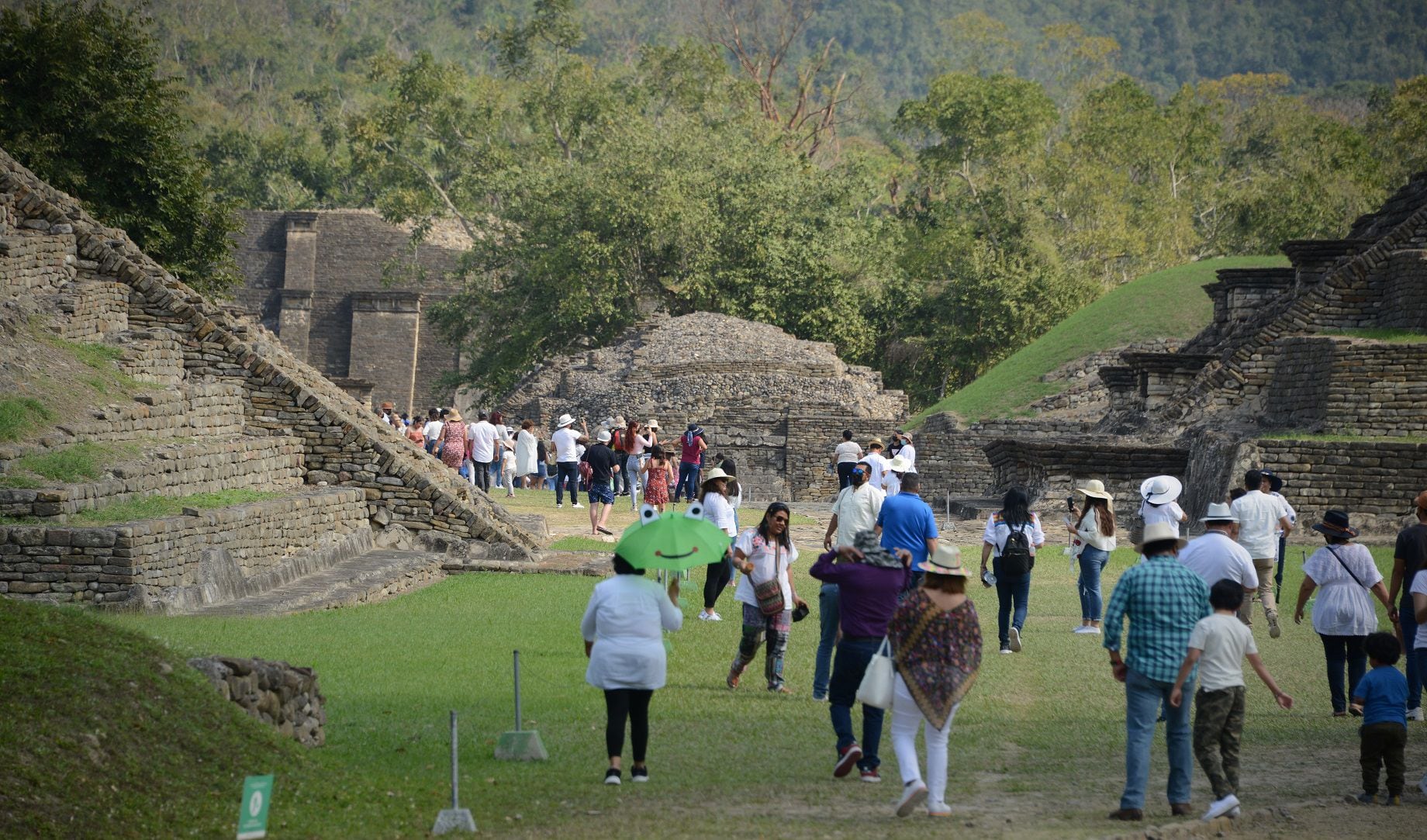
Due to the pandemic caused by COVID-19, several archaeological sites had to close their doors to thousands of visitors from all over the world country. After two long years of waiting, the El Tajín Archaeological Zone, located in Papantla, Veracruz, reactivated its schedule from Monday to Sunday during the spring equinox holiday bridge and received approximately 17,689 visitors according to the National Institute of Anthropology and History (INAH).
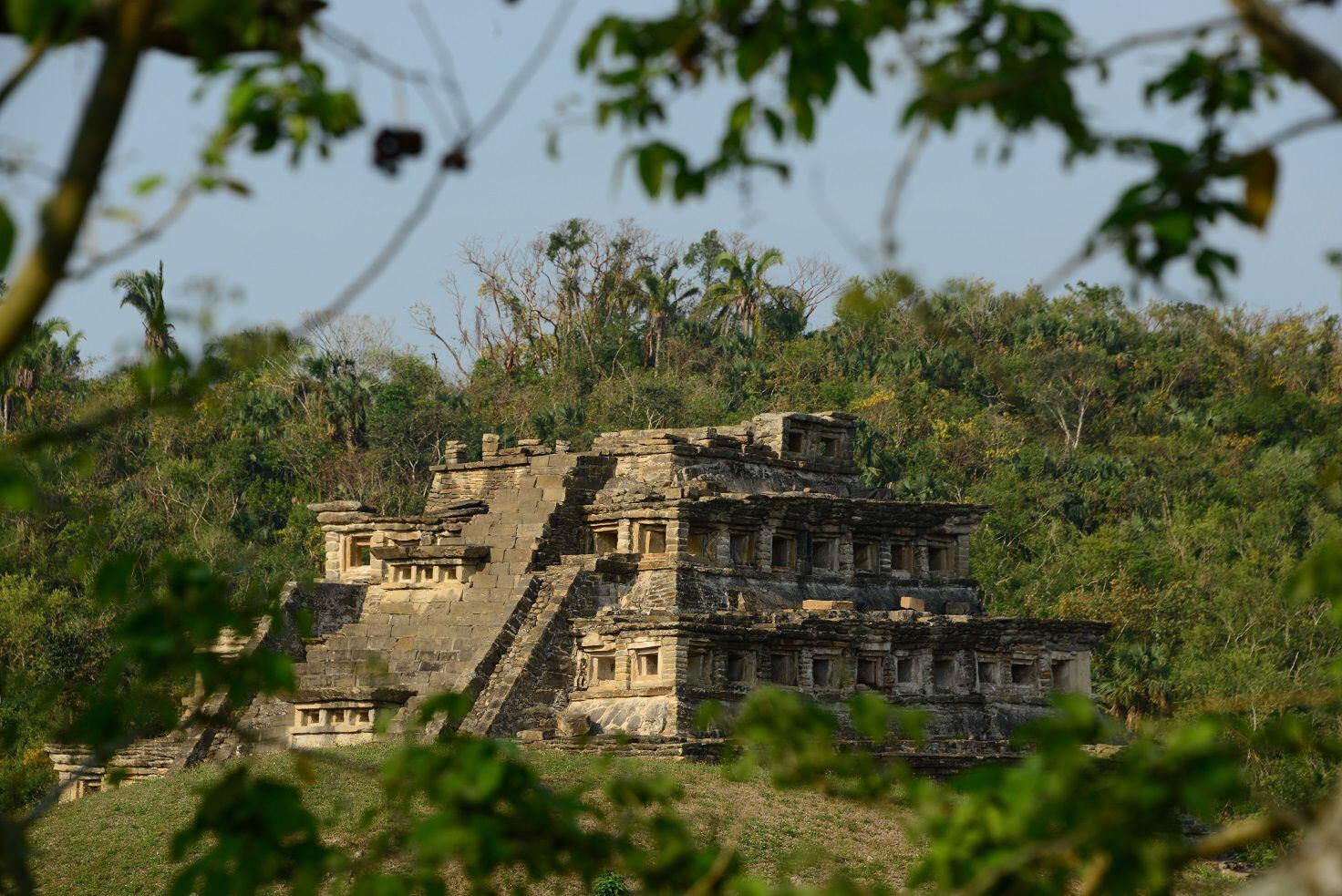
El Tajín is the most important pre-Hispanic Mesoamerican city on the north coast of Veracruz; it is the one with the highest number of ball games, of which there are 17. One of the most important buildings is the Pyramid of Niches, named for the panels that make up its facades.
Through a newsletter, the National Institute of Anthropology and History reported that improvements were made in the Visitor Care Area and horns were installed for periphoneum in Spanish, English and Totonac to remind the public of preventive measures, such as the use of face coverings and antibacterial gel, as well as keeping healthy distance. This was achieved thanks to the efforts of workers, authorities such as the Municipality of Papantla, who provided donations in kind and citizens who joined efforts to revive the heritage area.
Other works that were implemented were the installation of signage in the ticket offices and the entrance hall to the area, delimiters in the toilets. With the reopening of the archaeological site of El Tajín, it contributes to the reactivation of Papantla's economy, and also strengthens the identity link between the heritage site and the local Totonac population, INAH said.
The entrance fee is 85 pesos, students and teachers with a valid credential, seniors, children under 13, retirees, pensioners and people with disabilities enter for free. On Sundays, access is free for the national public and foreigners residing in the country. It is important to keep in mind that to enter with a video camera it is required to pay a fee of approximately 45 pesos.
The archaeological site is open from Monday to Saturday from 10 am to 4 pm, so that the last people who enter do their tour of approximately one hour and the place closes at 5 pm.
There are five main accesses: from the southeast, from Veracruz, from the north from Tampico, Tamaulipas, to the west from Mexico City, to the southwest from Puebla city and to the south from Xalapa Veracruz. Whatever it is, take the state road that reaches the community of El Chote, it is approximately 10 kilometers until you see the entrance of the archaeological zone.
To get there from Mexico City you can go by car, bus or plane. The journey by car takes approximately four hours and 302 kilometers are covered; you must take the Mexico-Pachuca highway until the Tulancingo turnoff, from there it is to continue to Poza Rica.
For the tour it is necessary to pass through the San Cristobal-Entronque Tepexpan Entronque at a cost of 83 pesos. After the Tulancinco Bypass at a cost of 46 pesos, to continue with the booth of the Entronque Tejocotal-Entronque Nuevo Necaxa at a cost of 30 pesos. In total it gives 159 pesos; it is important to mention that this is only the one-way cost without considering gasoline.

KEEP READING:
Últimas Noticias
Debanhi Escobar: they secured the motel where she was found lifeless in a cistern
Members of the Specialized Prosecutor's Office in Nuevo León secured the Nueva Castilla Motel as part of the investigations into the case

The oldest person in the world died at the age of 119
Kane Tanaka lived in Japan. She was born six months earlier than George Orwell, the same year that the Wright brothers first flew, and Marie Curie became the first woman to win a Nobel Prize

Macabre find in CDMX: they left a body bagged and tied in a taxi
The body was left in the back seats of the car. It was covered with black bags and tied with industrial tape

The eagles of America will face Manchester City in a duel of legends. Here are the details
The top Mexican football champion will play a match with Pep Guardiola's squad in the Lone Star Cup

Why is it good to bring dogs out to know the world when they are puppies
A so-called protection against the spread of diseases threatens the integral development of dogs


