


Bahrain shelters the start of Formula 1, which will be almost a new category with the brand new technical regulations. The cars look a little like last year's and their aerodynamic operation changed, which forced words to be added to the category's dictionary. These are key terms that will identify the Máxima in this championship that will be a turning point. Its meanings also serve as a guide.
The radical modifications affected the aerodynamic area that throughout its 72 years was always decisive in F1. In motorsport in general, but in Formula cars in particular, since the air penetrates hard and generates turbulence. To counteract it so that the cars do not lose traction and, therefore, speed, the spoilers and other elements were fitted.
But since last year some aerodynamic attachments began to be restricted such as deflectors on the lower rear, which are the elements that cars wore until 2021 in various sectors to allow better air penetration.
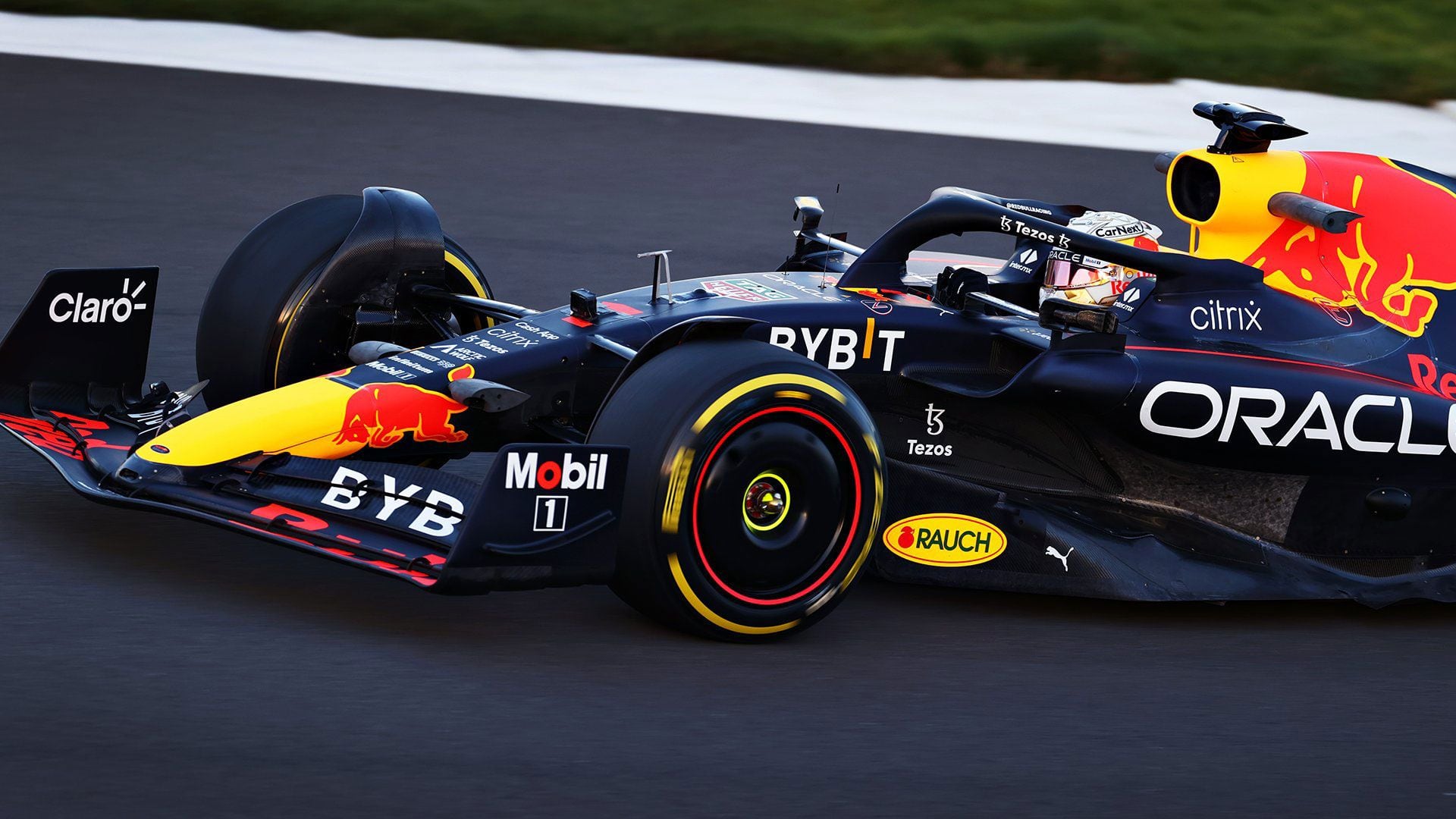
The monoposts of 2022 no longer have most of these elements and their regulations are based on achieving more speed in corners with the so-called “ground effect”, something that returned to the dictionary after 40 years and will be explained below. These are the words that will mark this year's F1 and that serve to understand the brand new era of the category.
Downforce (Downforce). It is also found with the abbreviation DWF. This was always key, but it is necessary to develop it to better understand this new F1. As it was put forward, Formula cars need to stick to the floor so that they can gain speed. For this purpose, attachments such as the front and rear spoilers and other elements are incorporated. Without them it would be very difficult to drive a monoposto and that is why there were training categories such as Formula Ford in England that did not have spoilers and young people learned to drive race cars and became sensitive to the complications of doing so without downforce. Ayrton Senna raced in it and was champion in 1981.
Drag (drag). It is related to the previous one and it is also another common term, but that in 2022 will be elementary. What is resistance to advance? It is the turbulence generated by the air that penetrates the cars head-on and that complicates the traction of the car that loses speed. To counteract this negative effect, cars need downforce or downforce.
Ground effect. It is a system that allows the car to gain speed when cornering. Its operation consists of air entering between the car and the track when the space between the two surfaces decreases, therefore, the pressure exerted by the air fluid decreases, less turbulence is generated, traction is improved and the car runs faster.
It was created by Colin Chapman, the owner and revolutionary designer of Lotus. This invention changed the history of the category and was the reference to follow since 1978, the year in which he was champion with cars called Lotus 78 and 79 and with Mario Andretti. Initially, the mechanism included skirts that were known as “polleritas” at the lower ends of the pontoons, which allowed air to not leave from the sides and enter and exit neatly through the bottom of the chassis. That first version of the ground effect continued until the end of 1982, when the International Automobile Federation (FIA) decided to change the technical regulations because of how dangerous cars became with that system. Of course, today's cars are much safer than those of that time.
By poising. It is the rebound of the cars on the straights and is related to the ground effect and in fact the cars of the period 1978/1982 have already suffered it. It happens because the downforce of the floor sucks the car that gets so close to the ground, until the area for air to pass is so small that it crashes, loses all the load, gets up and the same thing happens again. In short: as there is little space left between the chassis and the asphalt for air to pass through, this rebound is generated. It is something that should have been foreseen in the simulations in the wind tunnel of each team, but it surprised in the preliminary tests and it is the headache that engineers have.
Pontoons. Also known as “Sidepods”, they are the sides of the car that are at the height of where the driver and engine are located. They have existed for 50 years, but over time they gained importance due to aerodynamic development. In other times, with greater freedoms in technical regulations, engineers and designers gave free rein to the imagination and in this way the cars of each team gained in personality and distinguished themselves.
This year these elements played a leading role because it is the place used to achieve better air flow and not lose traction. That is why, bridging the distance, the technicians emulated their peers from past decades and each car has its own stamp. For example, Mercedes hardly wears that element and has that undulating area with clear radiators to help cooling. While Red Bull enjoys a pronounced cut at the bottom or Ferrari shows a ripple in the upper sector.
Words to reinforce.
Although these are terms that have been used in recent years, in a season based on the aerodynamics of cars due to its new regulation, what has already been explained goes hand in hand with the following denominations:
Flat bottom. This is the sector that goes to the lowest height of the monopost and the objective is to reduce the amount of gases that pass through that sector, as well as to forward them to specific areas. The objective of the flat bottom is to increase the downforce, aim at its efficiency and make the car respond in the best way.
diffuser. This is an aerodynamic part located in the back of the car, right where the flat bottom ends and is seen on the underside of the spoilers. It can take different forms depending on the concept of the car proposed by the team.
The purpose of the diffuser is to displace gases passing through the flat bottom to increase the downforce and improve the ground effect. On the other hand, diffusers can generate turbulence through the passing air, which can complicate the car behind, which in turn can be counteracted by the suction effect that is when the car behind sticks to the one in front. It all depends on whether the rider looking for the overpass manages to get closer to the rival ahead.
DRS file. In the case of overruns, the acronym in English for the “Drag Reduction System” (drag reduction system) consists of a hydraulic mechanism located in the rear spoilers of cars and its purpose is precisely to reduce air resistance in order to improve aerodynamic efficiency and gain speed on the straights. It can only be used in certain sectors of a circuit and when a driver is less than a second apart from the one ahead.
Oversteer. In Spanish it means oversteer and it is an effect that is generated when the car bends more than it should in principle as indicated by the driver with the steering wheel. It implies that the car “goes from behind”, that is, when it turns it appears sideways in the rear. This is caused by the entry of wind or the tuning of the car.
Understeer. In Spanish it translates as understeer and it is the opposite of the previous point, that is, to double less than expected or indicated by the driver. The understeer occurs when the car moves in the front area.
From this weekend at the Sakhir International Autodrome, first with the timed tests, then the qualifying and the race, the questions posed by this new season will begin to be answered with the drastic regulatory change. All these words will help as a guide to be able to analyze F1 2022, which ushers in a new era.
KEEP READING:
Últimas Noticias
Debanhi Escobar: they secured the motel where she was found lifeless in a cistern
Members of the Specialized Prosecutor's Office in Nuevo León secured the Nueva Castilla Motel as part of the investigations into the case

The oldest person in the world died at the age of 119
Kane Tanaka lived in Japan. She was born six months earlier than George Orwell, the same year that the Wright brothers first flew, and Marie Curie became the first woman to win a Nobel Prize

Macabre find in CDMX: they left a body bagged and tied in a taxi
The body was left in the back seats of the car. It was covered with black bags and tied with industrial tape

The eagles of America will face Manchester City in a duel of legends. Here are the details
The top Mexican football champion will play a match with Pep Guardiola's squad in the Lone Star Cup

Why is it good to bring dogs out to know the world when they are puppies
A so-called protection against the spread of diseases threatens the integral development of dogs


