


He was born in Lomas de Zamora, but he never considered himself a City Bug. His passion for nature and the desire for an adrenaline-fueled life led him to be a World Citizen. Before turning 23, he had already received a degree in administration from UBA, but his constant vacation to Bariloche aroused a deep feeling with Patagonia. “The stork was wrong about me, left me in a place I didn't like. As a child, I knew that my life was going to be far from Buenos Aires, and rafting was the trigger to take the first step,” Mariano Bianchi told Infobae after a regatta along the Chimehuin River, a few kilometers from San Martín de los Andes.
He defines himself as a fan, partner and lifetime of Racing, but he also has a special fanaticism for the National Team. The World Cup in the United States, in 1994, awakened a spark inside him that would soon become his sacred fire. During his teenage years he regretted that he could not be in Diego Maradona's last show in the albiceleste shirt; and Pomelo, as his friends tell him, understood that he had also had his legs cut off.
It was then that he decided to be present at all editions of the World Cup to follow the national representative. And his first target was France '98. At a time when convertibility was still entrenched, and inflation problems were not yet mentioned in the country, he opened with a colleague a fixed period in which he deposited 100 dollars a month for 4 years. “It was a World Cup Chancho, with which we raised $5,000 for each one to be able to travel to Paris,” recalled the supporter who had his first experience in Europe with the team led by Daniel Passarella.
“We were young, adventurous and eager to know the world. We had rented a car and followed the National Team through Toulouse, Bordeaux, Saint-Étienne and Marseille. When we were eliminated I went to the Basque Country to see some relatives and we just hooked up the San Fermin Festival. It was only then that I realized what had happened. When everyone was screwed up and drunk, I got a melancholic fart with which I didn't stop crying. I couldn't understand Bati's shot on the pole. They were all on tour and I didn't give any more. In Pamplona I dropped the chip!” , revealed the fan with a noticeable nostalgia.
The feat to get tickets in the resale was one of the adversities he had to face during his days in France. “In the debut with Japan it was impossible to achieve, because the Japanese were better off economically. If we were willing to pay $300 for a ticket, they would trigger 1,500. It was a disappointment, because we had made a huge effort to be able to be there and we ended up watching the game in a bar near the court,” he stressed.
Even with the pain caused by Dennis Bergkamp's goal and with no money in his pocket, Pomelo had no alternative but to appeal to survival to begin his return home. “Since a friend had a flight from London, I accompanied him to England and in a town called Canterbury I ended up working collecting apples for a guy from a local market. Since it was harvest time, the man took me to his farm and housed me in a rolling stall.”
His experience lasted several months. Since when it rained the fruits could not be harvested, he learned to use the tractor and develop juices for sale. And when he gathered the money he needed, he got on a bicycle to pedal to London, where he took a flight to Greece. After so many demands (and frustrations), I needed a vacation.
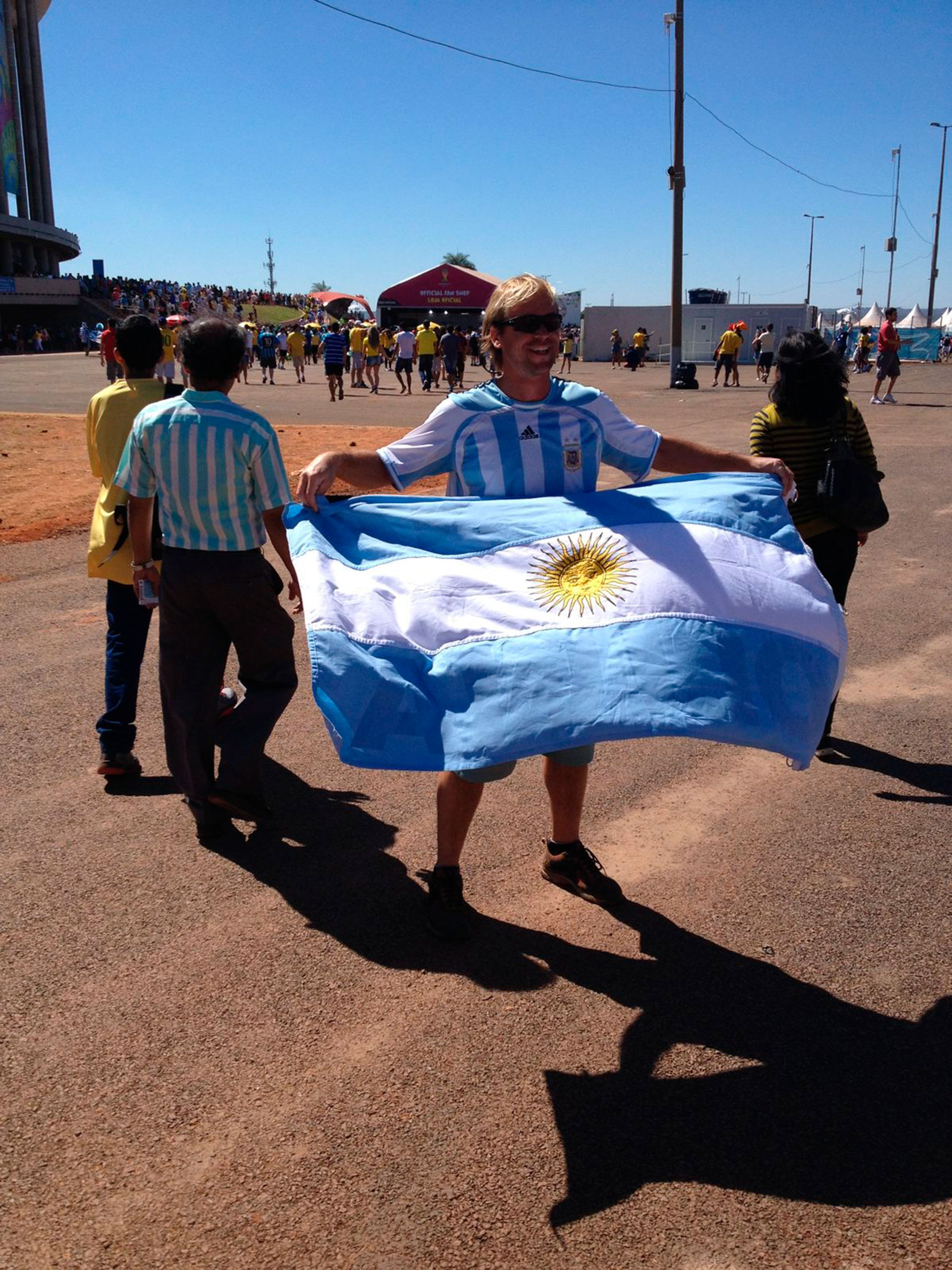
If money was presented as a conflict in 1998, for the edition that took place in Asia things were much more complex. The crisis that broke out in December 2001, the devaluation and the Corralito put Mariano in trouble. “During those years I was working in Spain with rafting and I was able to collect money from there. It was the only time we had tickets for all the matches and unfortunately we were short lived”, he continued on the team's expedition led by Marcelo Bielsa who returned in the first round.
Beyond sporting failure, Pomelo enjoyed the Asian destiny in a surprising way. “In Osaka we pretended to be national team players and ended up signing autographs at a Starbucks for hours,” he laughed. “We also made a lot of friends. To this day I keep in touch with a girl I had met on the court and was a fan of the Ayala Mouse. Since we had taken an inflatable Orca to screw in the stands, when we returned we wanted to send it to Tokyo to keep it as a souvenir; but sending it was a fortune. So, we left her in the lost and found sector and told her to claim it so they could send it to her for free,” he continued.
To live his adventures in Japan he also worked as a rafting instructor in the land of the rising sun, because the savings were not enough. “It was in Sapporo where I enjoyed the World Cup the most. It was very intense. Before the match with England we challenged some British fans to a picadito and played it to the death. For us it was a final and luckily we were able to win them”, he recalled.
Beyond the happiness caused by that Asian incursion, his stay also allowed him to understand the phenomenon of bars. “Since there were few Argentines who had traveled by their own means (many who lived in the United States or Europe), we came across a lot of fans who arrived funded by their own clubs. And once we lived in a complicated situation... ”
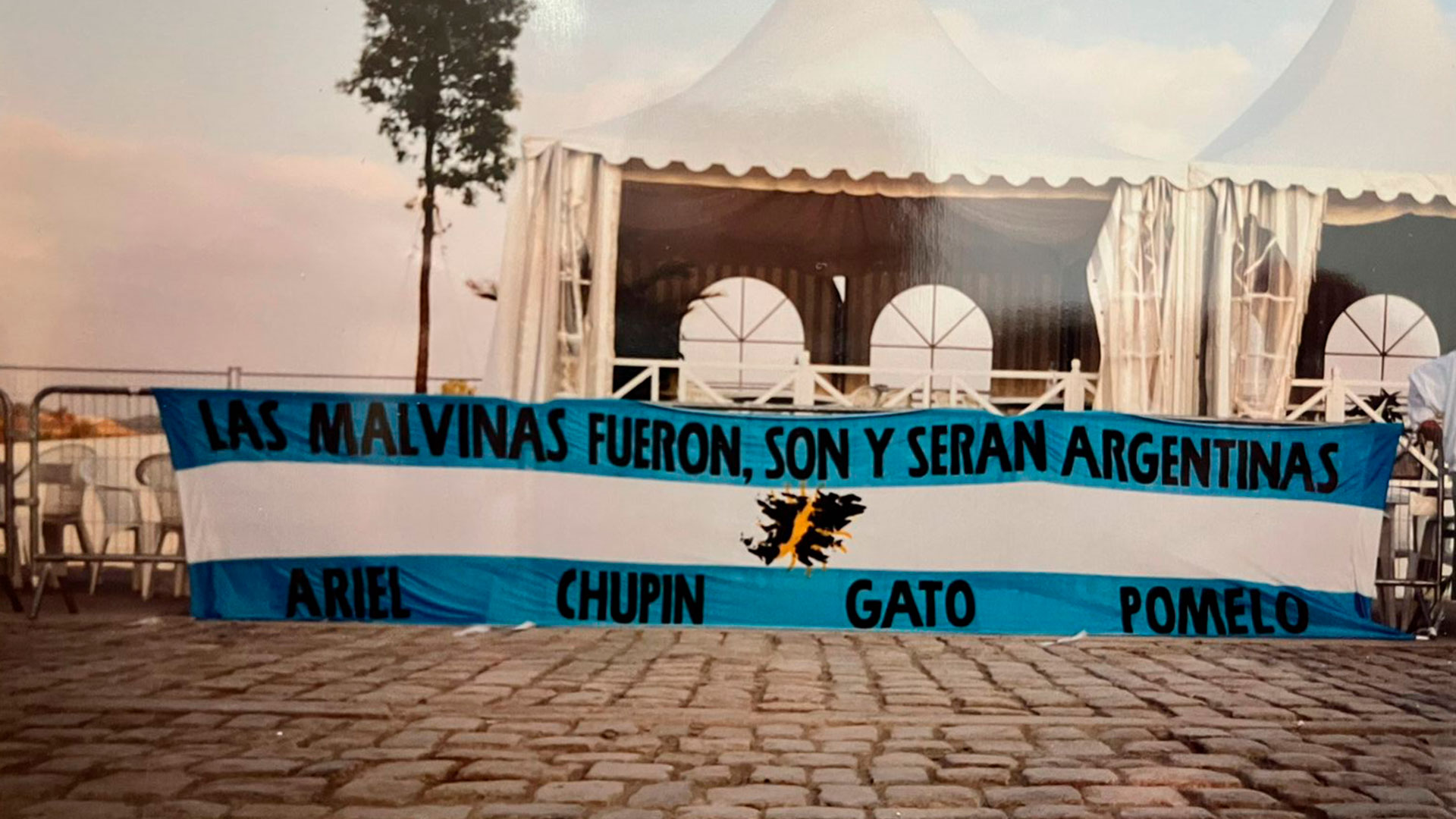
The pause he kept in his story was a sample of what memory represents to him. “We are normal kids who seek to avoid conflicts, they didn't raise us to catch us by horns because life happens on the other side. However, with one of the flags we carry we had problems. It was one that said Las Malvinas were, are and will be Argentinian, but FIFA would not let us enter the stadiums. Then we hung another one that said Los Suenos will never have a playpen. But since the bars wanted to put their rags, they covered it for us. The same thing happened to some guys from Mercedes, who began to argue with the head of the barrabrava in Vélez, who was called Marquitos. Luckily, when the police showed up nothing happened, but when we got back on the train after the defeat everything rotted...”
Fear settled in Argentine supporters. That Marquitos mistook a friend of Mariano's with the young man from Mercedes with whom he had had the altercation in the stands. After several arguments and some kicks, the velezano fan continued to search for the victim until he hit him in the middle of the wagon. “When the doors closed, the skinny guy got paid for the championship. They set up like a kind of ring, in a hand to hand and left the face to misery. Mercedes' kid arrived disfigured. And my friend was terrified because it could have been him because of the physical resemblance.”
During the World Cup organized by Germany in 2006, he experienced the opposite of what his incursion into Asia had left him. At that time he had gotten a job in Tyrol, a region of northern Italy that was annexed to the country of the boot after World War II, and was traveling to the German state to witness the commitments of the albiceleste team. “I was taking a little train from Bolzano, going through the finest part of Austria and arriving in Munich, where I took the high-speed trains to go to the destinations where Pekerman's team played,” he stressed.
Hamburg, Gelsenkirchen, Frankfurt am Main, Leipzig and Berlin were the places where, in addition to bringing his passion, he also enjoyed the occasional local beer. “Several times I had to sleep on the train to go to work the next day at the river in Italy,” he confessed.
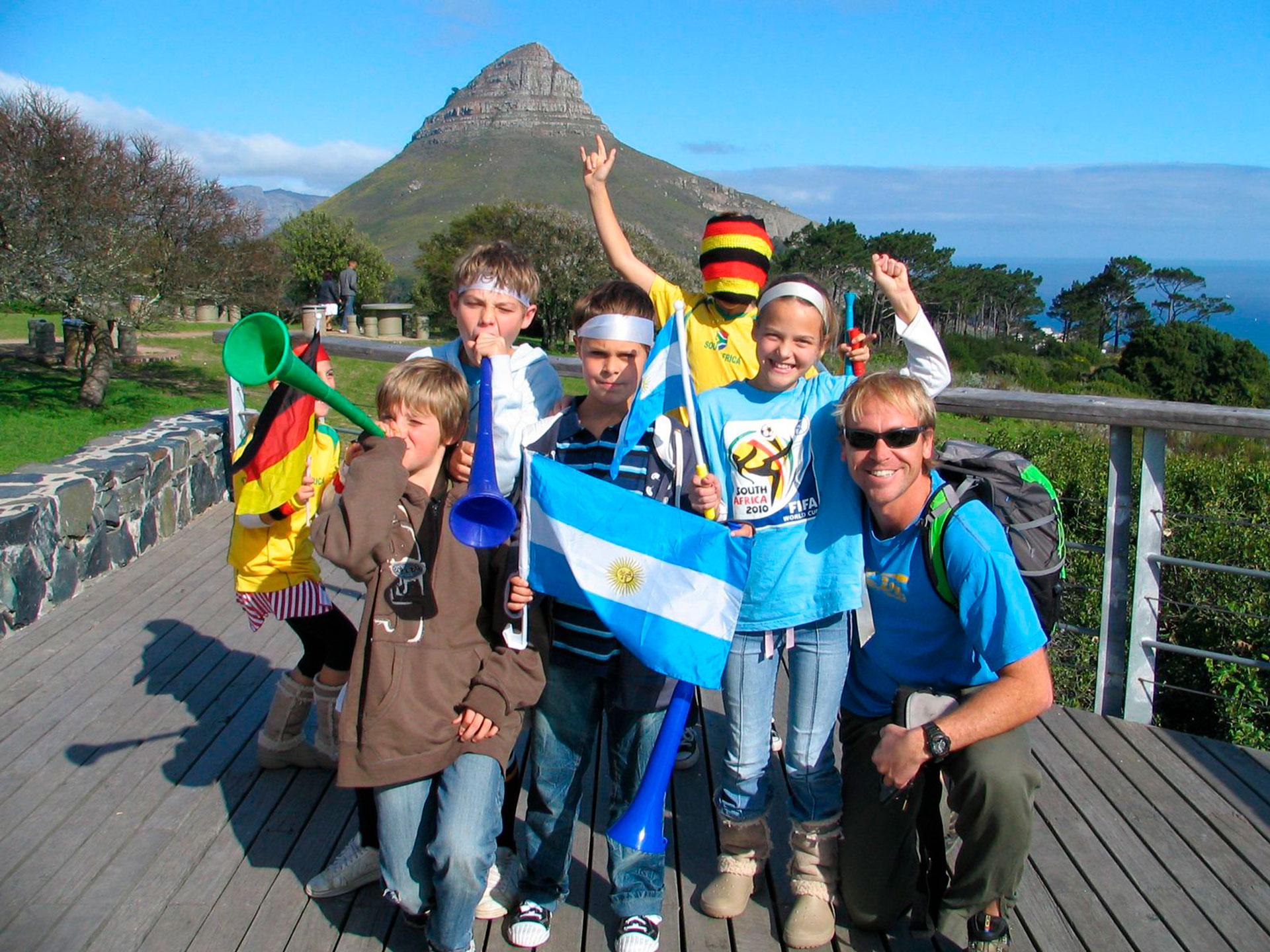
On the other hand, when he organized his expedition to South Africa, he had gotten a job in Scotland, where he met a South African who hosted him during the 2010 edition. “I always try to play the World Cup Chancho, although in the last time I didn't have any fixed deadline,” he acknowledged. His analysis of the first contest on the black continent did not leave a good taste in his mouth. “It was a failure since the organization, because there were few tourists and tickets for the matches were cheaper than the official price. I remember that to get to Durban from Cape Town I had to take a sixties train that took 36 hours.”
When the participation of the team led by Diego Maradona ended with a crushing adverse rout against Germany in the quarterfinals, he had again run out of resources. “After the World Cup I was left without a mango and went to Spain to finish the summer season to work in a confectionery shop,” he acknowledged.
The 2014 edition of Brazil Bianchi classified it as “crazy”, because he could not understand “the number of cars that were moved to follow the National Team”. “I couldn't believe how a ramshackle 147 with an Argentinian patent had gotten there. It was everyone and we were serious locals.”
In Brasilia, before the match with Belgium, he had to sleep in “a telo”, due to the amount of hotel demand in the region. “We came across some correntinos who had sucked themselves at a barbecue and at that dinner they decided to go see the quarterfinals in their car,” he recalled with the amount of humor that the memory provoked. “They had arrived without tickets and since we had two left, we helped them so they could get in and watch the game,” he slipped. He added: “I've never seen so many Argentines in Rio de Janeiro. We copacabana. All with fernet in hand making roasts. A party that unfortunately ended badly.” The scar from the final that the cast of Alejandro Sabella lost has not yet healed in Pomelo's heart.
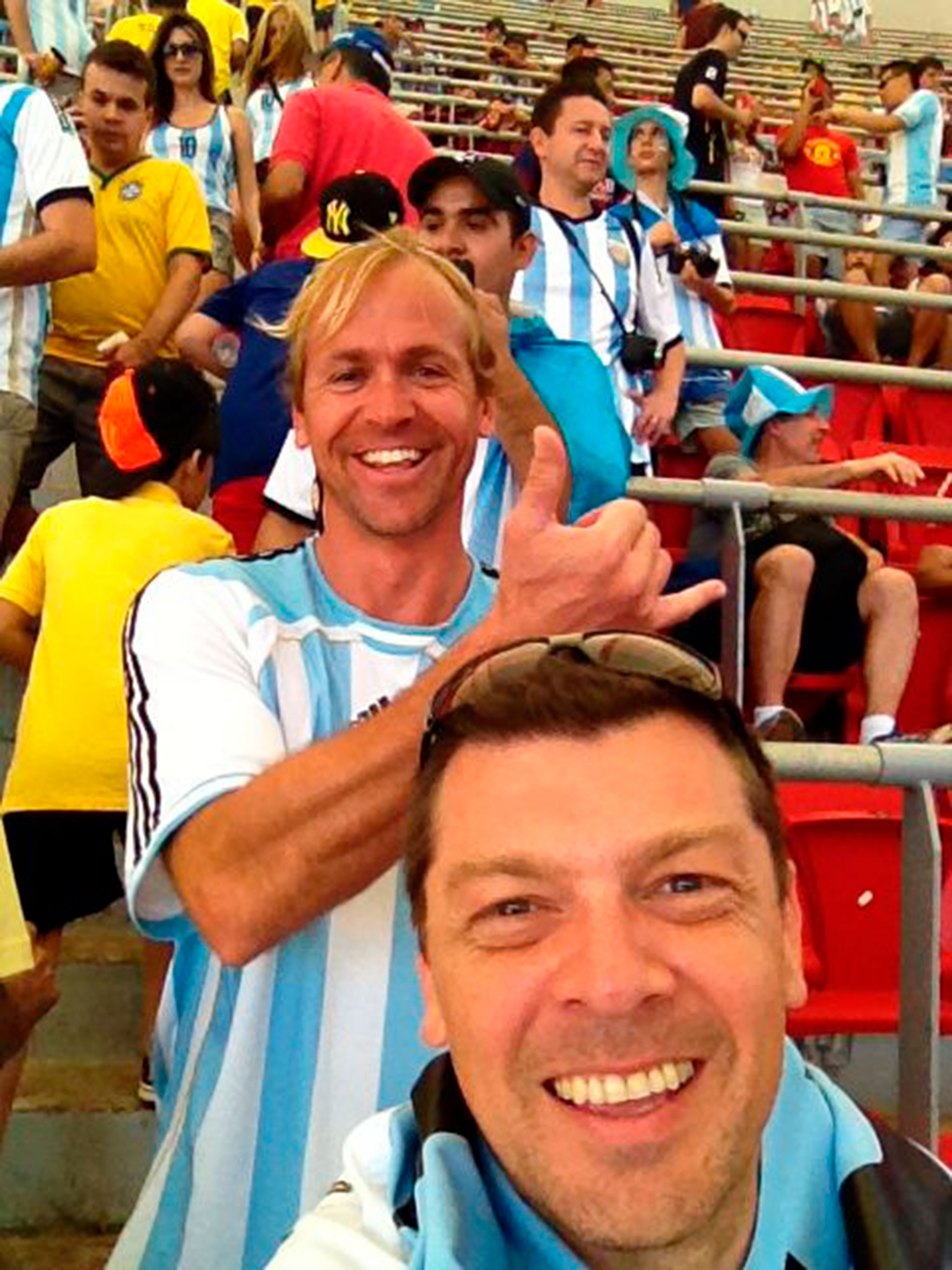
In Russia he had his last experience. It was a trip he took alone, because his friends could not accompany him due to work inconveniences. After meditating on it for days in the previous one, he took the opportunity to visit relatives in Italy and arrived in St. Petersburg to explode with the agonizing goal of Marcos Rojo against Nigeria. “I got my way into the queue at the airport in Catania thanks to some Argentines. A coincidence. I felt that I had led the standings because no one gave two handles for the Sampaoli team,” he revealed.
In the same way, for the round of 16 he again unleaved the daisies because the distance from Kazan was not at all accessible. “Many believe that Russia is developed, but except for Moscow, St. Petersburg and Sochi, the rest of the cities leave much to be desired. The routes are crappy and the bondi took more than 16 hours to the place where it was played against France. People didn't understand me either, because nobody speaks English. It wasn't an easy country. And I noticed that it was a very underdeveloped place,” he added.
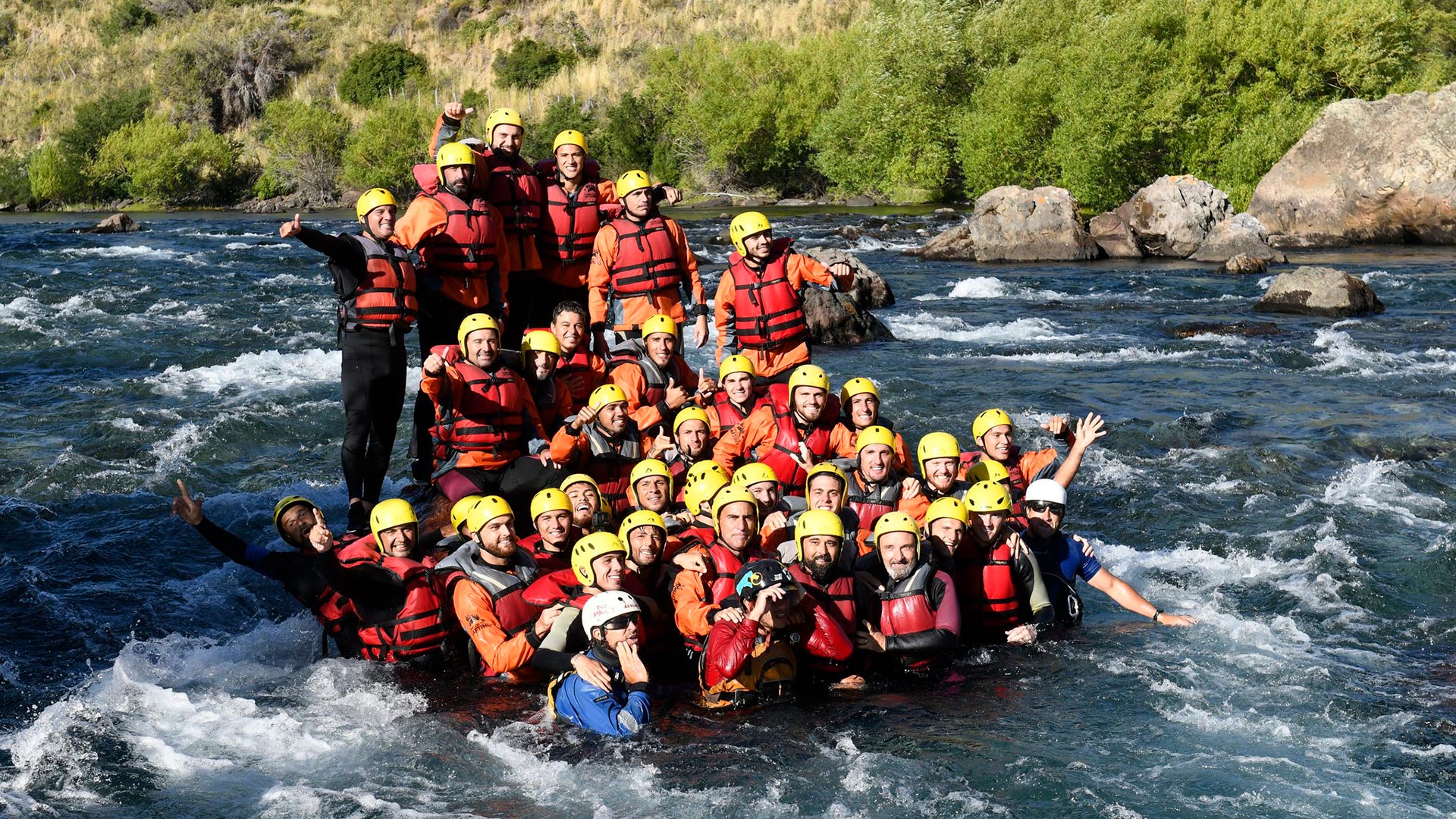
He currently works as a rafting instructor in San Martín de los Andes with Pomelos Tour. Together with his partner Alejandro Klapp he makes excursions through Pireco Turismo. And last summer he had the pleasure of accompanying River's squad during an activity that Marcelo Gallardo had designed for his players. “First the doll came just to do the regatta and get to know what it was all about. He is so linked to the club that he did not want to grab the blue and yellow oars that we have and he did the whole route with one for little ones because they had another color,” he assured with the admiration that the Millionario's performers arouse.
The next day he received the delegation of La Banda Completa, and on his boat he transferred Javier Pinola, Franco Armani, Enzo Pérez, Milton Casco, Jonathan Maidana and three juveniles. Despite his fanaticism for the Academy, he lived an unforgettable day with the stars of Núñez. “It was a great joy, because I was able to get to know the most human side of the footballer. They had a lot of fun: they went from one boat to another, pushed each other and threatened each other with humor. It was also a double-edged sword, because if anyone had had an ugly injury, it would compromise us a lot. Luckily everything went well and they enjoyed as children on a graduate trip.”
Months after what will be a new edition of the World Cup in Qatar, Mariano Bianchi has not yet decided whether to continue the tradition of encouraging the National Team from close range. “I already generated the savings, but I understand that it is a very expensive destination. The problem will be accommodation and daily life, because for flights there would be no problems due to air combinations. It is a small town, which I doubt has the atmosphere of bars around the stadiums. I haven't decided yet, but I'll surely end up going,” he closed. His story is that of a passion without borders.
KEEP READING
Últimas Noticias
Debanhi Escobar: they secured the motel where she was found lifeless in a cistern
Members of the Specialized Prosecutor's Office in Nuevo León secured the Nueva Castilla Motel as part of the investigations into the case

The oldest person in the world died at the age of 119
Kane Tanaka lived in Japan. She was born six months earlier than George Orwell, the same year that the Wright brothers first flew, and Marie Curie became the first woman to win a Nobel Prize

Macabre find in CDMX: they left a body bagged and tied in a taxi
The body was left in the back seats of the car. It was covered with black bags and tied with industrial tape

The eagles of America will face Manchester City in a duel of legends. Here are the details
The top Mexican football champion will play a match with Pep Guardiola's squad in the Lone Star Cup

Why is it good to bring dogs out to know the world when they are puppies
A so-called protection against the spread of diseases threatens the integral development of dogs


