


The former governor of Tucumán José Alperovich was finally summoned to inquire for April 20 to respond to accusations over the allegations of sexual abuse that his niece made more than two years ago. Last December, Alperovich lost his securities as a national senator of the All Front. The prosecutor's office had requested his investigation three times and criminal judge Osvaldo Rappa decided to convene him virtually for that day, at 9.30 a.m.
Everything is part of the complaint made by Alperovich's niece and former advisor on November 22, 2019. “I am here against the oppression of silence and the need to recover my life, to heal by calling things as they are, without softening or dyeing them, giving the monster a name and surname. When you don't name it, it doesn't exist,” he said then,” he said at that time.
“Mine is called José Jorge Alperovich, my second uncle and boss, by whom I was sexually, physically and psychologically violated from December 2017 to May 2019. For a year and a half I suffered violations of my physical and sexual integrity. The encroachment was devastating. So much so that I couldn't even put it into words. He oscillated freely and comfortably in the three scenarios in which I positioned myself: family, work and the horror of intimacy that forced me to live with him,” he said.
As soon as the complaint was known, the then senator said: “I have long been the victim of threats and undue demands from those who now falsely present themselves as a victim.” The political scandal grew and Alperovich asked for a six-month leave without pay in the Upper House. Once that period ended, the Senator's bloc of the Frente de Todos extended that requirement for an “indefinite” period. This is how his term ended last December, without returning to his bench.
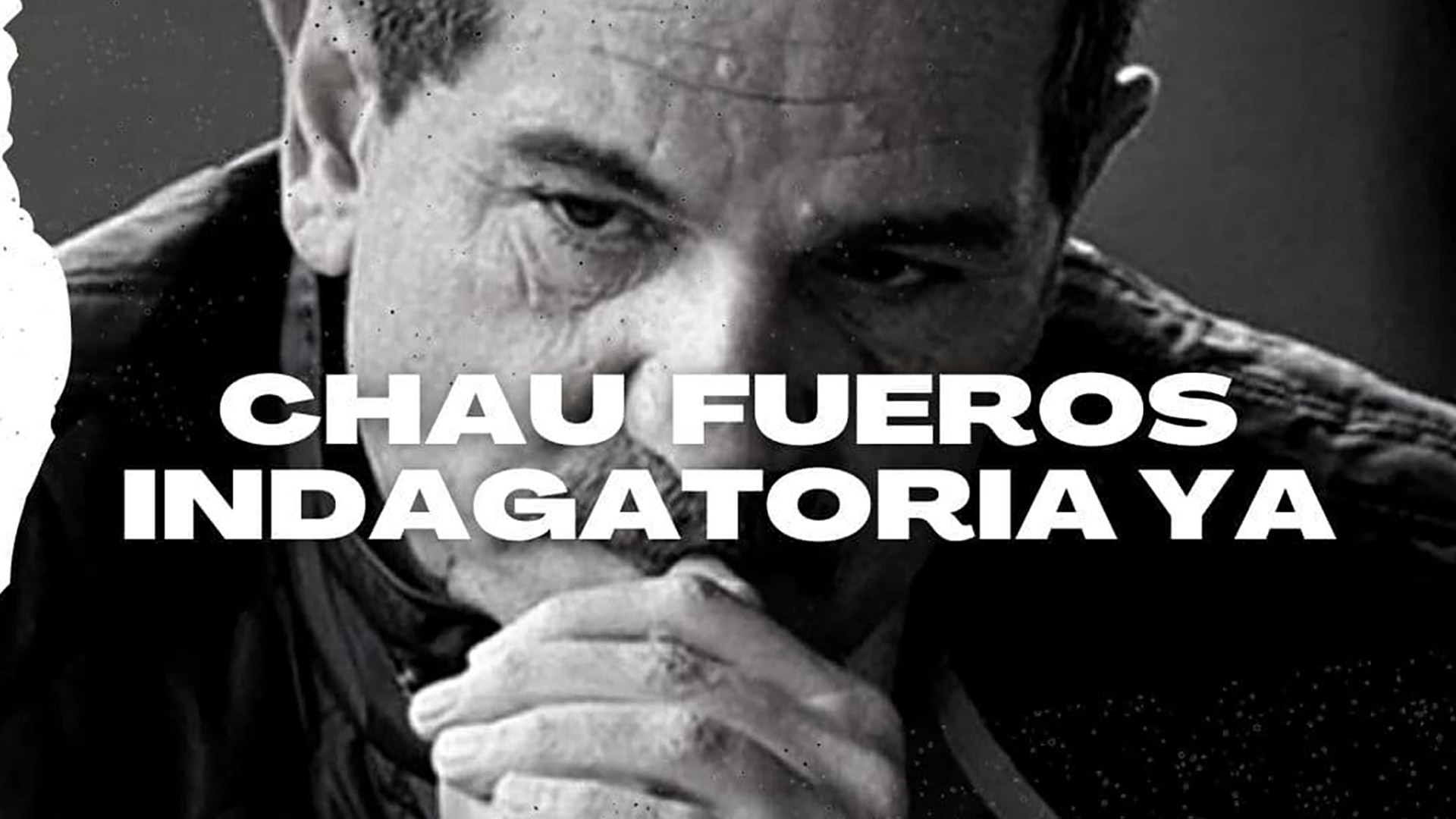
On time, the woman accused him of seven facts. Two of them would have taken place in the province of northern Argentina, while the other five in CABA. Two cases were then opened, one in Tucumán and the other in Buenos Aires. They both said they were incompetent. It was the Supreme Court that decided that it should be investigated in the Federal Capital.
On December 30, 2020, while the vote on the abortion law was being defined in Congress, prosecutors Santiago Vismara and Mariana Labozzetta, from the Specialized Tax Unit for Violence Against Women (UFEM), demanded the former governor's inquiry. They argued that cases of sexual abuse are committed in an area of privacy where it is not always possible to have direct witnesses of what happened. And they pointed out that: “For this reason, women victims of this type of aggression and abuse face great difficulties in reporting them, all of which has led to the development of public policies that, since the justice service, have been developed for some years, in order to guarantee them effective and timely assistance.”
In their opinion, the prosecutors highlighted the psychological expert report, the medical records, the communications between the victim and Alperovich, which granted “evidentiary force” to the complainant's statements. They emphasized the need to apply “an evidentiary standard”, that is, to consider assumptions that contribute to the demonstration of the facts “provided that these are serious, precise and consistent indications”.
Labozzetta and Vismara also noted: “It can be argued that the most important evidence in these cases is the sayings of the victim and the elements gathered must be evaluated under the guideline established by the Convention on the Elimination of All Forms of Discrimination against Women.” They added to this that in the file there are “plenty of charge elements” that support these claims.
And in the case of the complainant, they stressed that the relationship of asymmetry was also crossed by the employment relationship she had with Alperovich and the position of power that he held, not only in the matter of work but also at the provincial and national levels.
In addition to the family relationship, the prosecutors took into account the age difference (35 years); the situation of employment dependence; the fact that Alperovich was and is a renowned politician with provincial and national influence, who ruled Tucumán, the province where the complainant currently lives. In her denunciation, the young woman recounted the context of “permanent control and humiliation in which this relationship developed, the constant imperative tone of him towards it and the naturalization of the environment of obscene phrases uttered by him and to others”.
Prosecutors Vismara and Labozzetta concluded that Alperovich should be investigated because the facts against him “fall within a context of sexual, domestic violence and gender-based workplace harassment.”
There were no answers to the proposal and prosecutors reiterated it last December. “The vast majority of cases of sexual abuse such as the present one are committed in an area of intimacy where it is not always possible to have eyewitnesses of what happened. For this reason, women victims of this type of aggression and abuse face great difficulties when it comes to reporting them, all of which has led to the development of public policies that, since the justice service, have been developed some years ago, in order to guarantee them effective and timely assistance”, had explained the representatives of the Public Prosecutor's Office in the opinion they presented in December 2021.
Once again, the request was reformulated this week. “There is an evidentiary picture with sufficient significance that allows the factual situation to be framed to the procedural norm defined in article 294 of the Code of Criminal Procedure of the Nation, giving the species the state of suspicion to which it alludes,” they insisted. Now, Judge Rappa signed the call for inquiry. The former governor is due to present himself for that statement on April 20.
Continue reading
Últimas Noticias
Debanhi Escobar: they secured the motel where she was found lifeless in a cistern
Members of the Specialized Prosecutor's Office in Nuevo León secured the Nueva Castilla Motel as part of the investigations into the case

The oldest person in the world died at the age of 119
Kane Tanaka lived in Japan. She was born six months earlier than George Orwell, the same year that the Wright brothers first flew, and Marie Curie became the first woman to win a Nobel Prize

Macabre find in CDMX: they left a body bagged and tied in a taxi
The body was left in the back seats of the car. It was covered with black bags and tied with industrial tape

The eagles of America will face Manchester City in a duel of legends. Here are the details
The top Mexican football champion will play a match with Pep Guardiola's squad in the Lone Star Cup

Why is it good to bring dogs out to know the world when they are puppies
A so-called protection against the spread of diseases threatens the integral development of dogs


