


The October 27, 2010 census projected that by 2020 the Argentine population would be 46,800,000 citizens. A little less than twelve years have passed since that forecast. The range of estimation error increased with the postponement of the eleventh National Census of Population, Households and Housing, scheduled for 2020 and ruled out due to the coronavirus pandemic. The main idea of the survey is to count all the people who inhabit Argentine soil at any given time: the dwellings, the households, the demographic and socioeconomic characteristics of its inhabitants. “It will be possible to know how many we are, what we are like and how we live”, defines the National Institute of Statistics and Censuses (INDEC), responsible for coordinating the survey.
It will begin in the first minute of Wednesday, March 16, 2022, when the “digital census” button is enabled, which appears in the upper right corner of the censo.gob.ar website. It will be the first time that a bimodal census will be held in the country: digital and face-to-face. For 63 correlative days - the option will be invalidated at eight o'clock in the morning of Wednesday, May 18 - citizens will be able to complete the form from any digital device with an internet connection.
PUBLICIDAD
This is a milestone with a record in the region: Colombia, Mexico and Chile have already implemented similar records. The global trend is towards a digital record of the population, protected by a wide network of connectivity: 70% of the inhabitants of the United States answer the questionnaire digitally and in Spain the survey is close to being exclusively digital. In Colombia, in pre-pandemic times - before the lockdown developed a greater habituality of digital tools - the percentage of digital data load was only 15 percent.
Between November and December 2021, an experimental census was organized in the country, an operation that allowed testing the application of the bimodal combination around digital survey and territorial sweeping. In Gálvez, department of San Jerónimo in the province of Santa Fe, 35% of the 8,140 homes preferred to provide data digitally. In two fractions of communes 2 and 5 of the Autonomous City of Buenos Aires, the percentage fell: only 22% of the 10,681 homes did so through an electronic system. In both cases, however, there was no advocacy campaign. The INDEC authorities do not dare to foresee a percentage that represents the success of the bimodal program, but the feeling is auspicious: 80% of people who went through the experimental phase of the census said they would choose the digital option to respond.
PUBLICIDAD
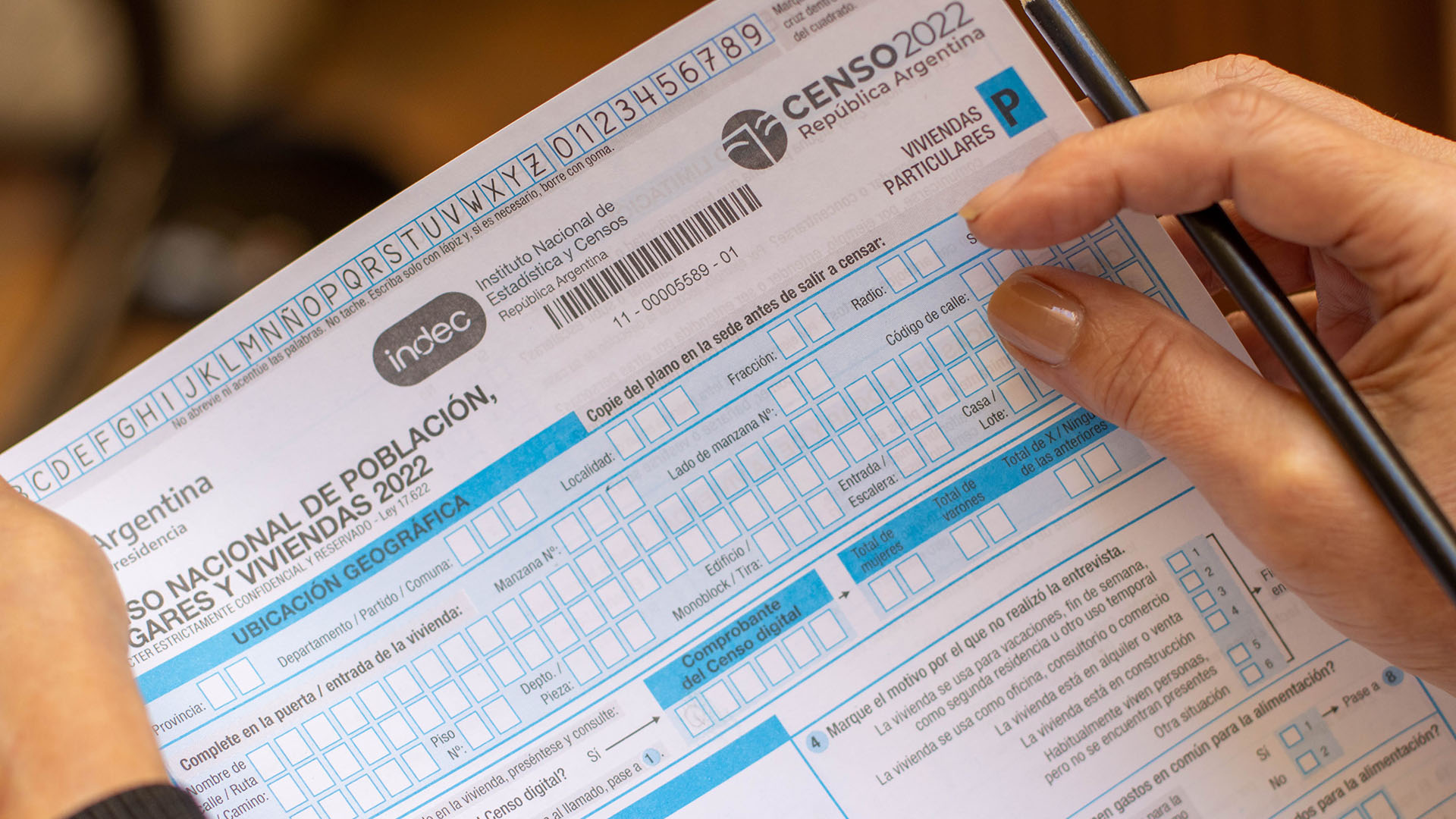
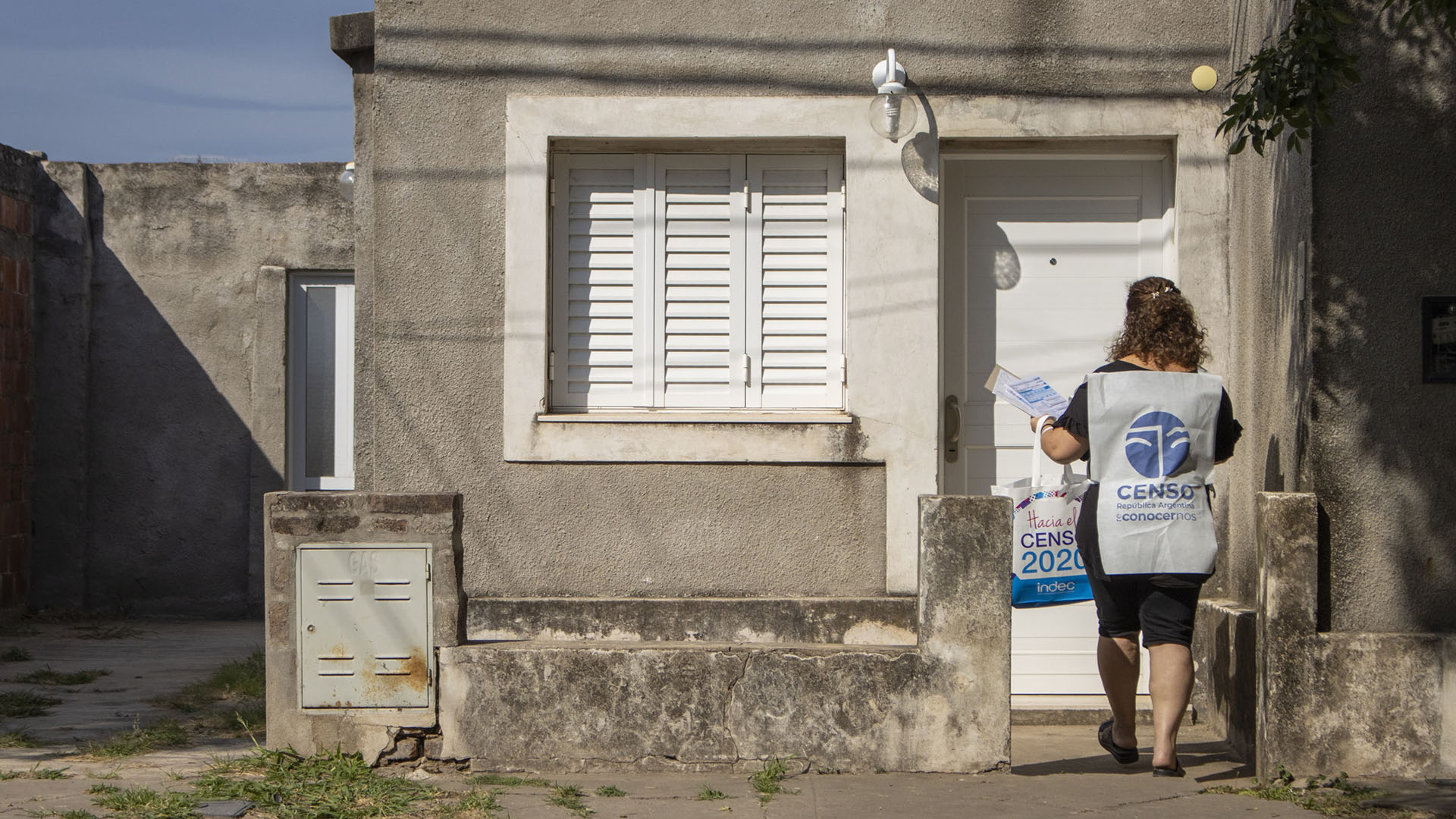
Online uploading of information does not replace face-to-face visits. The booklet underlines the important word and explains: “The digital census does not exempt that we should be in our homes on the day of the face-to-face census.” That day will be Wednesday, May 18, a national holiday guaranteed by Decree 42/2022, and census takers will visit all homes in the country between eight in the morning and six in the afternoon. Of the 600,000 people who make up the census structure, 456,000 are census takers of urban agglomerates. In turn, there will be special regimes for people in street situations with specific census takers, collective housing operatives - geriatrics, prisons, hospitals, religious centers, residential hotels, hostels - and surveys in rural areas. These visits will take place between 16 and 17 May. Volunteers, university students and preferably teachers, will visit 36 urban dwellings called normal or 18 considered complex (popular neighborhoods or areas difficult to access). They will work a maximum of eight hours and get an economic remuneration of six thousand pesos.
PUBLICIDAD
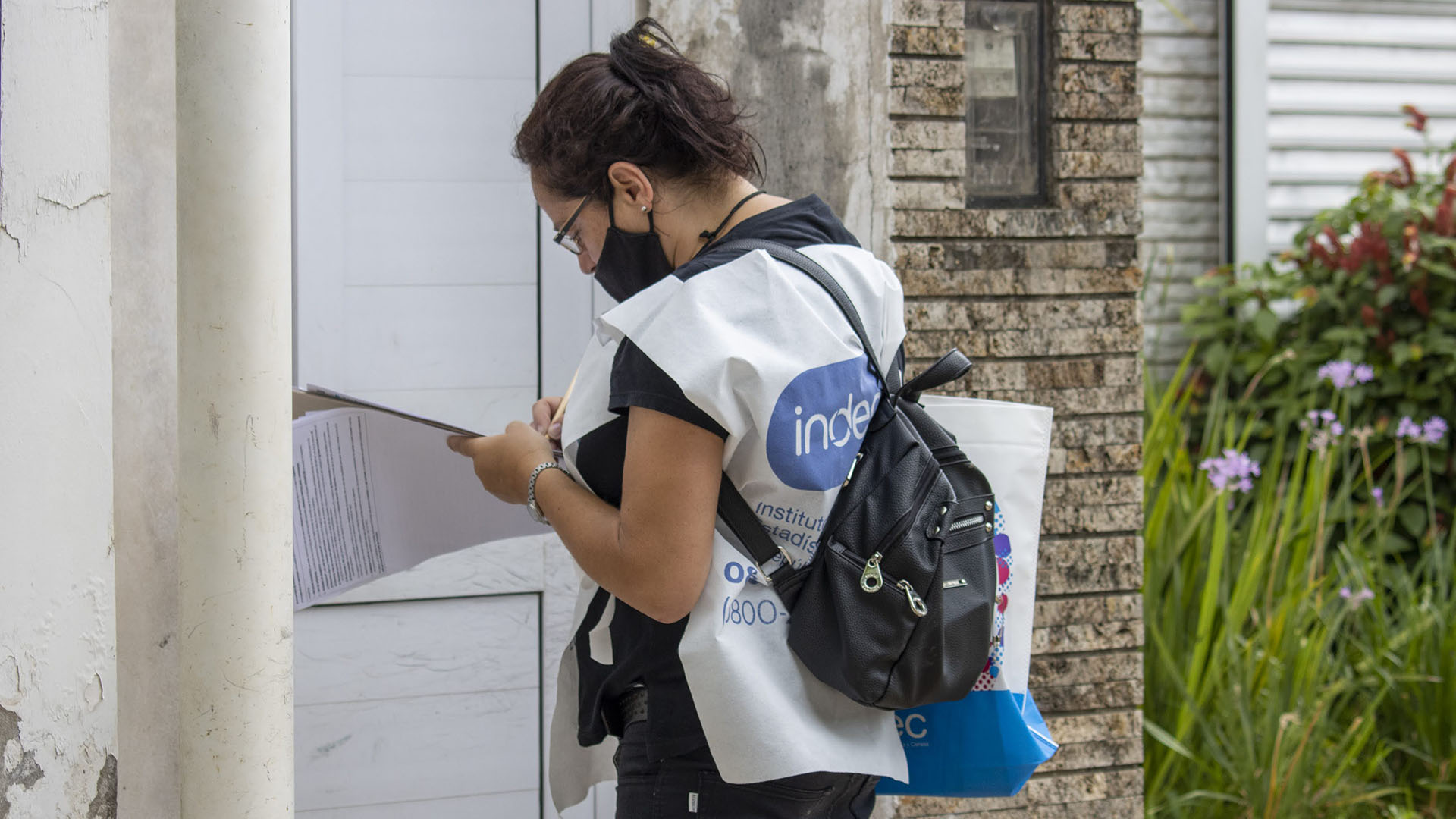
They will wear a representative chest and a credential with their personal data (name, surname and ID). The authorities suggest, for reasons of health prevention, that the survey should be carried out at the door of the house. “It is not necessary for the census taker to enter your home,” says the FAQ portal. It is estimated that the questionnaire for a typical family of four will not take more than fifteen minutes.
The online response suppresses the response time to a mere face-to-face procedure. The person who receives the census taker must prove the proof they will obtain when completing the digital census: it is a six-digit alphanumeric code that does not need to be printed or displayed. Only by naming it, the census taker will be able to verify the complete and correct loading of the information. This code will be similar (the only difference is that it will add a number at the end), to the unique five-digit code associated with the house, a previous procedure in which the address must be validated and that enables the loading of the information into a system that will allow the process to be saved and continued at another time. Authorities assume that completing the online form should not take more than ten minutes.
PUBLICIDAD
There are, at most, 61 unique questions for all the inhabitants of the country. In the 2010 census, which is remembered for coinciding with the day of Néstor Kirchner's death, there were two modalities: the basic one and the extended one. The basic was general and had 35 questions. The enlarged one was answered by 10% of the population and involved 67 consultations. This new survey, in addition to digital innovation, will have a fundamental change: it will be a “census of law” and not a “de facto census”. For the first time in the country, people who habitually reside in each dwelling will be computed to portray a more reliable image. Therefore, people who slept that night in that house will no longer be portrayed, in order to reduce circumstantial events. “This is much better in methodological terms because it allows you to better identify where the population consumes public services, for example,” they say from Indec.
PUBLICIDAD
The 61 questions are divided into two modules: that of the household - regarding access to services, characteristics of housing, among other conditions - and that of each person who is a member of the household. In the printed form there are twelve pages and the order is altered in the online spreadsheets. There are new questions and language changes compared to the previous census: twelve years passed, laws passed and new demands from society.
Gender identity, for example. “What is the sex registered at birth?” has three possible answers: “female/female”, “male/male” and “X, none of the above”. The amendment follows Presidential Decree No. 476/21 published on July 21, 2021, which approves the existence of the non-binary document: it is the first country in the region to recognize identities beyond binary gender categories in registration and identification systems. Another question is: “According to gender identity, it is considered...”. The options are nine and it responds to Law 26,743 which recognizes the right to have a self-perceived sexual identity in the national document and which was sanctioned by the Senate on May 9, 2012, two years after the previous census.
PUBLICIDAD
There are other questions aimed at self-perception: 22 and 25. The first one says: “Do you consider yourself indigenous or descendant of indigenous or original peoples? ”. The second query: “Do you recognize yourself as Afro-descendant or do you have black or African ancestors? ”. Both questions were added to the general form after they integrated the expanded questionnaire of the past census, which collected only 10% of the data from the total population.
PUBLICIDAD
This expanded version also brought together issues relating to the limitations and difficulties faced by the inhabitants. The INDEC form omits the word disability and appeals to the terms “limitation” and “difficulty”, adopted in accordance with the recommendations of international expert bodies for the measurement of disability, such as ECLAC and the United Nations regional representation. They will reveal whether people in homes have difficulty walking or climbing stairs; remembering or concentrating; communicating, understanding, or being understood by others; hearing, even with hearing aids; seeing, even with glasses; and eating, bathing, or dressing alone.
There was also special care in language and semantics. In the 1991 census, the word “female boss” was added to the question of the relationship with “the head of the household”. In 2010, the order was altered: first the word “boss” appeared. In this last census, the term “head of household” was maintained and the concept “household reference” was added to gradually displace the allusion that patterns exist in a household. The consultation ended up as follows: “What is the relationship or kinship with the head, boss or the reference person of the household?”
PUBLICIDAD
There are no questions about the coronavirus or the vaccination schedule. The surnames of the registered persons will not be asked as statistical secrecy applies: all information is confidential and will be provided in aggregate form. Nor did issues related to national idiosyncrasies pass the filter: pets, religion and favorite football team. “There were a lot of questions left on the outside. Censuses must accompany the country's culture and football is part of Argentine culture. It seems like a simple question but not: we would have to include all the football teams in the country in the form and that would be very long,” they argued from the official body. Responding to the number and type of pets or chosen religion would also hinder the processing of the data.
The survey is supported by closed questions. Of the 61, there are only three that can be completed by neatly typing the letters within the allocated spaces. Open questions are the main economic activity of the household, which native people do they perceive themselves of (in the digital census there are 68 pre-filled options plus the “other” option) and what is the country of birth if they are not Argentine (you can only mark eight South American nations with one x eight).
From Wednesday, March 16 to Wednesday, May 18, the virtual upload of the data will then be available. The 0800-345-2022 line will be open from 6 a.m. to 24 a.m. from Monday to Friday, and from 9 a.m. to 9 p.m. on Saturdays and Sundays to advise on online charging. The number of people who prefer to complete the form through the digital channel will determine the speed of delivery of the first conclusions. On Thursday, May 19, 2022, Indec plans to report how many inhabitants live in Argentina. We will work with information packages. Three months later there will be a preliminary estimate of the basic rates: sex, ages, regions. After eight months, the first definitive data will be communicated and after a year and a half the processing of all variables will be completed with the scanning and decoding of the main economic activities of each household.
The estimate is that there are more than 47 million people living in the country. 153 years passed since the first one in Argentina: it was between September 15 and 17, 1869, under the presidency of Domingo Faustino Sarmiento. There were 1,830,214 inhabitants in the country, 6,276 members of the army in operations in Paraguay and about 41,000 Argentine citizens abroad. 93,138 inhabitants of native peoples were not recorded.
KEEP READING:
PUBLICIDAD
PUBLICIDAD
Últimas Noticias
Debanhi Escobar: they secured the motel where she was found lifeless in a cistern
Members of the Specialized Prosecutor's Office in Nuevo León secured the Nueva Castilla Motel as part of the investigations into the case

The oldest person in the world died at the age of 119
Kane Tanaka lived in Japan. She was born six months earlier than George Orwell, the same year that the Wright brothers first flew, and Marie Curie became the first woman to win a Nobel Prize

Macabre find in CDMX: they left a body bagged and tied in a taxi
The body was left in the back seats of the car. It was covered with black bags and tied with industrial tape

The eagles of America will face Manchester City in a duel of legends. Here are the details
The top Mexican football champion will play a match with Pep Guardiola's squad in the Lone Star Cup

Why is it good to bring dogs out to know the world when they are puppies
A so-called protection against the spread of diseases threatens the integral development of dogs


