


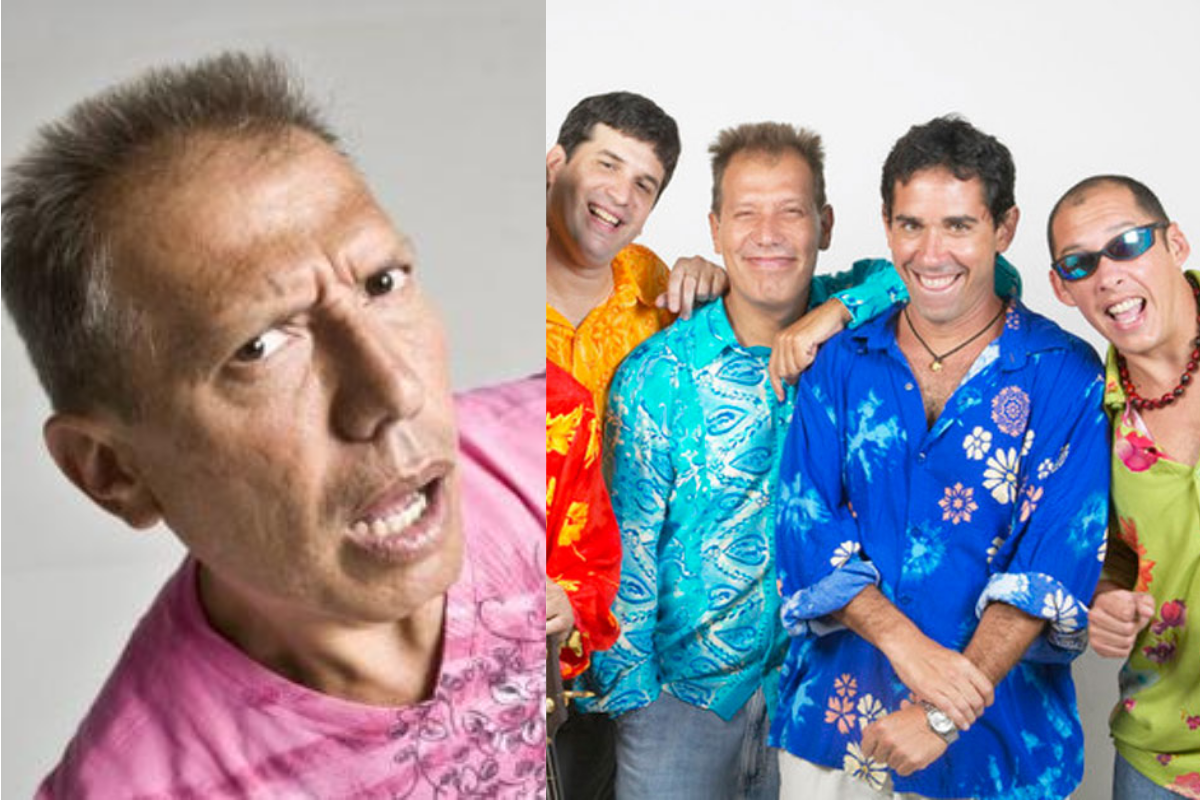
The band Nosequío y los Nosequantos was formed in the late 80s, when Peru was going through one of its most difficult times with terrorism. Fernando Ríos, who was in charge of playing bass, sought Raul Romero to be the lead vocalist.
Together they formed one of the most famous groups in Peru that sang songs that were full of jokes, criticisms and satires of the problems that the Peruvian government was going through with the sole purpose of cheering its audience.
For more than 20 years they won the hearts of their fans, however, in 2011 he went on a break and stopped performing live. This would have been one of the reasons why Raúl Romero left the band, as in 2013 he announced the separation of the NSQ and NSC.
This is how, in 2014 the popular 'Cara de Haba' was released as a soloist so as not to leave one of his great passions as music. In addition, he released his first solo debut album called “Solito” which is in the salsa genre.
“The decision to go out as a soloist implies a break with the group, at least, a chapter closure. Those who want to see the Nosewho are going to meet only Raul,” he said at the time in an interview with a local media outlet
“I haven't left the group to be the former singer of the Noseiqui and the great memories. I'm betting on a new product. It is a risk, yes, but this moment is a milestone for me,” he added to RPP in 2014.
Currently, the TV presenter continues to work on his musical career, since he is performing concerts in the province and, as he declared some time ago, he is focused on continuing to write songs that are recorded in the public's memory and he is not interested in returning to television.
It should be noted that another of the talents in which Raúl Romero stood out is driving, since he has been in charge of managing different programs nationwide and one of the most memorable is” Habacilar” during the years 2003 to 2011.
GERMAN VARGAS ACCUSES RAÚL ROMERO OF COPYING SONGS AND CREATING CONFLICTS IN THE BAND
Germán Vargas, former drummer of Noseuquien and Los Nosecuántos between 1989 and 1990, told the hidden story of the Peruvian rock band through an extensive Twitter thread, where he not only accused Raúl Romero to copy songs by other authors, but also to cause conflicts within the music group.
According to his version: “The story of the I Don't Know Who begins in my room, at my house, with Fernando Ríos, a friend of the school. I played drums and he played bass. Kids, we were 16 or something like that,” he said. At another time, he wrote that the quarrels began after the success of the song “Magdalena”, precisely during the creation of the song “Las Torres”, officially released in 1991.
He also accused him of appropriating the lyrics of other little-known singers. Raúl plagiarized Spanish songs without telling us (...) Raúl plagiarized songs by his friends at the University, such as Ato Buroncle, for example (...) He is an artist, but a crooked human being,” he said.
“In the history of the nosewho there are many more things, stories of betrayal, of personalisms, much beyond music. Fame is a perverse path,” added one of the band's founders.
KEEP READING
Últimas Noticias
Debanhi Escobar: they secured the motel where she was found lifeless in a cistern
Members of the Specialized Prosecutor's Office in Nuevo León secured the Nueva Castilla Motel as part of the investigations into the case

The oldest person in the world died at the age of 119
Kane Tanaka lived in Japan. She was born six months earlier than George Orwell, the same year that the Wright brothers first flew, and Marie Curie became the first woman to win a Nobel Prize

Macabre find in CDMX: they left a body bagged and tied in a taxi
The body was left in the back seats of the car. It was covered with black bags and tied with industrial tape

The eagles of America will face Manchester City in a duel of legends. Here are the details
The top Mexican football champion will play a match with Pep Guardiola's squad in the Lone Star Cup

Why is it good to bring dogs out to know the world when they are puppies
A so-called protection against the spread of diseases threatens the integral development of dogs


