


U.S. Senator Marco Rubio urged the White House to pay more attention to China's growing influence in Latin America and the Caribbean, even as another US adversary, Russia, waves its saber in the region amid mounting geopolitical tensions over Ukraine.
The Republican for Florida, as the senior member of the foreign relations subcommittee for Latin America, is co-chairing a hearing Thursday with US officials and experts to discuss China's diplomacy and agreements in the region.
In dialogue with the AP news agency, Rubio said he is concerned that US officials and resources correctly focused on the confrontation with Vladimir Putin in Ukraine will be distracted from the threat posed by Beijing in the region.
“Russia is an acute problem and it is a current challenge,” Rubio said. “But it's a five-year or ten-year problem. China is a 100-year problem, both in the region and internationally,” he added.
Immediately after Putin's invasion of Ukraine, senior officials in Moscow warned that Russia could deploy troops or military assets in Cuba and Venezuela “if the United States and NATO insist on meddling at Russia's door.”
Rubio said the threats were mostly “bluffing” aimed at gaining influence over the United States while attracting ordinary Russians who were sympathetic to Putin's narrative of great power.
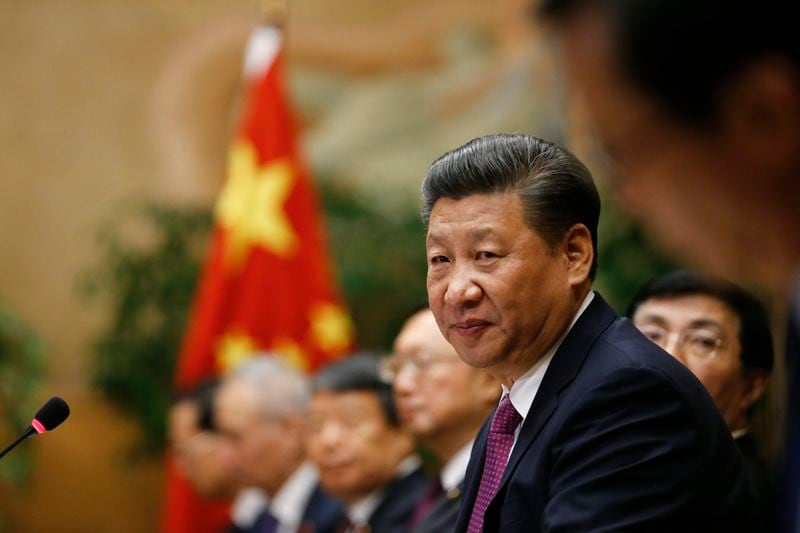
But he said that the real strategic threat is posed by China, whose influence successive US administrations have not been able to curb. Beijing is now the main trading partner of several Latin American countries, it finances major infrastructure projects and during the pandemic it rushed to send airplanes full of necessary vaccines and medical supplies.
The Trump administration sought to warn governments in the region that they would become vulnerable to hacking and threats to national security if they built their telecommunications systems by purchasing subsidized products sold by Huawei from China, which has restrictions on purchasing some components and technology from USA.
However, these concerns have so far largely failed to deter governments with liquidity problems.
“It's hard to compete,” admitted Rubio, who is often consulted by conservative leaders in the region about US politics. “It's what they can afford, frankly, and then they (the Chinese officials) finance it. Therefore, it has a legitimate need and there is only one company in the world that seems to meet the requirements in terms of profitability.”
He then said that the US should do more to encourage adoption of what is known as Open RAN technology, a cheaper cloud-based alternative to Huawei's 5G technology.
“Hopefully we can offer that as an alternative. But once these things are installed in a country's infrastructure network, it's hard to get them out,” he said.
(With information from AP)
KEEP READING:
Últimas Noticias
Debanhi Escobar: they secured the motel where she was found lifeless in a cistern
Members of the Specialized Prosecutor's Office in Nuevo León secured the Nueva Castilla Motel as part of the investigations into the case

The oldest person in the world died at the age of 119
Kane Tanaka lived in Japan. She was born six months earlier than George Orwell, the same year that the Wright brothers first flew, and Marie Curie became the first woman to win a Nobel Prize

Macabre find in CDMX: they left a body bagged and tied in a taxi
The body was left in the back seats of the car. It was covered with black bags and tied with industrial tape

The eagles of America will face Manchester City in a duel of legends. Here are the details
The top Mexican football champion will play a match with Pep Guardiola's squad in the Lone Star Cup

Why is it good to bring dogs out to know the world when they are puppies
A so-called protection against the spread of diseases threatens the integral development of dogs


