


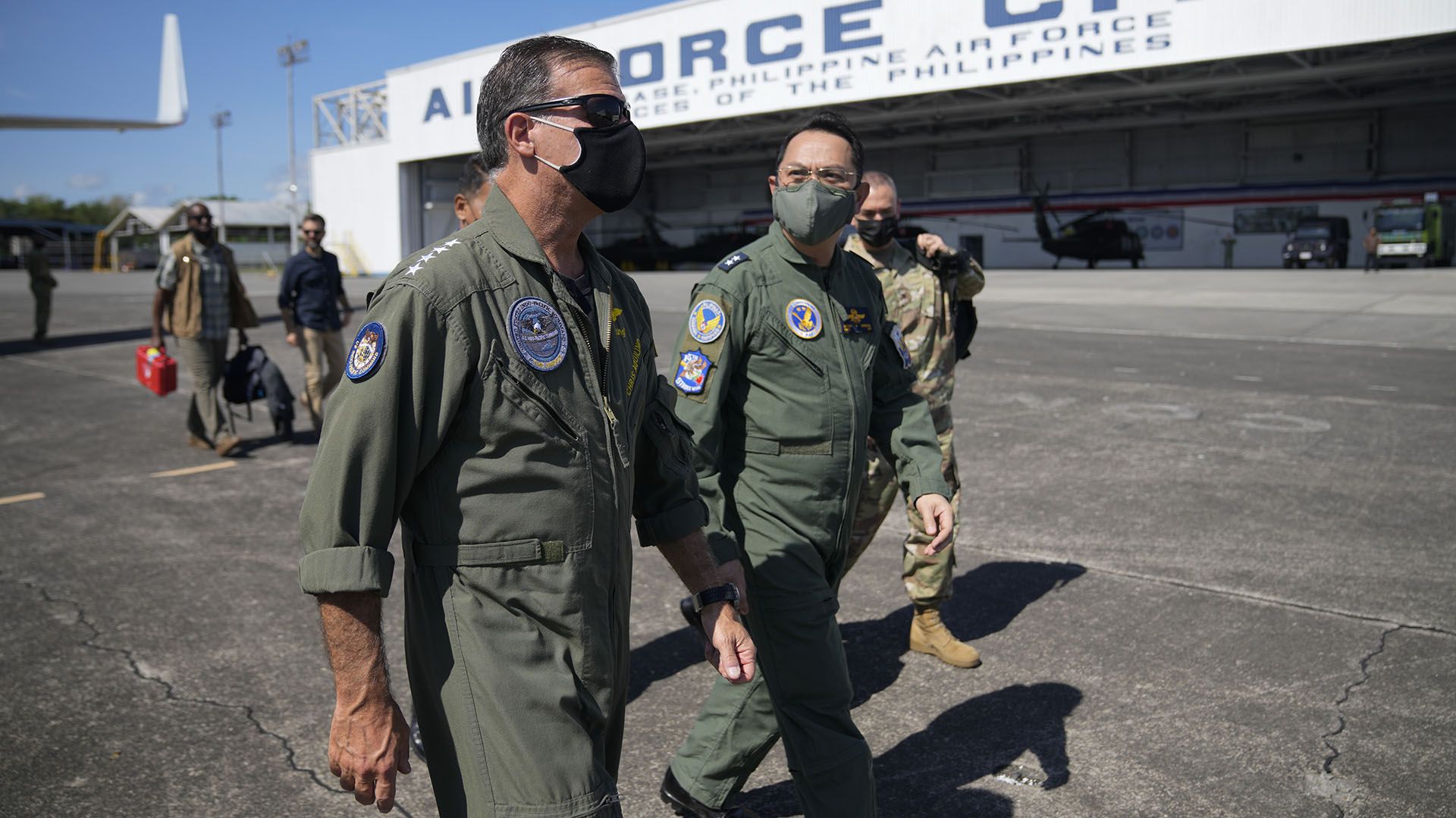
China has completely militarized at least three of the several islands it built in the disputed South China Sea, arming them with anti-ship and anti-aircraft missile systems, laser and interference equipment and fighter jets in an increasingly aggressive move that threatens all nations operating nearby, said Sunday a high military commander of the United States.
The US commander of the Indo-Pacific, Admiral John C. Aquilino, said the hostile actions were in stark contrast to Chinese President Xi Jinping's past assurances that Beijing would not transform artificial islands into disputed waters into military bases. The efforts were part of China's bending of its military muscle, he said.
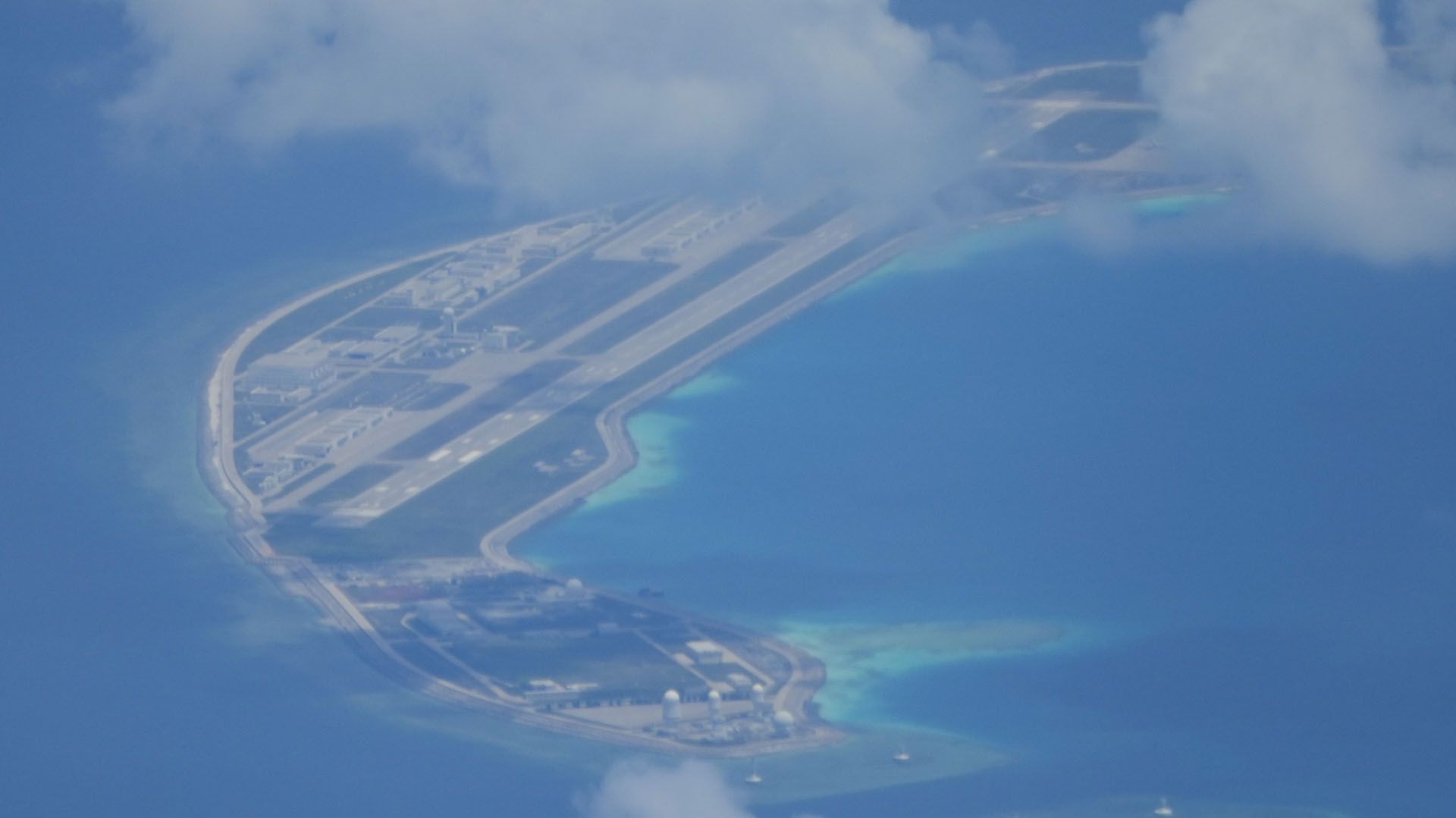
“I think that in the last 20 years we have witnessed the greatest military accumulation since World War II by the People's Republic of China,” Aquilino told The Associated Press in an interview, using the initials of China's formal name. “They have advanced in all their capacities and that accumulation of weapons is destabilizing for the region.”
There were no immediate comments from Chinese officials. Beijing maintains that its military profile is purely defensive, ready to protect what it says are its sovereign rights. But after years of increased military spending, China now has the second largest defense budget in the world after the United States and is rapidly modernizing its force with weapon systems including the J-20 poacher, hypersonic missiles and two aircraft carriers, with a third under construction.
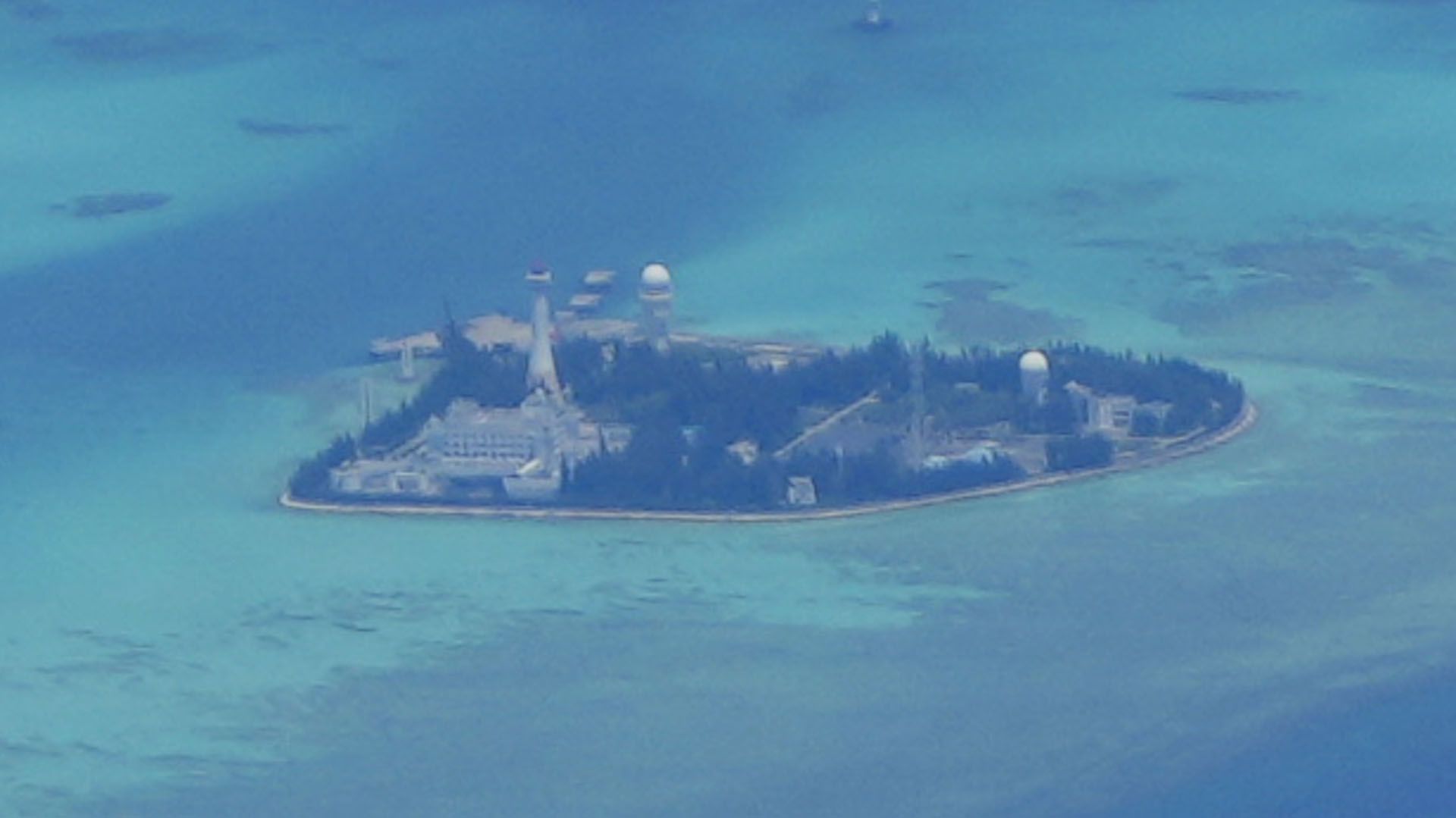
Aquilino spoke to the AP aboard a US Navy reconnaissance aircraft that flew near Chinese-controlled outposts in the Spratly archipelago of the South China Sea, one of the most disputed regions in the world. During the patrol, the P-8A Poseidon aircraft was repeatedly warned by Chinese callers that it illegally entered what they said was China's territory and ordered the plane to leave.
“China has sovereignty over the Spratly Islands, as well as over the surrounding maritime areas. Stay away immediately to avoid misjudgments,” said one of the harsh radio messages in a veiled threat.
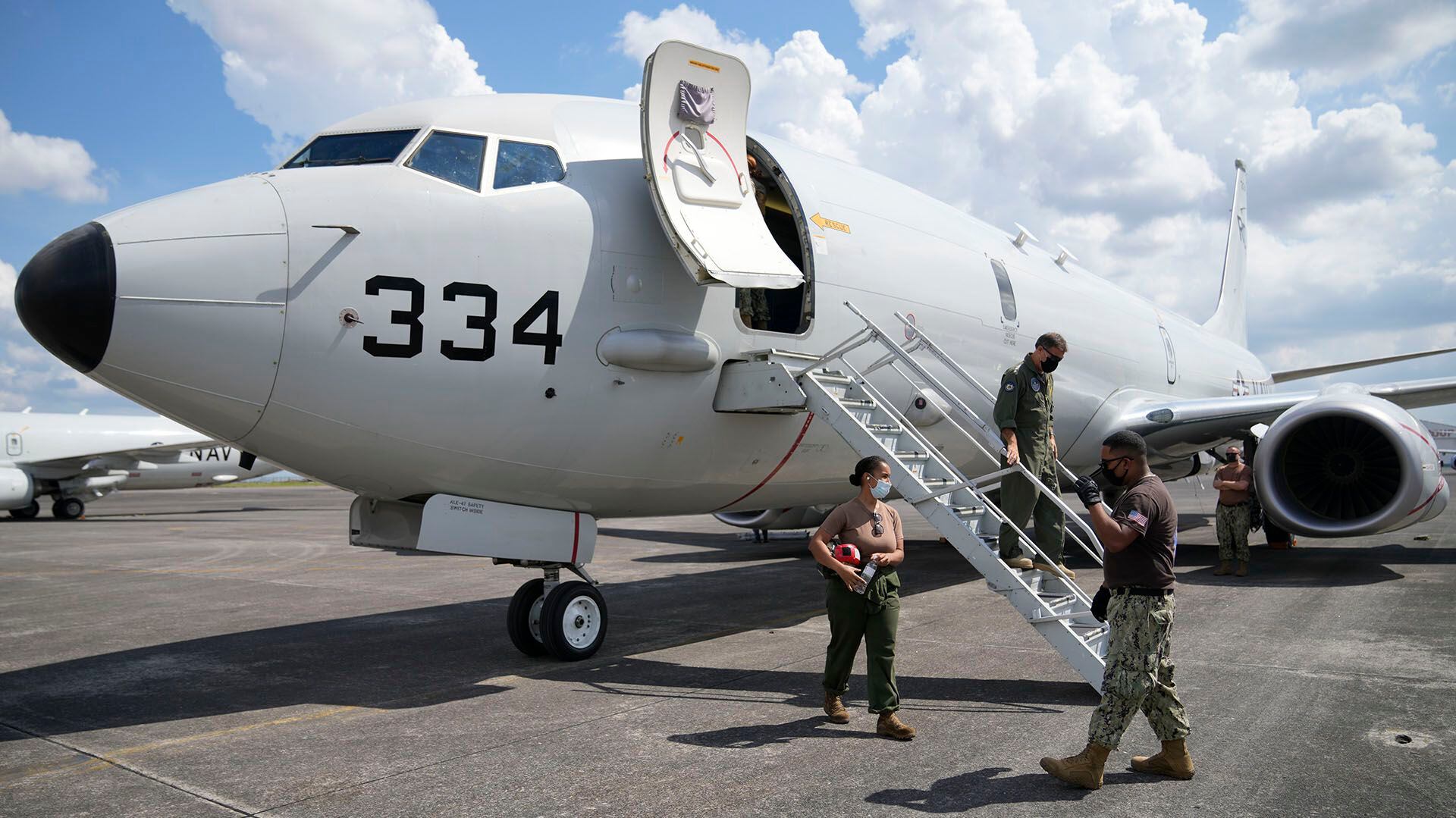
But the US Navy plane dismissed the multiple warnings and went ahead defiantly with its reconnaissance in brief but tense moments witnessed by two AP journalists invited on board. “I am a sovereign immune US naval aircraft that carries out legal military activities beyond the national airspace of any coastal state,” an American pilot responded by radio to the Chinese.
“The exercise of these rights is guaranteed by international law and I am operating with due regard to the rights and duties of all states,” he said.
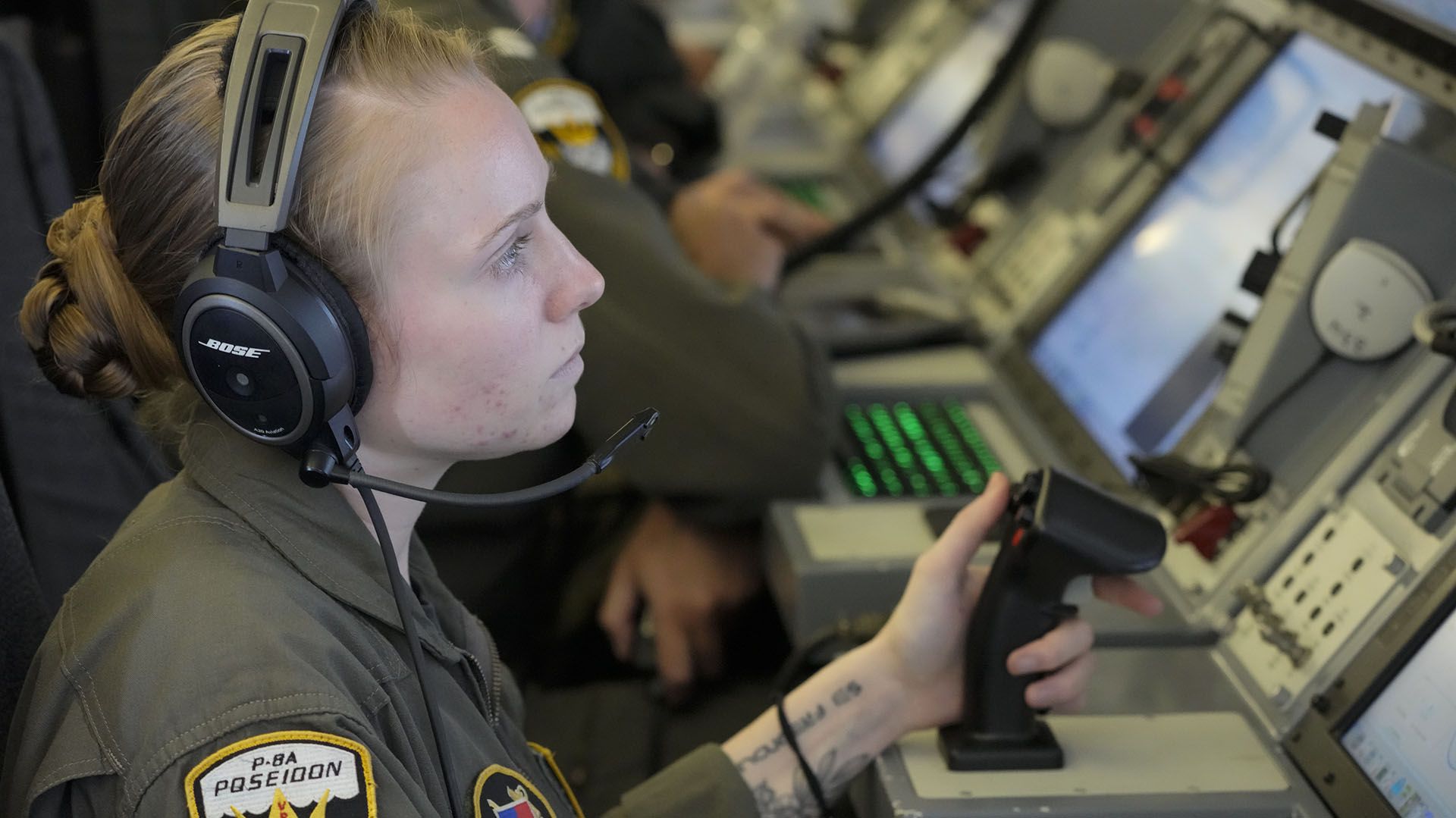
Navy commanding officer Joel Martinez, who led the crew of P-8A Poseidon, said there has been an incident when a Chinese plane flew near a US plane in a dangerous maneuver in the disputed region. The US flight crew calmly reminded the Chinese to comply with aviation safety regulations, he said.
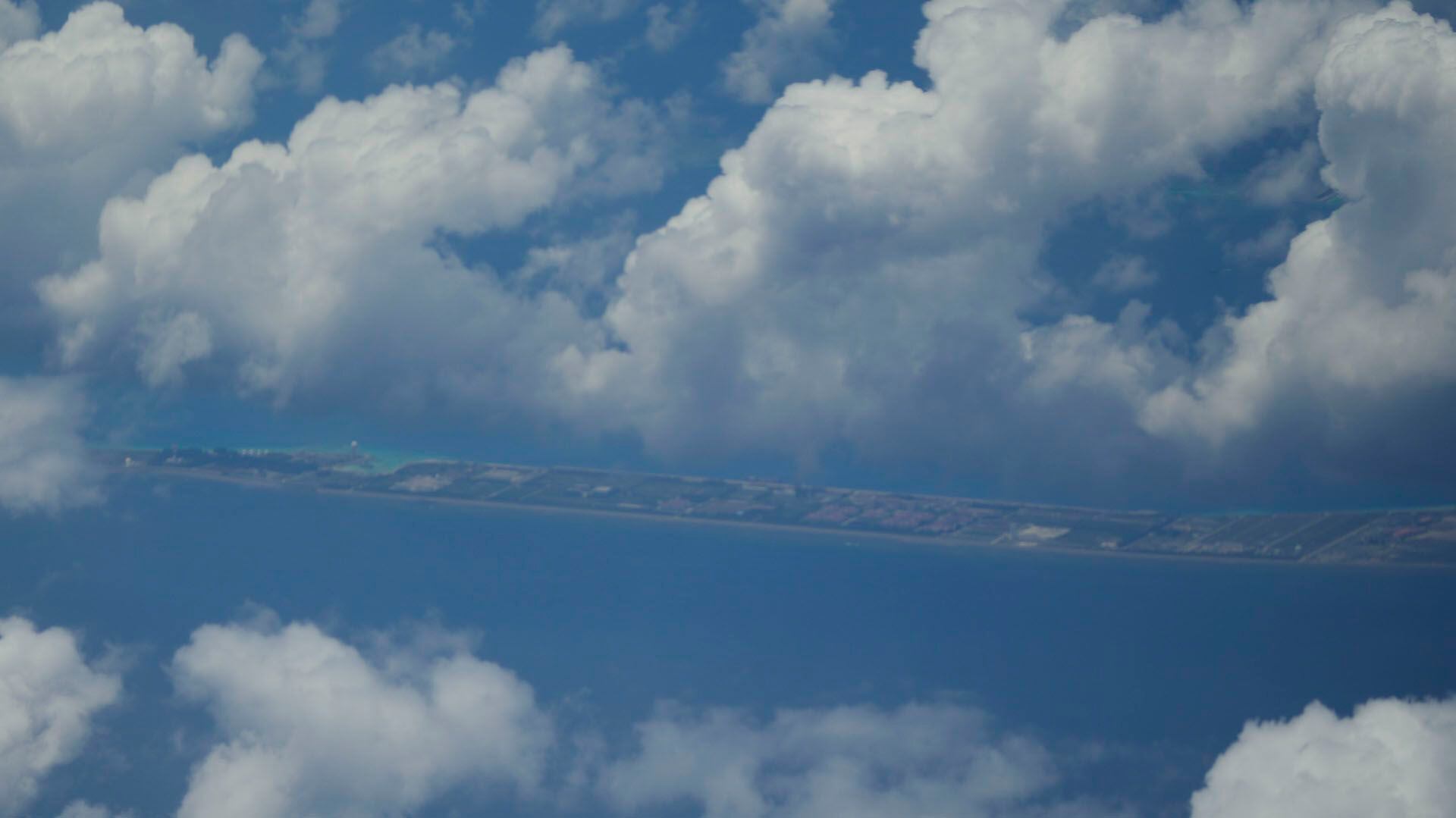
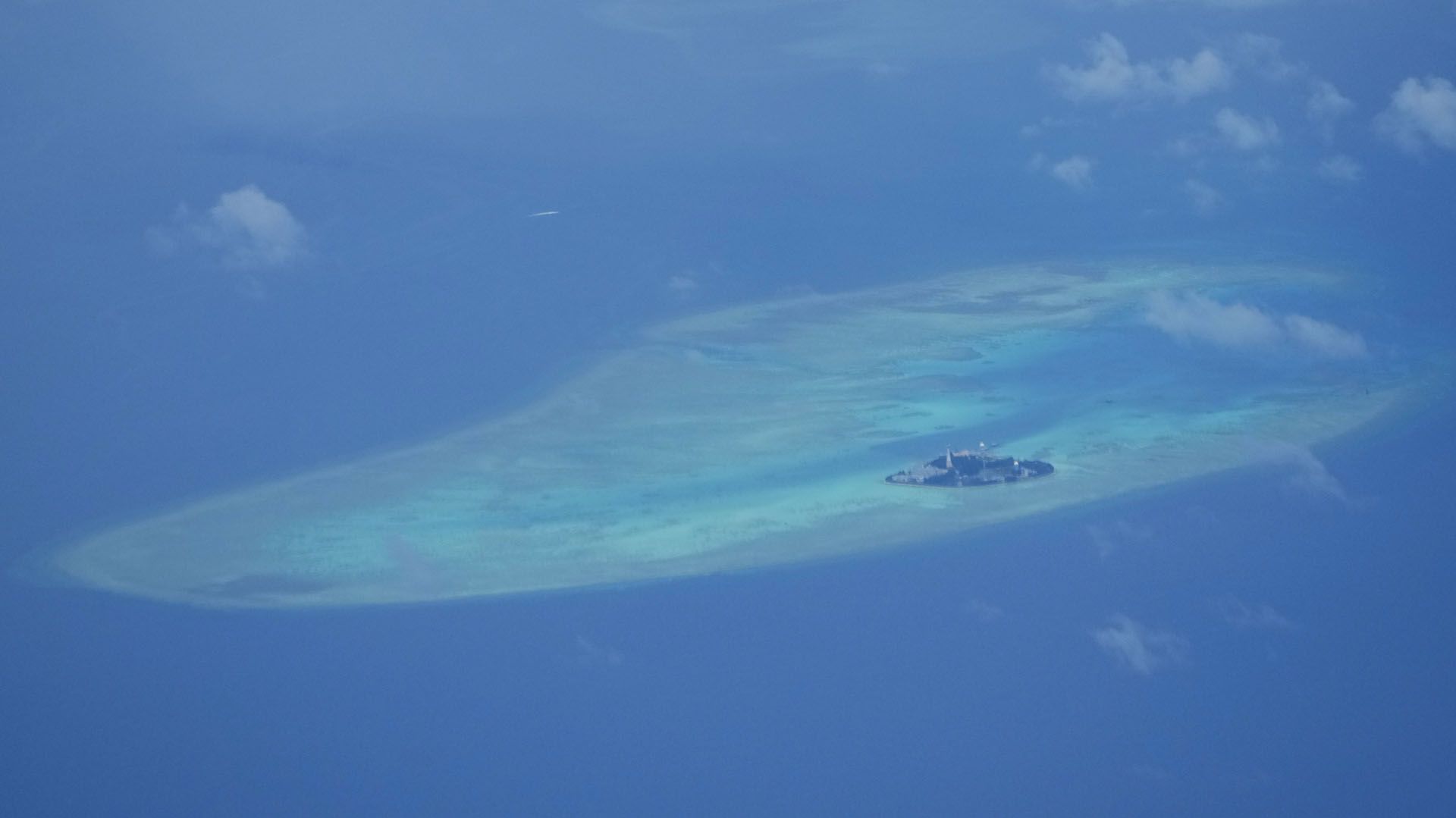
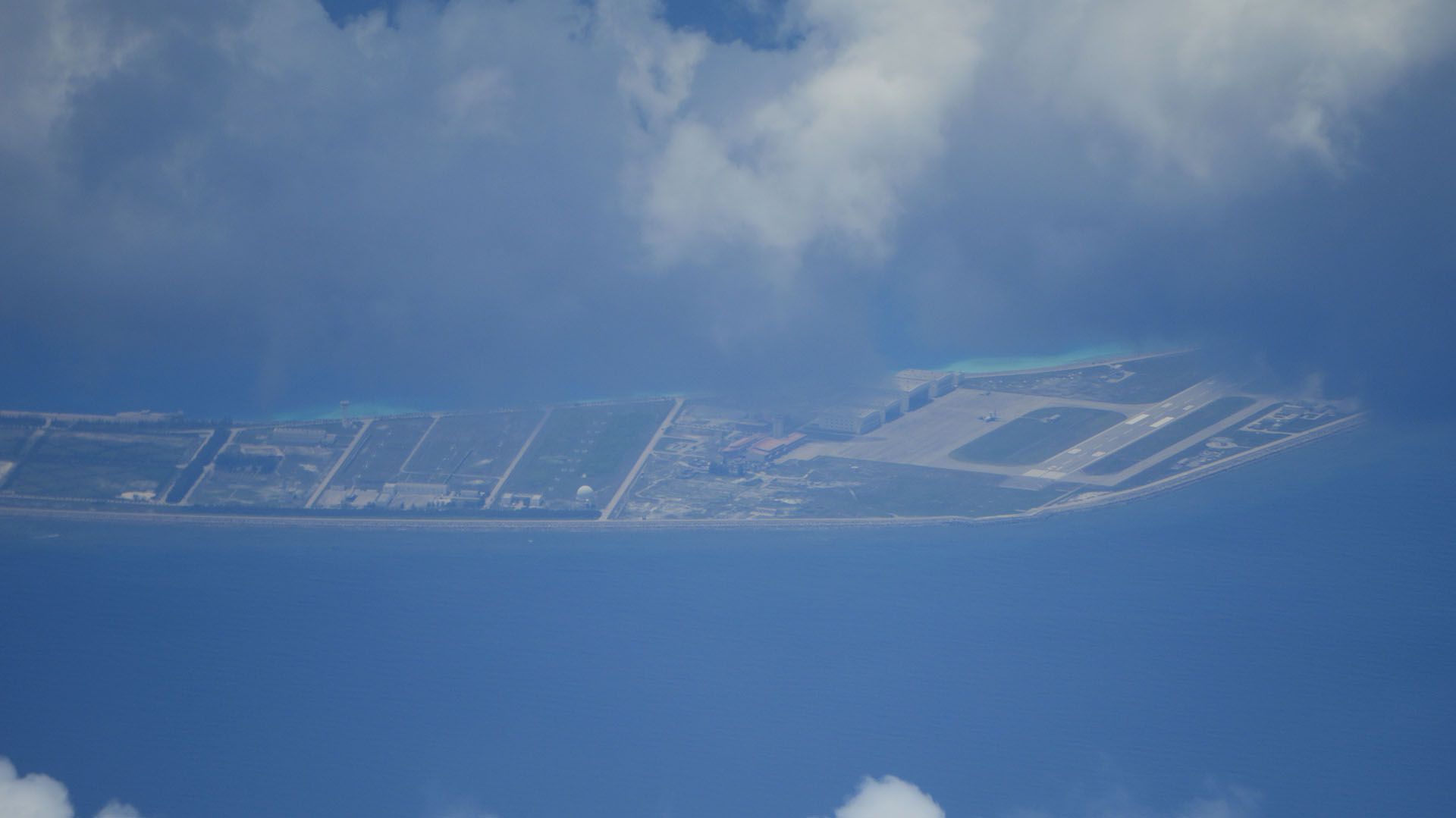
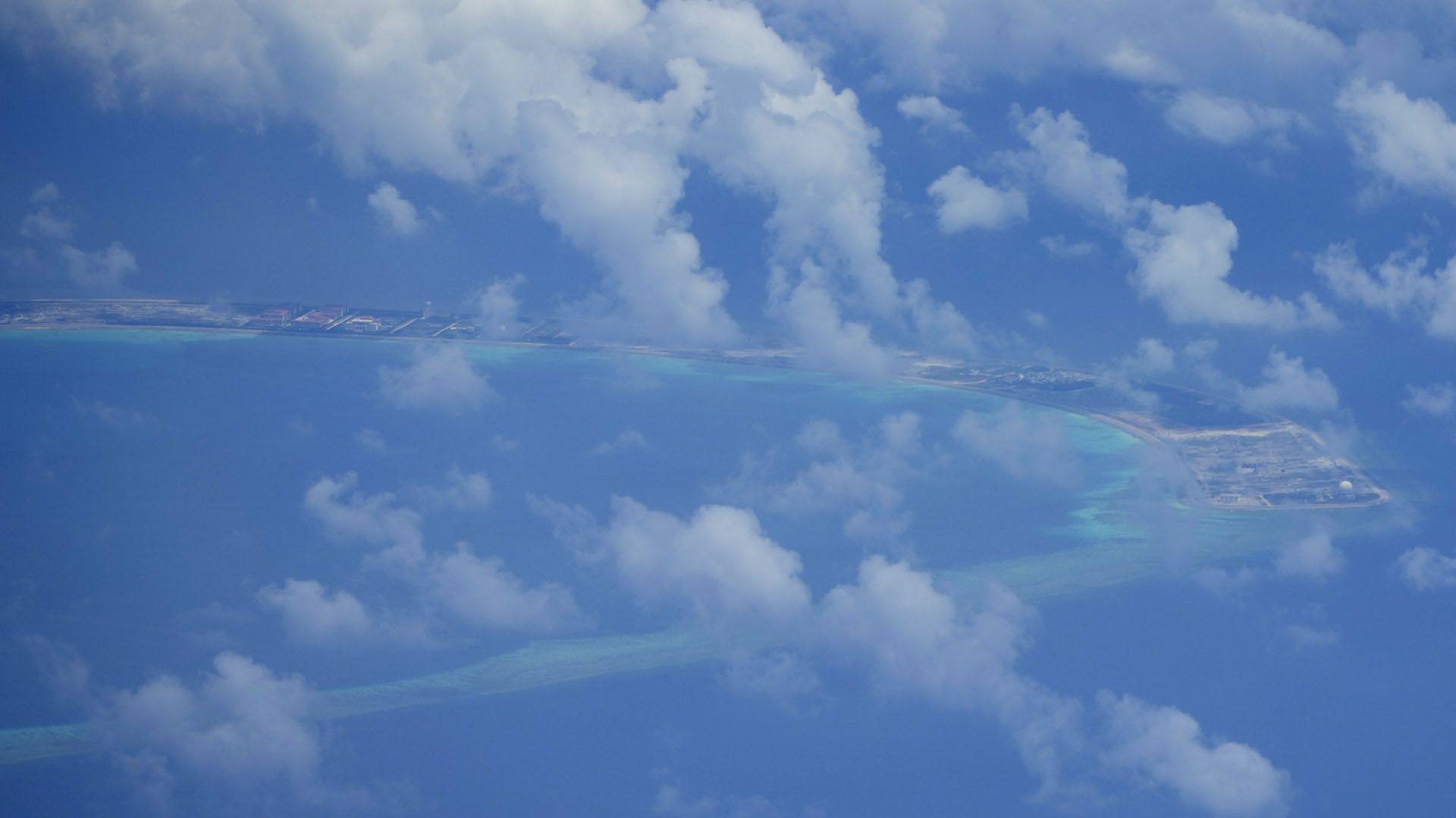
As the P-8A Poseidon flew as low as 15,000 feet (4,500 meters) near the reefs occupied by China, some appeared to be like small cities on screen monitors, with multi-story buildings, warehouses, hangars, seaports, runways and white round structures that Aquilino said were radars. Near Fiery Cross, you could see more than 40 unspecified vessels apparently anchored.
Aquilino said the construction of missile arsenals, aircraft hangars, radar systems and other military installations in Mischief Reef, Subi Reef and Fiery Cross appeared to have been completed, but it remains to be seen whether China will continue to build military infrastructure in other areas.
“The role of these islands is to expand the offensive capacity of the People's Republic of China beyond its continental shores,” he said. “They can fly fighters, bombers plus all those offensive capabilities of missile systems.”
He said that any military and civilian aircraft flying over the disputed waterway could easily be within range of the Chinese islands' missile system.
“So that is the threat that exists, which is why it is so worrying for the militarization of these islands,” he said. “They threaten all nations operating in the vicinity and the entire sea and international airspace.”
China sought to shore up its vast territorial claims over virtually the entire South China Sea by building island bases on coral atolls nearly a decade ago. The United States responded by sending its warships across the region on what it calls freedom of operation missions. The United States has no claims, but it has deployed Navy ships and planes for decades to patrol and promote free navigation on the international waterway and airspace.
China routinely opposes any action by the US military in the region. The other parties, the Philippines, Vietnam, Malaysia, Taiwan and Brunei, claim all or part of the sea, through which approximately $5 billion worth of goods are sent each year.
Despite China's aggression, simmering territorial conflicts should only be resolved peacefully, Aquilino said, citing the Philippine government's successful move to bring its disputes with China to international arbitration in 2013 as a good template.
A UN-backed arbitration tribunal that handled the case invalidated China's extensive historical claims in the South China Sea under the United Nations Convention on the Law of the Sea. Beijing dismissed the ruling as a farce and continues to challenge it.
Washington's main goal in the disputed region is to “prevent war” through deterrence and promote peace and stability, including by involving US allies and partners in projects to that end, Aquilino said.
“If deterrence fails, my second mission is to be prepared to fight and win,” said Aquilino, who leads the largest command of combatants in the United States with 380,000 military and civilian personnel covering 36 nations and territories.
(with information from AP)
KEEP READING:
Últimas Noticias
Debanhi Escobar: they secured the motel where she was found lifeless in a cistern
Members of the Specialized Prosecutor's Office in Nuevo León secured the Nueva Castilla Motel as part of the investigations into the case

The oldest person in the world died at the age of 119
Kane Tanaka lived in Japan. She was born six months earlier than George Orwell, the same year that the Wright brothers first flew, and Marie Curie became the first woman to win a Nobel Prize

Macabre find in CDMX: they left a body bagged and tied in a taxi
The body was left in the back seats of the car. It was covered with black bags and tied with industrial tape

The eagles of America will face Manchester City in a duel of legends. Here are the details
The top Mexican football champion will play a match with Pep Guardiola's squad in the Lone Star Cup

Why is it good to bring dogs out to know the world when they are puppies
A so-called protection against the spread of diseases threatens the integral development of dogs


