


If Putin's tanks have not managed to reach Kiev after a month of invasion, it is not only because of the mistakes of the Russian army itself, but because of the strong Ukrainian resistance. It highlights a team of special forces operating drones with which they have destroyed armored vehicles and prevented the passage of so-called “death convoys”.
This is Aerorozvidka, an air reconnaissance unit that began as a group of amateur computer scientists, participated in the “Revolution of Dignity” in 2014 and volunteered to face the Russian invasion in Crimea and the Donbas. Although it was dissolved years later, it was reactivated in the face of threats of a new invasion led by the Kremlin.
According to the Guardian newspaper, the unit used collections and personal contacts to obtain the components of its tasks: advanced modems and thermal imaging cameras to track enemy tanks. The commercial drones they used at first were left aside to use their own designs.
In addition to the surveillance ships, they also built 1.5-meter machines and eight rotors capable of dropping bombs and rocket-propelled anti-tank grenades, and created a system called Delta, a network of sensors along the front lines that fed on a digital map so that commanders could see the movements of the enemy. Currently, for communications and deployments, they use the Starlink satellite system, supplied by Elon Musk
They know the risk they face: their founder, Volodimir Kochetkov-Sukach, was an investment banker who died in action in 2015.
Its current commander, Lieutenant Colonel Yaroslav Honchar, detailed to the British newspaper the ambushes they have carried out to stop the convoys. According to him, near the city of Ivankov, Ukrainian fighters approached at night crossing a forest to reach the road bound for Kiev. Equipped with night vision goggles, sniper rifles, remotely detonated mines, drones equipped with thermal imaging cameras and others capable of dropping small bombs, they launched the ambush.
“This small unit in the night destroyed two or three vehicles at the head of this convoy, and after that it stayed. They stayed there two more nights, and [destroyed] many vehicles,” Honchar said. Russian troops escaped in several groups to try to move forward, but the same assault team attacked the supply depot. “The first step of the Russian force was left without heating, without oil, without bombs and without gas. And all this happened thanks to the work of 30 people,” said Honchar.
The Aerorozvidka unit claims that it also helped defeat a Russian air strike on Hostomel Airport, just northwest of Kiev, on the first day of the war, using drones to locate, target and bomb some 200 Russian paratroopers hidden at one end of the airfield. “That greatly contributed to their failure to use this airfield to carry out their attack,” said Lieutenant Taras, one of Honchar's assistants.
Not all details could be confirmed independently.
Klaus Hentrich, molecular biologist from Cambridge, highlights the importance of these special forces. “I myself was in an artillery reconnaissance unit, so I immediately realized what a huge impact Aerorozvidka has. In effect, they give eyes to artillery,” he said. His colleague, Marina Borozna, who was an economics student at the university with Taras, is exploring ways to buy what the unit needs and to find routes to carry supplies across the border.
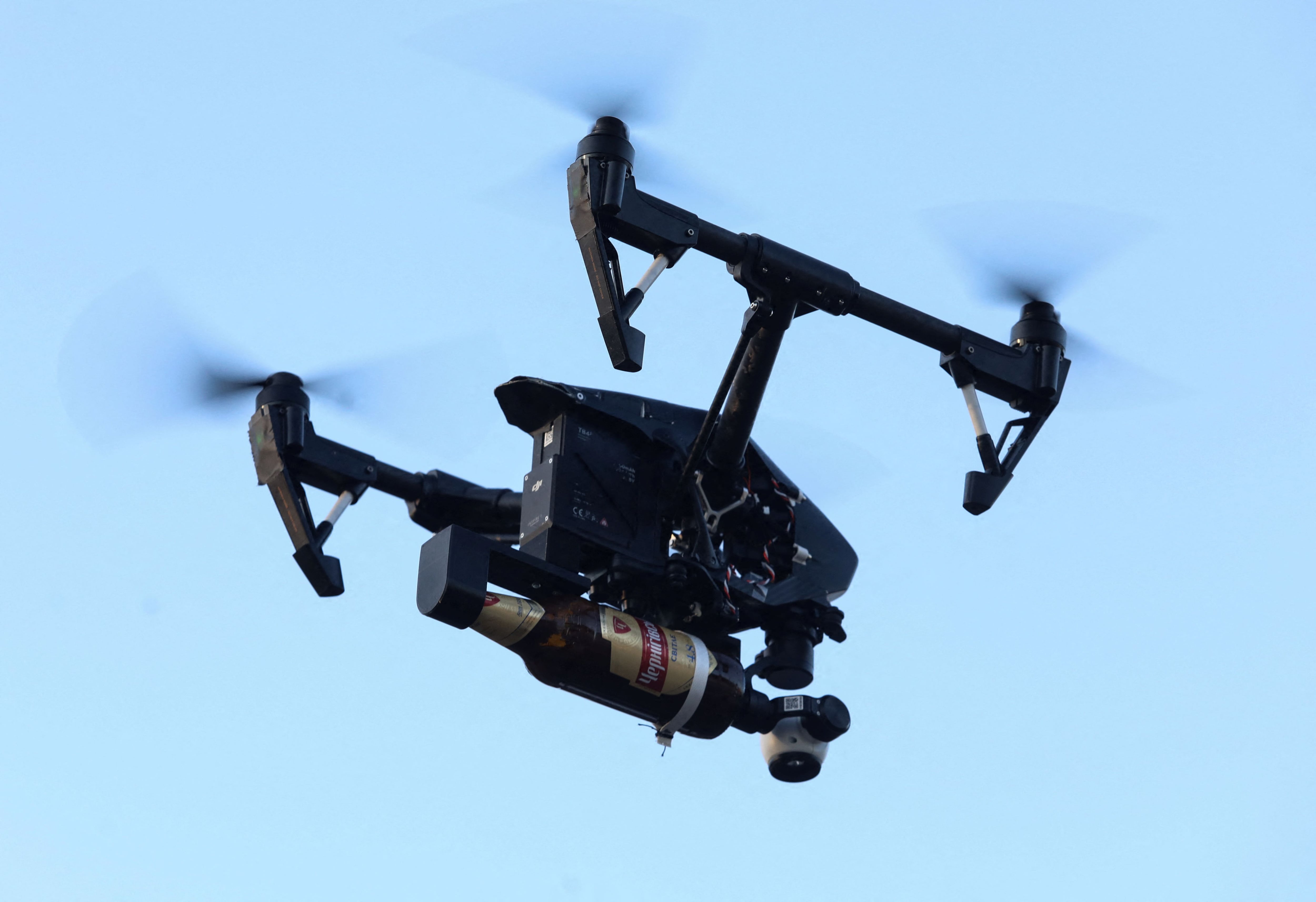
“We attack at night, when the Russians sleep,” Honchar told The Times a few days ago. Another unidentified soldier stressed that in the dark it is impossible to detect drones.
For Honchar, Aerorozvidka's form of combat is the future of war, with more technological battles of small connected teams that manage to confront a much more powerful adversary. “We're like a hive of bees,” he said. “A bee is nothing, but if it faces a thousand, it can defeat a great force. We are like bees, but we work at night.”
KEEP READING:
Últimas Noticias
Debanhi Escobar: they secured the motel where she was found lifeless in a cistern
Members of the Specialized Prosecutor's Office in Nuevo León secured the Nueva Castilla Motel as part of the investigations into the case

The oldest person in the world died at the age of 119
Kane Tanaka lived in Japan. She was born six months earlier than George Orwell, the same year that the Wright brothers first flew, and Marie Curie became the first woman to win a Nobel Prize

Macabre find in CDMX: they left a body bagged and tied in a taxi
The body was left in the back seats of the car. It was covered with black bags and tied with industrial tape

The eagles of America will face Manchester City in a duel of legends. Here are the details
The top Mexican football champion will play a match with Pep Guardiola's squad in the Lone Star Cup

Why is it good to bring dogs out to know the world when they are puppies
A so-called protection against the spread of diseases threatens the integral development of dogs


