


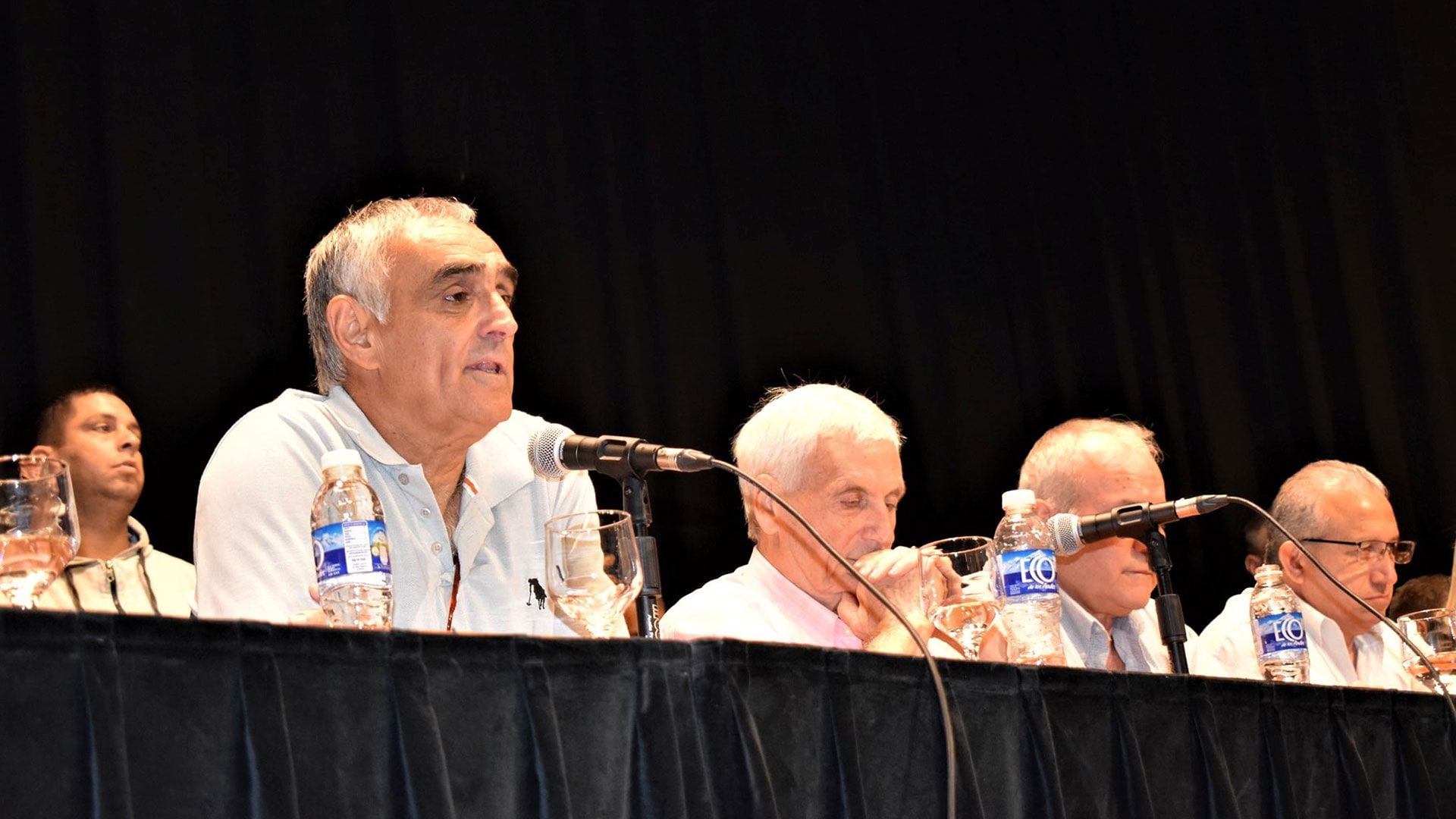
These are decisive hours for the Metallurgical Workers' Union (UOM). Unpublished for the most important industrial union in Argentina and which, for decades, in the empire built by Augusto Timoteo Vandor and Lorenzo Miguel, was synonymous with internal verticalism and stifled dissent.
Antonio Caló, its secretary general, is considering taking a step aside to resign a new four-year term at the head of the guild: a group of rebel sectionals would already have most of the votes needed to defeat him and instead appoint Abel Furlán, head of the Campana Sectional.
PUBLICIDAD
Of the 290 voters who this morning, at the metallurgical congress, will have to cast their direct and secret ballot to elect the union's new national secretariat, Caló would have barely 80 supports against 210 in favor of Furlan, which in recent hours would have added the accession of the Mendoza Sectional, which is added to Avellaneda, Rosario, San Martín, La Matanza, Quilmes and San Miguel.
In the war of versions of both sectors, there was a rumor that the rebels had offered Roberto Bonetti, deputy of Caló in the Capital Section of Metallurgists, the general secretariat of the national UOM. But it is very likely that Furlan will not give up his aspirations to lead the union and, at the same time, will offer Bonetti the Deputy Secretariat of the union. For UOM, it would be another novelty: since the 1960s, the Buenos Aires branch has been leading the UOM and is supported by Avellaneda.
PUBLICIDAD
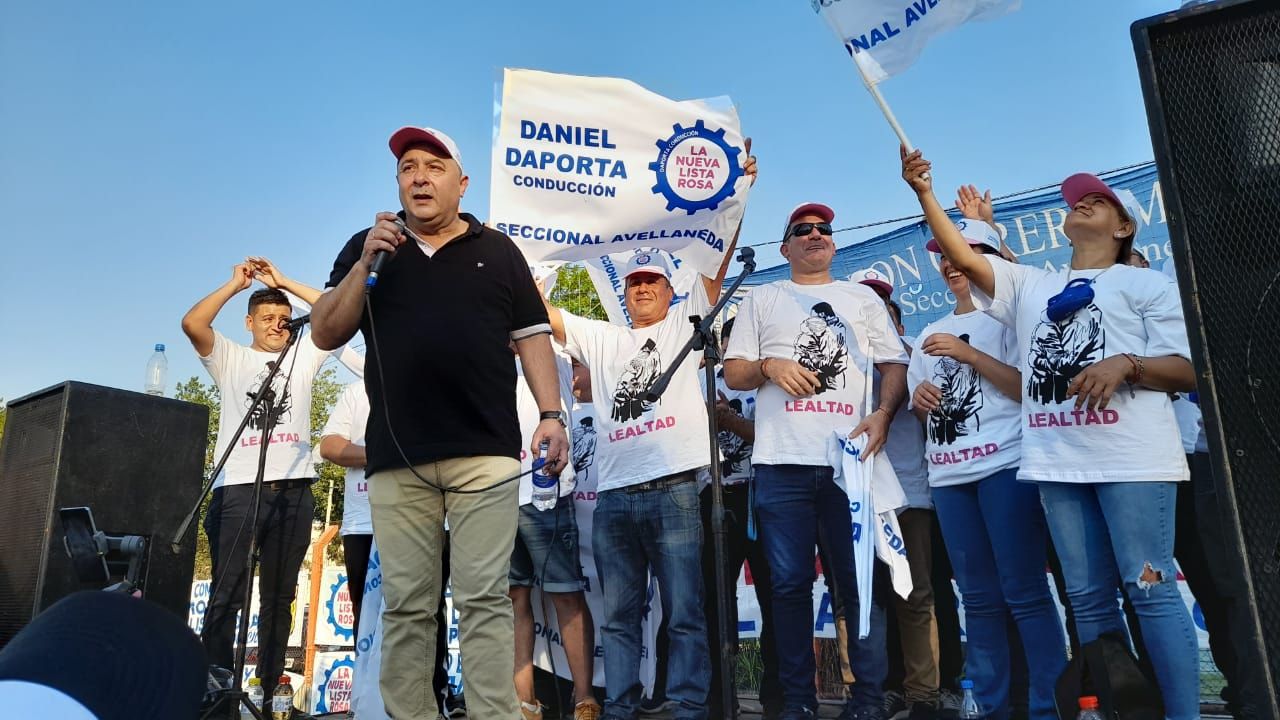
In the elections of the metallurgical guild last week, Daniel Daporta won in the powerful Avellaneda Sectional, a leader who is not aligned with Caló and who was not defeated by the head of UOM through his favorite candidate, Felipe Anriquez. Something similar happened at the Quilmes Sectional, where its 38-year holder, Francisco “Barba” Gutiérrez, lost to Adrián Pérez, an applicant enrolled in Kirchnerism and endorsed by Mayor Mayra Mendoza, of La Campora.
PUBLICIDAD
One of the triggers of the UOM rebellion was Caló's decision to displace the Avellaneda Sectional of the Deputy Secretariat and give that post to Naldo Brunelli, the historic head of the San Nicolás Sectional, who maintains that place in 1973, when José Ignacio Rucci left that position to head the CGT and from that section he opposed the leadership of Lorenzo Miguel.
In front of the headquarters of UOM Capital, in Hipolito Yrigoyen 4265, where there were shootings between metallurgical factions in the 1970s, the national congress was scheduled to be deliberated from 10 o'clock, which will open with the voting of the voters of the new leadership. The metallurgical affiliates do not directly choose their national authorities, but only those who lead the sectionals and the voters who will ultimately be in charge of voting for the top secretariat of the guild.
PUBLICIDAD
The UOM electoral system is designed to ensure that the leader who occupies the main chair at the national level always wins. But, unlike Vandor and Miguel, Caló could not stop the dissent that for years had been taking place in their sections and in the bases. He took up his post in 2004. The same one that Miguel kept for 32 years, until his death.
The internal critics of the UOM chief blame him for signing “paritarian downwards” in recent times. In 2020, even strong resistance from a handful of sectionals (such as La Matanza, Córdoba, Morón and Villa Constitución, among others) stopped the agreement to preserve labor sources by suspensions paid with 70% of wages. Last week, the metallurgical union signed its annual joint with a 45% increase in three tranches, with a review in November. This is the same percentage that was set by the Government as the maximum of the peers for 2022 and Caló, the President's ally, faithfully respected it, while other trade union organizations reached higher wage agreements, such as the Toll Union (58%).
PUBLICIDAD
Another explanation for the strong metallurgical dissent has to do with politics. Or, more precisely, with the fight between Alberto Fernández and Cristina Kirchner on the All Front. Caló has become a staunch defender of the President, while Furlan is aligned with Kirchnerism, as are other sections such as Quilmes, San Martín and San Miguel.
PUBLICIDAD
Furlán has been leading the Zárate-Campana Sectional since 2008, is aligned with Kirchnerism and is one of the counselors of the Buenos Aires PJ, which is chaired by Máximo Kirchner, on behalf of the Second Electoral Section. He was a national deputy of the Front for Victory between 2015 and 2019, and served as president of the Zárate PJ. In August 2018, he signed a petition with other leaders to denounce the “political, media and judicial persecution” against Cristina Kirchner.
Will Caló refuse to dispute its continuity so as not to lose in the vote? Will an agreement finally be reached that consecrates Furlan as its successor, accompanied by the Capital Sectional? Some doubts remain, but there is one certainty: nothing will ever be the same in the UOM power structure.
PUBLICIDAD
KEEP READING:
PUBLICIDAD
PUBLICIDAD
PUBLICIDAD
Últimas Noticias
Debanhi Escobar: they secured the motel where she was found lifeless in a cistern
Members of the Specialized Prosecutor's Office in Nuevo León secured the Nueva Castilla Motel as part of the investigations into the case

The oldest person in the world died at the age of 119
Kane Tanaka lived in Japan. She was born six months earlier than George Orwell, the same year that the Wright brothers first flew, and Marie Curie became the first woman to win a Nobel Prize

Macabre find in CDMX: they left a body bagged and tied in a taxi
The body was left in the back seats of the car. It was covered with black bags and tied with industrial tape

The eagles of America will face Manchester City in a duel of legends. Here are the details
The top Mexican football champion will play a match with Pep Guardiola's squad in the Lone Star Cup

Why is it good to bring dogs out to know the world when they are puppies
A so-called protection against the spread of diseases threatens the integral development of dogs


