


Broooooommmmmm.
The first grenade that put everyone on alert exploded. It was the first clear sign that the war had come home. When Russian soldiers launched the third, the 286 inhabitants of Andriivka, a small town north of Kiev, were all hidden as deep as they could. Until the invading soldiers started shooting at the houses.
“I don't know what they wanted to do. There was no one armed here, there were no militias or soldiers or tanks or anything,” Mykola tells on a Telegram channel where testimonies of survivors from all over Ukraine appear.
A neighbor lost his leg to the shards of the grenades and the next day he died, Mykola says. Another neighbor was shot in the head when the bullet entered the window of her house and passed through the table behind which she was hiding. Her 9-year-old daughter managed to crawl behind an armchair and survived.
Mykola lives a short distance from her brother, Dymtro. “They fired several times at the front of the house. My brother came out with his hands up. They beat him and then executed him there on the street in full view,” he said. Dymtro's wife and daughter, Yulia, saw the whole scene from a window. They shouted desperately, but the young Russian soldiers did not flinch. Other neighbors said they were laughing. They also saw how they executed the man who lives in the house next door. Yulia suspects that someone pointed them out. “They were the only two in town who had signed up to join the popular defense forces,” he wrote on Telegram.
Mykola wanted to go get her brother's body, but the wife feared the soldiers would shoot them and asked her to wait. They recovered the body only at night when everything was quiet and at dawn they made a pit in the back garden of the house.
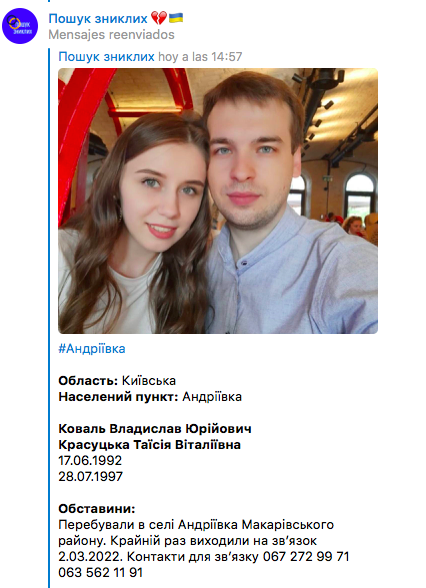
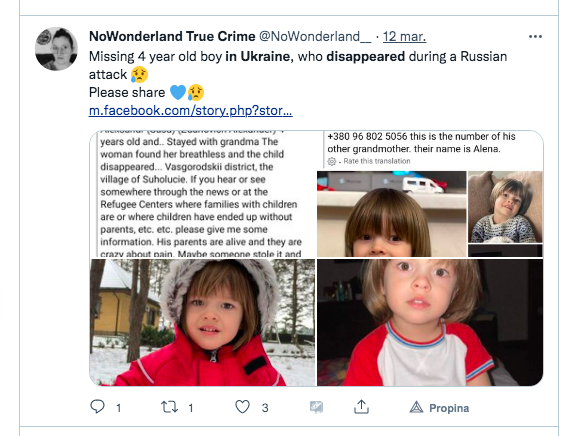
All this happened on March 3, but it was only now that Ukrainian journalists were able to reconstruct it through the testimonies that people are leaving on social networks. There are hundreds of them and they are mixed with requests for help in finding a relative who escaped, but they don't know if they managed to get anywhere safe.
“The next day they went house to house, confiscating phones and computers,” Mykola said. Apparently, the Russians want to prevent these testimonies from being released. The lack of electricity for several days had already rendered almost all the appliances useless. “Those who entered our house behaved well. But they told us that it is good that we have a basement, that we collect water, because they are going to bomb us for six days.”
The threat was fulfilled just a few hours later. There was a shower of mortars and the house next door started to burn. Dymtro's widow and her daughter, Yulia, walked out the door and a Russian soldier beckoned them to hide behind the tank he was driving. “We were terrified. We didn't understand if it was the Russians who were shooting or ours. Everything that happened after that I don't remember very well. A while later we ran home and barely arrived under a constant mortar attack.”
This small town in Andriivka knows about suffering. In 1930, there was a tremendous famine in that area with the collectivization of the land ordered by Stalin. A few years later Nazi troops passed through there and stole all the peasants' provisions and raped several women. In 1986, when the reactor at the nearby Chernobyl plant exploded, all the inhabitants had to evacuate the area. It was right on the edge of the exclusion area and little by little they returned. Until the Russians came in, it was 286. No one knows today.
On 8 March, the bombardments had stopped and Mykola, his family and Dymtro's family decided to move west where the occupying forces had not yet entered. Dymtro's wife approached the soldiers for permission, but they started shooting in the air. When the Russians rushed to the cross street, they got in the car and went out along the only avenue that takes you out of town. “As we were leaving, they were shooting at our car, even though we had the word 'children' written on paper glued to the windows. But they obviously didn't care if there were boys or not,” Yulia wrote.
Mykola and Yulia wrote these testimonies two days later, when they managed to cross the border into Poland. On the same Telegram site there are already more than 60,000 posts of relatives looking for theirs. Another hundred orders come in per hour. They need to know if their parents, siblings or children are alive. It's getting harder to find an answer every minute. Victims increase exponentially. The networks are collapsed. The Russians confiscate every phone they find.
Andriivka is now part of the Russian rear. They keep parked trucks full of ammunition and the rest of the war paraphernalia needed by the troops attacking the Ukrainian capital from the north and west. But they have not yet been able to break the defenses that are standing firm, while the anti-tank missiles sent to them by the British continue to wreak havoc on the Russian convoys that are advancing with the slow pace of a public office queue.
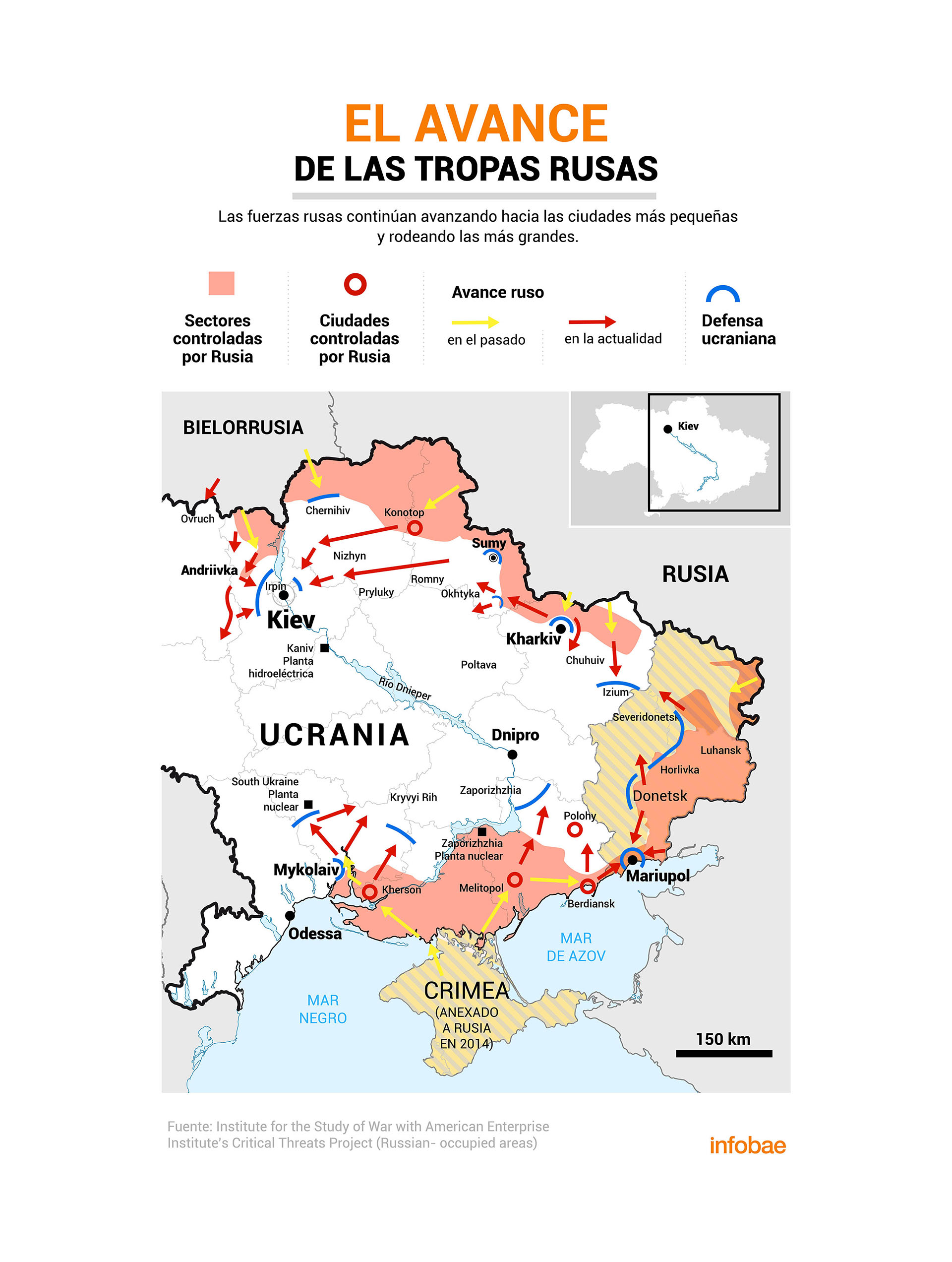
According to the latest report by the Institute for the Study of War (ISW), Russian forces carried out relatively few ground offensives on Sunday, securing new land only in the provinces of Donetsk and Luhansk, the enclaves they had already invaded in 2014. The attack on Yavoriv's training unit, near the Ukrainian border, was the most significant of the last two or three days. They are still unable to seize power in Kharkov, the second Ukrainian city, and fighting continues in the southern port of Mariupol, where reports are of enormous devastation of the city due to heavy bombardment by artillery and aviation. The Ukrainian General Staff reported that Russian forces took over the weekend to restore combat readiness and regrouped combat units from noon on Monday. Russian forces continue to gather reinforcements and try to improve logistical support both in the direction of Kiev and in the south of the country. “It is possible that Russian forces intend to resume larger-scale attacks on both axes of advance from Monday night, but it is likely that they will take longer to gather (or never will) gather the combat power needed to complete the encirclement of Kiev,” the ISW reported.
It also appears that the Russian generals are needing fresh troops to continue the offensive. They called the units that are part of the international peace forces in Armenia and Nagorno-Karabakh. They are also moving battalions that are cantoned in the Russian extreme east.
Ukrainian intelligence reported that Russia is also deploying units that were in Sira and that together with them they brought hundreds of mercenaries fighting for the Bashar al-Assad regime in the Middle East. Other reports speak of Libyan militiamen who would be arriving by sea for the assault on Odessa. “It is unlikely that these forces will allow Russia to favorably change the balance of forces around Kiev this week, but they can provide a pool of low-quality replacements in the longer term,” ISW analysts explained.
The rest had no major modifications since Friday. The south and east of the country dominated by the Russians. Also the territory that goes from Putin's ally, Belarus, to the outskirts of Kiev. The remaining 70% of Ukrainian territory remains under the legitimate government of President Volodymyr Zelensky. We will know the details about advances and setbacks, the attacks on small towns and isolated outskirts, through social networks. With devastating testimonies such as that of Mykola and her niece Yulia.
Keep reading:
Últimas Noticias
Debanhi Escobar: they secured the motel where she was found lifeless in a cistern
Members of the Specialized Prosecutor's Office in Nuevo León secured the Nueva Castilla Motel as part of the investigations into the case

The oldest person in the world died at the age of 119
Kane Tanaka lived in Japan. She was born six months earlier than George Orwell, the same year that the Wright brothers first flew, and Marie Curie became the first woman to win a Nobel Prize

Macabre find in CDMX: they left a body bagged and tied in a taxi
The body was left in the back seats of the car. It was covered with black bags and tied with industrial tape

The eagles of America will face Manchester City in a duel of legends. Here are the details
The top Mexican football champion will play a match with Pep Guardiola's squad in the Lone Star Cup

Why is it good to bring dogs out to know the world when they are puppies
A so-called protection against the spread of diseases threatens the integral development of dogs


