


The IMF loan to Argentina can be taken as the great electoral “workhorse” of the Frente de Todos, the “spearhead” of Kirchnerism to characterize Mauricio Macri's administration as “razed land”.
In fact, to this day, the hard sector of Kirchnerism claims that “the loan from the Fund escaped” or that “Macri and his friends timbed it all” and that is why he proposes not to recognize the debt, or to pay it and to prosecute the measure. This is the axis where Máximo Kirchner and Juan Grabois' Patria Grande Front stop in order not to support the recent agreement with the IMF. But what really happened? Was it malpractice or was there “pain” when it came to taking that debt?
The loan granted to the government of Cambiemos was the largest in the history of the multilateral credit agency. In principle, disbursements of 50 billion USD were agreed, then increased to 57 billion, but finally 44 billion were disbursed.
The “stand-by” loan was committed to 12 revisions, of which only four were approved; fiscal targets were met, by reducing the deficit to 1 point of GDP from 7 left by Kirchnerism and monetary reserve accumulation, from 3.4 billion USD in 2015 to 12.598 million net reserves in 2019 (the available before a bullfight).
But inflation targets were not met, 41% of the annual average and a cumulative 166%, exchange rate change, the peso devalued by 359%, the dollar price went from $14.86 to $63 and economic activity, there was a 3.5% contraction of GDP.
Kirchnerism: low debt
When Néstor Kirchner took over we were in default, Argentina could not pay its debt, it had no way. The level of debt in relation to GDP was 118%. In 2005 Kirchner together with his economy minister, Roberto Lavagna, made the first “exchange” and managed to break out of default by restructuring USD 62 billion. The debt rose from 191,254 million USD to 125,283 million after a removal of 65.6%. With this, the debt to GDP fell to 80.5%.
Then, Cristina Fernández and her minister Amado Boudou made another exchange for USD 12,067 million in 2010, aided by the nationalization of the Fund and Pension Administrator (AFJP), thereby restructuring the external debt by 92.4%.
However, holdouts or vulture funds (6% that did not enter any swaps) are not paid. As a result, the country loses external financing and ends up buying from Venezuela, sovereign bonds worth $6 billion, at rates of 16%, much higher than those in the market.
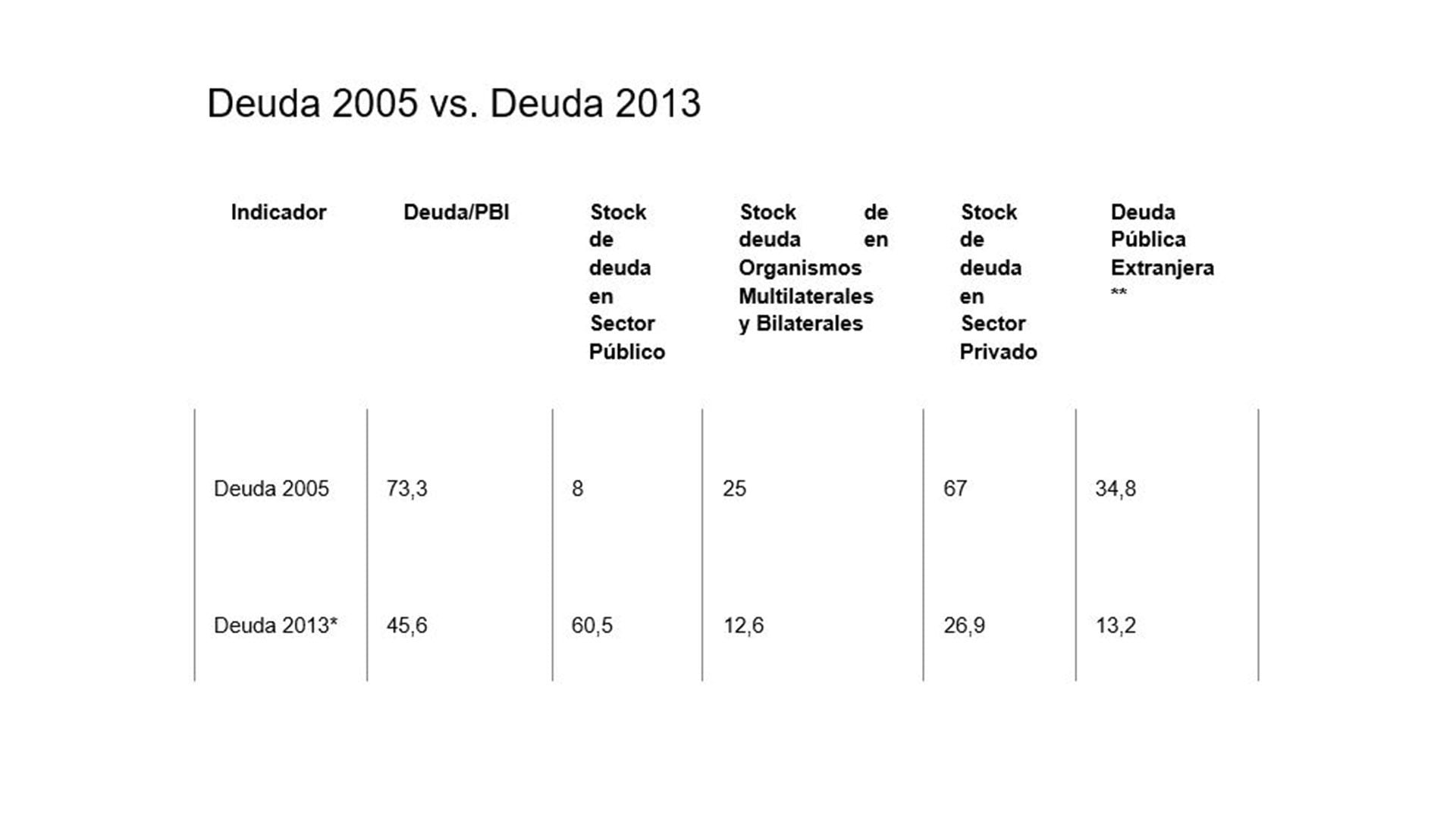
Macrismo: high debt
When Mauricio Macri took over, Argentina was again in default for not paying vulture funds. One of the first measures taken by Alfonso Prat Gay, his finance minister, was to pay the last apricot of the jar of these creditors 100%.
With access to capital markets again, first Prat Gay, together with the secretary and then finance minister, Luis Caputo, used debt incurred in the capital markets to cover previous debt in pesos (debt that matured) and the state deficit.
With the increase in FED (US Federal Reserve) interest rates due to the “Trade War”, which Donald Trump started with China, the money that investors had in emerging countries, such as Argentina, went to the US where profitability was the same but they were more secure.
When this happens, the new Minister of Economy, Nicolás Dujovne, an economist from Di Tella University and a former columnist of Carlos Pagni's Odyssey program, with Macri's endorsement, asked for the robust US$50 billion loan from the IMF.
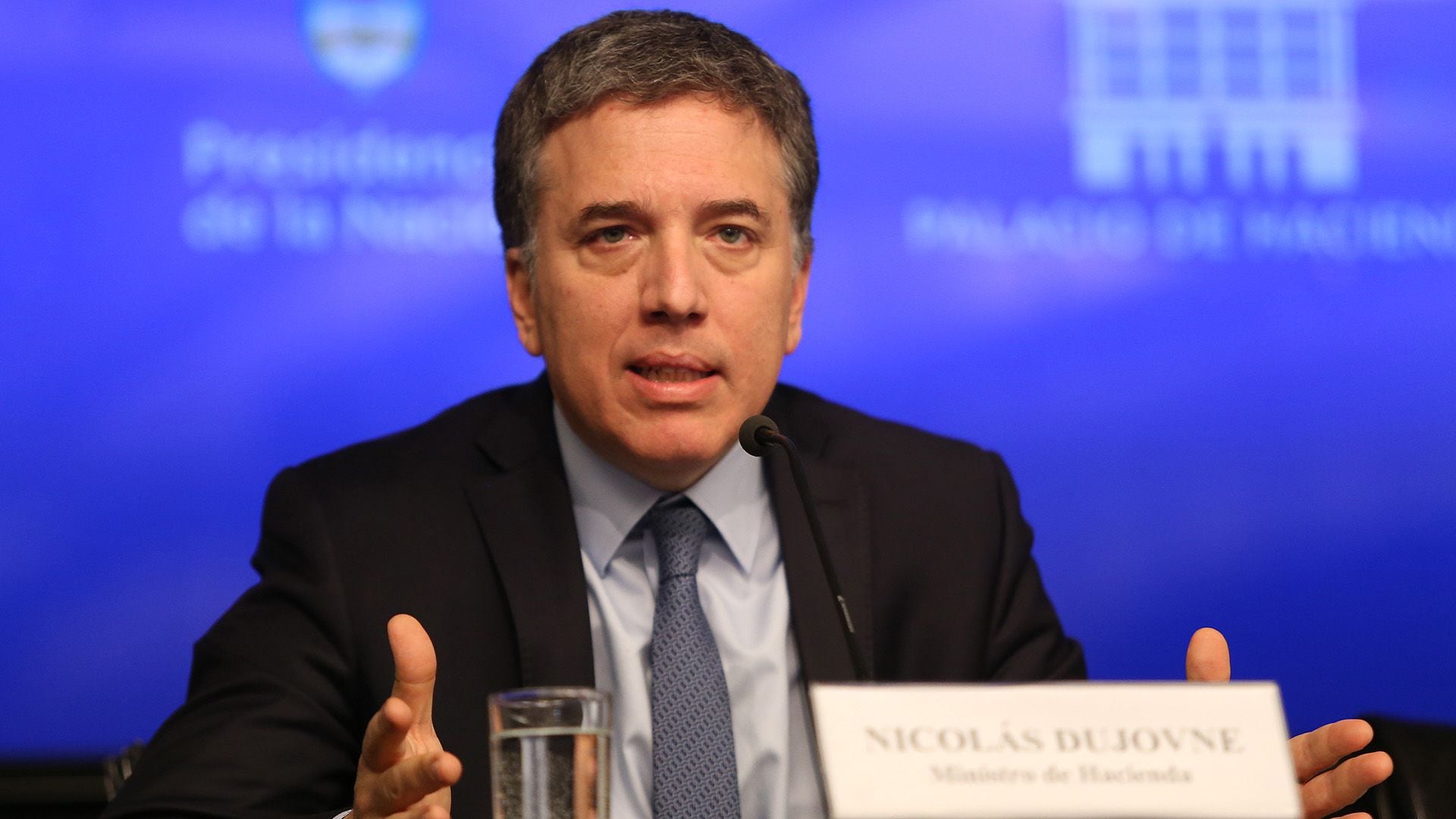
The archive does not forgive and Dujovne in an interview before taking office as minister of economy, said that: “Within this whole set of problems left by the previous administration, he also left us a blessing... very low levels of indebtedness”. When Cambiemos lawmakers, such as Fernando Iglesias, claim that Macri's indebtedness went to pay off Kirchnerism's previous debt exclusively... it's not true.
Where is the silver?
The US$44 billion loan to the IMF, Dujovne used almost entirely to pay interest on debt taken by Prat Gay and Caputo (which they took to pay Kirchnerist debt), but above all to cover deficits and treasure reserves. In that order.
Let's go slowly... Cambiemos assumes with a deficit of 7 points of GDP: it adjusts tariffs in 2016, corresponding to 2.2 deficit, is 4.8. There Caputo asks, to cover rather than adjust, debt in foreign currency, so as not to take credit in pesos from companies. But because of the Trade War he was cut off. We're going to the IMF.
Debt was taken first to cover maturities in pesos and deficit in Kirchnerist pesos, but expensive, not making the adjustment and having already asked for that money, we went to the IMF to cover that debt, “cheap” debt (3.2 to 4.3%) for expensive debt (6%), but it was the same debt of Cambiemos. Therefore, in 2019 the debt reached USD 313,299 million and represented 90% of Argentina's GDP.
The state deficit was covered by the Central Bank (BCRA), which sold to banks Letras (LETES, LEBACS and LELIQS) and Bonar (Argentine Bonds) and with that money the State financed deficits for future interest.
Although public spending rose from 23% to 45% of GDP in the 12 Kirchner years and the deficit ended at 7 points as indicated above, if debt had been sustainable and inflation had fallen, the loan would have been justified.
But that was not the case because Macri took debt that he would not be able to pay at the end of his term. Interest could not be paid on the debt owed to the IMF. This is evidenced by the reprofiling announced by Hernán Lacunza, the last Minister of Economy of Cambiemos, who said on August 28, 2019: “In addition to having strictly met all the fiscal and monetary goals of the agreement with the IMF to give continuity to the existing agreement, we have proposed to that body to initiate dialogue, which will inexorably be concluded in the next mandate, to re-profile debt maturities with that international body”.
¿The “mea culpa” of the Fund?
The IMF carried out an evaluation of the loan called “Post-Agreement of the Stand By”, where the agency made some observations:
- The agreement must have a contingency plan, prepared for a context of international crisis (something that was missing)
- Recommends capital control
- The need for a larger political agreement that integrates other spaces
- Good communication to the population and the markets of the Fund's programme
- That the loan be in conjunction with private creditors and other international financial institutions (IFIs).
The main problem faced by contracting debt to the IMF was the lack of repayment capacity of the Cambiemos government, the failure to meet goals agreed upon by other factors, and which, by self-fulfilling profession, believed that it would get the interest money to be paid. Something that did not happen, as did his victory in the 2019 presidential elections, which would have allowed him to continue restructuring his debt.
With regard to the judicialization of debt taking, first, the IMF does not admit that it violated its statutes, secondly, there are no elements to constitute a judicial conviction in this area, since they are strictly economic policy measures. The same could be said of issuing money without support to cover the fiscal deficit, generating inflation, and eroding the purchasing power of Argentines as happened during the Kirchner governments.
Another example of the judicialization of failed economic policy was what happened with the “Future Dollar Case”, where the vice-president, Cristina Fernández, the Buenos Aires governor, Axel Kicillof and the president of the BCRA, Miguel Ángel Pesce, were accused, who ended up falling under their own weight.
KEEP READING:
Últimas Noticias
Debanhi Escobar: they secured the motel where she was found lifeless in a cistern
Members of the Specialized Prosecutor's Office in Nuevo León secured the Nueva Castilla Motel as part of the investigations into the case

The oldest person in the world died at the age of 119
Kane Tanaka lived in Japan. She was born six months earlier than George Orwell, the same year that the Wright brothers first flew, and Marie Curie became the first woman to win a Nobel Prize

Macabre find in CDMX: they left a body bagged and tied in a taxi
The body was left in the back seats of the car. It was covered with black bags and tied with industrial tape

The eagles of America will face Manchester City in a duel of legends. Here are the details
The top Mexican football champion will play a match with Pep Guardiola's squad in the Lone Star Cup

Why is it good to bring dogs out to know the world when they are puppies
A so-called protection against the spread of diseases threatens the integral development of dogs


