


After a difficult tie for Gerardo Martino, the Mexican National Team won its way to the Qatar World Cup, where the Tricolor will seek to pass the group stage again and reach the longed-for fifth match of the World Cup.
To achieve this, in addition to substantially improving the style of play shown so far, you will also need to receive a little help in the draw, as the chances of transcending will increase if you manage to fall into a group with less complicated rivals.
On the other hand, Mexico's fortunes could also be adverse, as there is always the possibility of being sown in a group with very complicated rivals, with whom the move to the round of 16 would be complicated from the start.
Because the Mexican National Team was in pot 2, the possibility of being in a death group with two other great powers was eliminated, as it will avoid rivals such as Germany, the Netherlands, Croatia or Uruguay; however, this does not mean that the Tri has already eluded important rivals that could leave it out in groups.
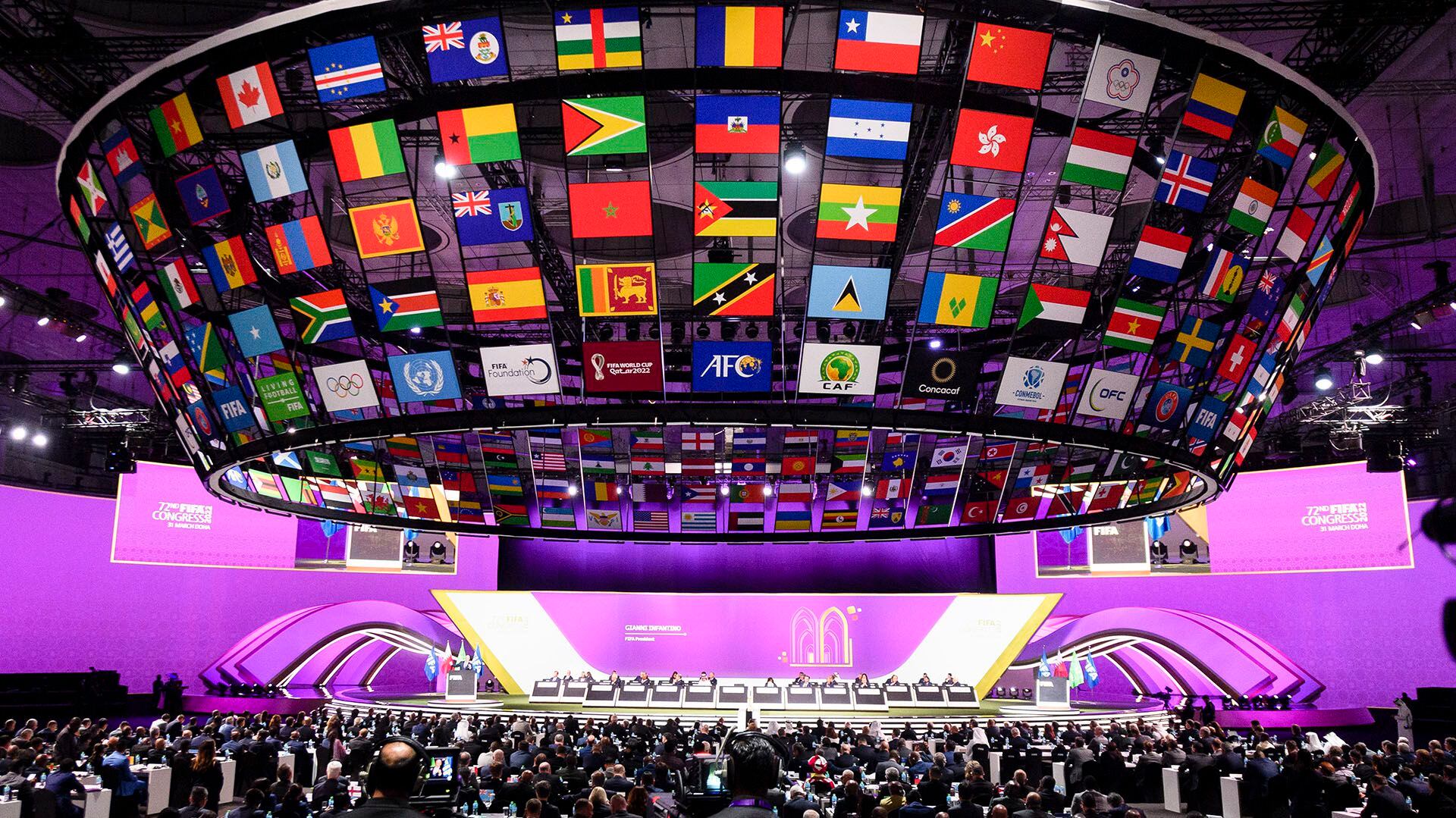
What are the most difficult teams that could get Mexico in the draw?
From pot 1 (Qatar, Brazil, Belgium, France, Argentina, England, Spain and Portugal), practically everyone is one step higher than Mexico, except for the host team of Qatar. According to recent World Cup results, the worst rivals that could fall to Tricolor are Brazil, who has never scored a goal, and Argentina, the executioner of the Aztecs in 2006 and 2010.
On the other hand, in pot 3 (Iran, Japan, Serbia, South Korea, Tunisia, Poland, Morocco and Senegal), the teams that arrive at the best pace and with the most important names are Senegal, with Sadio Mané, Koulibaly and Edouard Mendy as references; Poland, with Lewandowski, Zielinsky and Szczesny as key players; and Serbia, with Dusan Vlahovic, Tadic and Luka Jovic as powers.
Finally, inside pot 4 (Saudi Arabia, Ecuador, Ghana, Canada and Cameroon, plus three teams from the repechage), the teams of Ecuador, Ghana and Ukraine, favorite in the European repechage, look like the big complications for any team.
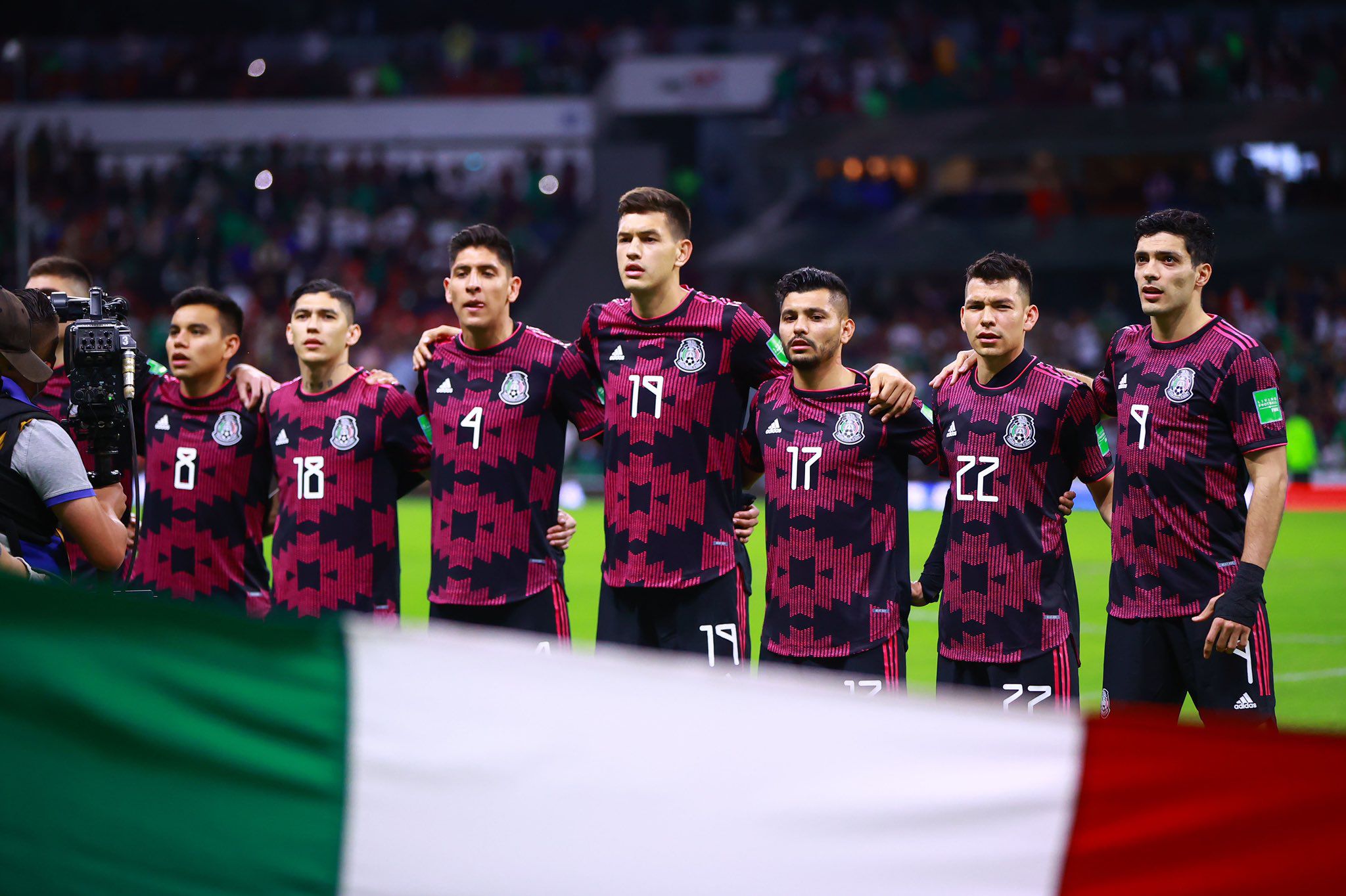
Examples of “death groups” for Mexico:
With these details, some complicated possibilities that Mexico could have in the draw are as follows.
A. Mexico, Senegal, Ecuador and Spain
B. Brazil, Mexico, Poland and Ghana
Argentina, Mexico, Senegal and Ukraine (if qualified in the repechage)
D. France, Mexico, Serbia and Ecuador or Peru (if qualified in the repechage)
E. England, Mexico, Poland and Ghana
What are the rules of the world cup draw?
The 29 qualified teams, the two intercontinental playoffs and the UEFA play-off quota will be divided into four groups of eight teams each, based on the FIFA Ranking published on March 31, 2022. According to the standings, the top seven teams, along with the host, Qatar, are assigned to group 1. Selections ranked from 8 to 15 are assigned to group 2 (where Mexico is). The teams classified from 16 to 23 are assigned to group 3 and, finally, group 4 includes the teams classified from 24 to 28, in addition to the two places that will be occupied by the winners of the intercontinental qualifiers scheduled for 13 and 14 June 2022 and the place of the winner of the UEFA playoff .
The general principle of FIFA, wherever possible, is to ensure that no group has more than one team from the same qualifying area. This applies to all areas, except Europe, which is represented by 13 teams. Each group must have at least one European team, but no more than two. Thus, five of the eight groups will have two European teams.
The geographical distribution of the winner of the UEFA playoff and the two winners of the intercontinental repechage will also follow the general principle of “separation” of teams from the same qualifying area.
The geographical allocation of each intercontinental repechage place shall be based on the pairings of the confederation teams participating in that specific match of the intercontinental repechage.
KEEP READING:
Últimas Noticias
Debanhi Escobar: they secured the motel where she was found lifeless in a cistern
Members of the Specialized Prosecutor's Office in Nuevo León secured the Nueva Castilla Motel as part of the investigations into the case

The oldest person in the world died at the age of 119
Kane Tanaka lived in Japan. She was born six months earlier than George Orwell, the same year that the Wright brothers first flew, and Marie Curie became the first woman to win a Nobel Prize

Macabre find in CDMX: they left a body bagged and tied in a taxi
The body was left in the back seats of the car. It was covered with black bags and tied with industrial tape

The eagles of America will face Manchester City in a duel of legends. Here are the details
The top Mexican football champion will play a match with Pep Guardiola's squad in the Lone Star Cup

Why is it good to bring dogs out to know the world when they are puppies
A so-called protection against the spread of diseases threatens the integral development of dogs


