


The day after Russia invaded Ukraine, Pope Francis broke protocol and went directly to the Russian embassy in the Holy See to call for peace. The next day, he spoke with the President of Ukraine, Volodymyr Zelensky, to offer him spiritual support. As the war escalated, he raised his voice against the “unacceptable armed aggression” and the “barbarism of the killing of children.”
“In the name of God,” he declared on Sunday, “I ask you: Stop this massacre!”
Who, however, did Francis ask?
The Pope has carefully avoided appointing Russian President Vladimir Putin, or even Russia itself, as aggressor. And although he has said that whoever justifies religiously motivated violence “desecrates the name” of God, he has avoided criticizing the main defender and religious apologist of the war, Patriarch Kirill of the Russian Orthodox Church.
Unlike some European nationalists, who have suddenly left Putin's name blank to avoid remembering voters who belonged to the Russian leader's fan club, Francis' motivation is because he walks a fine line between global consciousness, the real-world diplomatic actor and the religious leader responsible for the safety of their own herd.
However, some of his own bishops and other supporters within the Roman Catholic Church want him to name names, and historians say that the pontiff risks slipping off his high moral ground and entering a murky space prominently occupied by Pope Pius XII, the war-era pope he avoided speak critically of Hitler and the Axis powers as Germany invaded Poland and eventually perpetrated the Holocaust.
“In many ways, the pope's current situation is reminiscent of the situation Pius XII faced,” said David I. Kertzer, a historian of the Vatican and Italy whose new book, “The Pope at War”, about Pius XII, Mussolini and Hitler, will be published in June.
Kertzer said that Pius XII also sought a balance between internal interests and the public demand to speak, as he resisted the great pressures to denounce Hitler. Instead, he used generic language about the horrors of war, which Kertzer said Francis was now echoing. “The position you are taking, or are not taking, is not without risk,” he said.
A recent editorial by the National Catholic Reporter, which is often sympathetic to Francis, urged the pope to draw Putin's attention. “Whatever is going on behind the scenes, it's time for Francis to tell the truth about the murderous assault on Ukraine,” he said, adding: “It's time to tell things as they are. This is Putin's war and it's evil.”
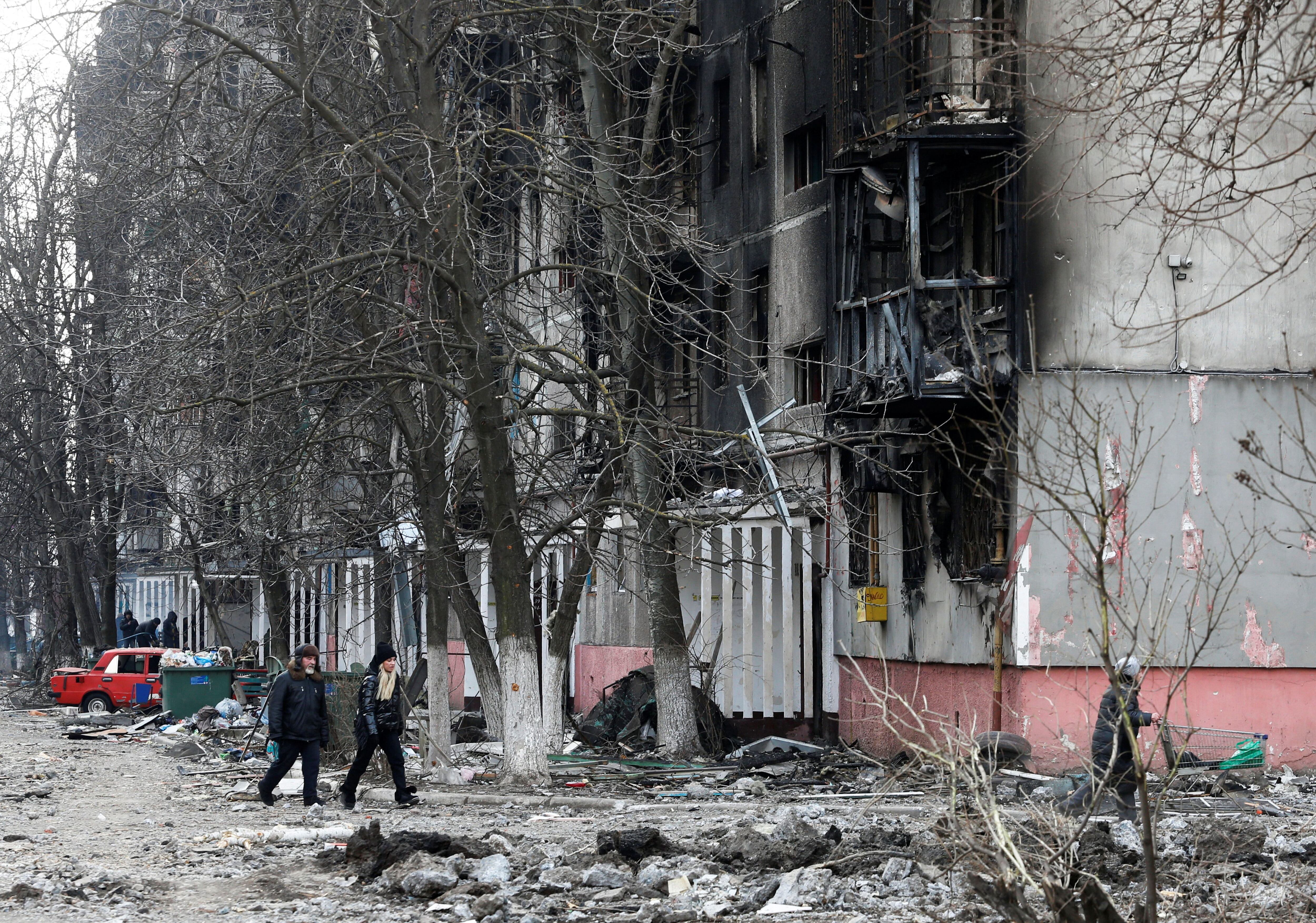
The Vatican has come to the defense of Francis. A front-page editorial on Monday in the Vatican newspaper L'Osservatore Romano noted: “Francis has been the subject of criticism by those who hope that in his public statements he will explicitly name Vladimir Putin and Russia, as if the words of the pastor of the universal church should reflect the fragments of sound of a television news program.”
The editorial, written by Andrea Tornielli, an influential Vatican official, maintained a bitter tone. He argued that the popes avoid naming the aggressors “not out of cowardice or excessive diplomatic prudence, but in order not to close the door, to always leave a crack open to the possibility of stopping evil and saving human lives.”
In fact, the pontiffs have traditionally avoided taking sides in conflicts in order to better preserve the Church's chances of playing a constructive role in possible peace talks. There are Roman Catholics all over the world and taking sides on one side or the other in a possible world conflagration could endanger millions of people. And criticizing Kirill, whom Francis has been courting for years to repair the divide between Western and Eastern churches dating back to 1054, could aggravate an already horrible situation by adding the dimension of a religious war.
But the editorial went notably beyond what Francis has openly done, arguing that the pope tried to reveal the “hypocrisy of the Russian government” when he said on March 6: “This is not just a military operation, but a war that sows death, destruction and misery.”
Some Catholic bishops from Ukraine and Poland have gone where the pope did not, blaming Patriarch Kirill, who called Putin's leadership “a miracle of God” and justified war as necessary to stop the spread of Western “gay parades” on Christian territory. Bishop Stanislav Szyrokoradiuk of Odessa-Simferopol in Ukraine said on Italian television that he wanted stronger words from Francis about Kirill, who, the bishop said, “blesses this new Hitler and Russian fascism.”
Archbishop Stanislaw Gadecki, president of the Polish Bishops' Conference, wrote in a March 2 letter to Patriarch Kirill that Russia's crimes would eventually be brought before international courts. “However, even if someone manages to avoid this human justice,” he added, “there is a court that cannot be avoided.”
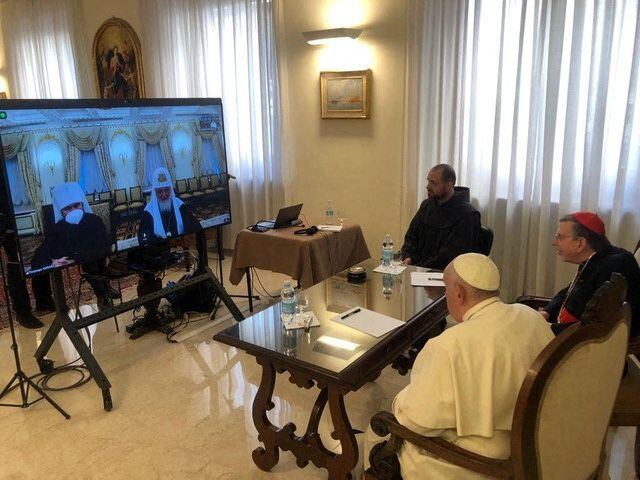
On Wednesday, Francis and Kirill spoke in a video conference, in which the two expressed “hope that a just peace can be achieved as soon as possible,” according to a statement from the Moscow Patriarchate.
“That sounded a lot to me,” said Kertzer, who pointed out that during World War II, Pope Pius XII often added the warning that true peace required justice. But, Kertzer said, that “was the language that Hitler used, and that Mussolini used” when both dictators complained that the injustice of the Treaty of Versailles prevented true peace and then tried to pass the pontiff's carefully neutral language as proof that he agreed with them.
Kertzer said that although Francis was different in many ways from Pius XII, “he too, knowingly or not, is now lending himself to being used by the Russians to support his position.”
Last Wednesday, the Vatican issued its own statement on the conversation between Francis and Kirill. He noted that Francis said: “There was a time, even in our churches, when there was talk of a holy war or a just war. We can't talk like that today. A Christian awareness of the importance of peace has developed.”
“Wars are always unfair,” he added, “since it is God's people who pay.”
The role of religious leaders may seem peripheral to the horrors on the ground in Ukraine. But religion, or Christian mysticism, has been central to Putin's nationalist project at home and abroad. For years, European populists and even some traditionalists of the Roman Catholic Church regarded Putin, who met with Francis three times, as a true defender of Christianity because of his adoption of the Christian heritage and his opposition to liberal and progressive values.
Putin's Catholic admirers sometimes compare the Russian leader to Pope John Paul II, who is often credited with helping to bring down Soviet communism, because both Putin and John Paul exalt the Christian heritage shared by the East and West over secular values, whether communist or liberal.
Putin's religion-steeped, nationalist vision of a “Russky Mir”, or “Russian world,” is more rooted in myth than in real history, but has been supported by Kirill. It has also been central to Putin's justification of war.
In his July 2021 essay “On the Historical Unity of Russians and Ukrainians”, Putin refers to Prince Volodymyr, a Viking leader who belonged to the Rus tribe of Kiev and who converted to Christianity in 988. St. Vladimir of Kiev, as the Russians came to call him, became responsible for the Christianization of Russia. Putin has argued that this long-standing link between Ukraine and Russia “largely determines our current affinity”, justifying the invasion.
Historian Timothy D. Snyder has said that the connection between Kiev and Moscow really arose in the late 17th century, when Kiev priests spoke to their Moscow counterparts about the convert Volodymyr and his shared Russian heritage to improve connections with Russia, which was then on the rise.
More than 300 years later, amid a split between the Russian and Ukrainian churches, Francis became the first pontiff to meet with a patriarch of the Russian Orthodox Church. At that meeting, with Kirill in Cuba in 2016, the leaders signed a statement of common goals, including avoiding confrontation in Ukraine.
Now that Russia has unilaterally forced that confrontation, Francis' pontifical project to heal wounds between eastern and western churches seems to have the cost of not publicly blaming Mr Putin and Kirill for opening real wounds and shedding royal blood. It is not clear how long that papal neutrality can be maintained.
“Certainly,” Kertzer said of Francis, “is under pressure.”
KEEP READING:
Últimas Noticias
Debanhi Escobar: they secured the motel where she was found lifeless in a cistern
Members of the Specialized Prosecutor's Office in Nuevo León secured the Nueva Castilla Motel as part of the investigations into the case

The oldest person in the world died at the age of 119
Kane Tanaka lived in Japan. She was born six months earlier than George Orwell, the same year that the Wright brothers first flew, and Marie Curie became the first woman to win a Nobel Prize

Macabre find in CDMX: they left a body bagged and tied in a taxi
The body was left in the back seats of the car. It was covered with black bags and tied with industrial tape

The eagles of America will face Manchester City in a duel of legends. Here are the details
The top Mexican football champion will play a match with Pep Guardiola's squad in the Lone Star Cup

Why is it good to bring dogs out to know the world when they are puppies
A so-called protection against the spread of diseases threatens the integral development of dogs


