


“We are working in Romania, mainly on the Ukrainian-Romanian border and assisting Argentines crossing these border points and all those who are still in Ukraine and have decided to move temporarily or permanently.” Elena Leticia Mikusinski, a career diplomat who graduated from the Foreign Service of the Nation in 1983, was appointed in early 2019, during Mauricio Macri's government, as Argentine ambassador to Kiev. She never imagined that three years later she could be surprised by a war like the one being waged between Russia and Ukraine and that she would have to experience situations full of drama, chaos and desolation.
Until February 24 of this year, the ambassador was able to work with some normality on the sixth floor of the diplomatic headquarters located at 12 Ivana Fedorova Street in the Ukrainian capital. In that building with large windows, the bombings woke them up at 4.30 in the morning. “That day several Argentines showed up, we tried to assist them even by completing procedures and offering advice. With the impact of the first bombs, we knew it was necessary to fulfill our responsibilities and we opened the embassy,” Mikusinski explains. A few hours later, Chancellor Santiago Cafiero sent the instruction to relocate the embassy, in order to preserve security.
Local employees still continued to work remotely to help “as long as they should not be sheltered in shelters and there is connectivity.” “Local employees have responded and helped with various tasks, official translations and various steps. The two diplomats, the consul and myself, are constantly monitored by the two diplomats,” says the ambassador.
- How was the evacuation and the trip to another country?
-We left Kiev because in advance there was talk of possible actions involving lack of energy and normal fuel supply, fuel reserves were made in drums and were crucial when it came to evacuation by land, accompanied by other Argentinean citizens to Moldova to then enter Romania. This itinerary was chosen as it is the fastest and safest route, plus the fact that the wait at the border crossing is one of the least prolonged.

- What were you able to observe on that trip to Poland?
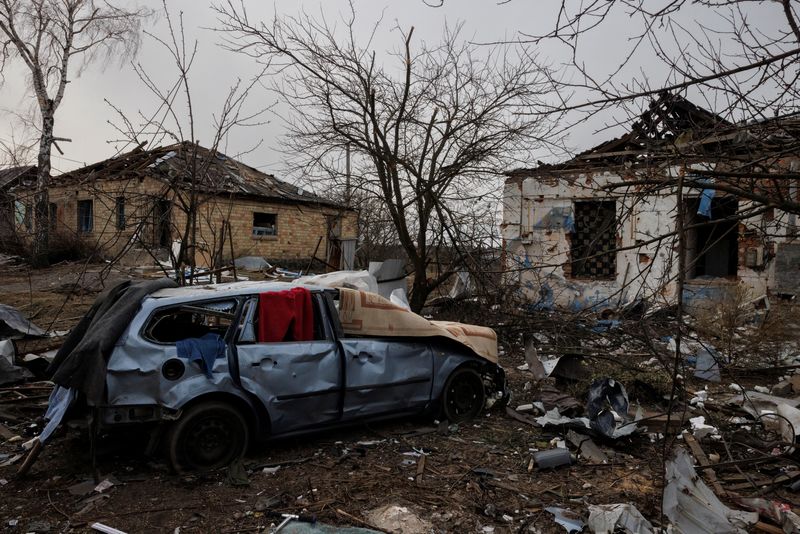
-The trip involved moments of uncertainty and tension typical of a country at war. The typical farmers' villages with the houses so well kept, and with their characteristic paintings, could be equated to an unused scenery; completely desolate, empty and in darkness. Empty hammocks, ghost towns... Helicopters in their rigorous control running through the area flew just meters away from us. We crossed long lines of convoys with military trucks and equipment that marked a reality. Different images of disintegrated families crossed my mind, where each house is a heartbreaking story; such as grandparents and grandchildren who are separated from the men who have to go to the front line to defend their land, leaving their affections and terroir for an uncertain future. He repeatedly reflected on the fate of those villages, of those rich and productive lands, of those farmers who managed to place Ukraine among the countries with the highest cereal production and today. I saw children saying goodbye to their parents who stayed in Kiev to defend their land, their homeland and their ideals.
- Does this war bring back family memories? Because his dad was a prisoner of the Nazis during World War II.
-My family experience has made me aware of the stories I heard since I was a child, since both branches survived the Second World War, the 100-year-old maternal from Leopolis/Lviv and the paternal from Krakow. My maternal grandfather was saved from Katyn, he was a military judge, studied law in Lviv and then fought in the First World War. In '39 he was saved from Katyn but was deported to a gulag in Komi, in the USSR. My grandmother, my mother and my uncle suffered the same fate when they entered the then NKVD at 3 in the morning and deported them to Siberia. My father, as a career soldier, recently promoted to captain, was a prisoner of Colditz (the fortress near Leipzig where officers from France, the United Kingdom, Belgium and Poland remained prisoners, a prison famous for the extreme conditions and the courage of some officers who managed to escape) there is a profuse literature on that prison, for the heroism of those prisoners. In 2000 I discovered a book published by the University of Cambridge, the history thesis of PhD student Henry Chancellor, I found a group photo where my father is, and descriptions of the various escape attempts. My maternal family miraculously escaped from Siberia, they crossed from Kazakhstan, Uzbekistan, Iran, Iraq to Palestine. I think about people who must abandon their affections, their lives and I observe that pets occupy a preponderant place, my mother always commented on the pain when she had to part with her little dog.
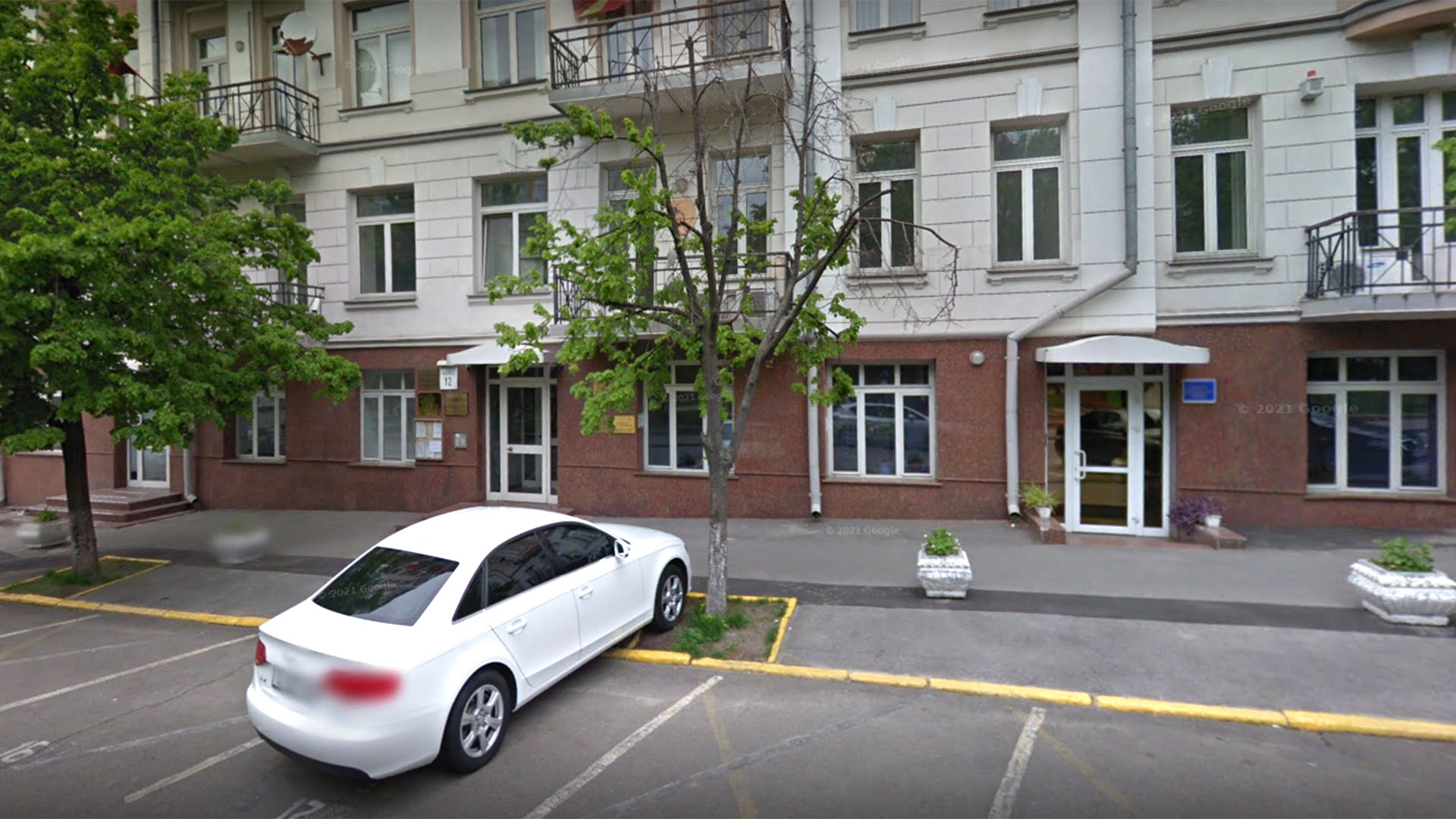
- How were the days before you left the capital of Ukraine?
-Faced with the bombings and explosions in Kiev, I decided to set up the basement of the Residence for vulnerable non-resident Argentines with minors who were stranded without being able to return due to flight cancellations. Luckily, we managed to supply food, water and other essentials to be able to survive without problems in a resistant space protected by wide walls. We stayed there for 7 days. We have to acknowledge that from February 24 at dawn, when in the ambassadorial chat we began to report to each other the violent explosions, it can be said that our lives changed dramatically in the historic city of Kiev (Kyiv), whose celebrations organized by Mayor Vitali Klitschko for his 1539th anniversary were fulfilled in 2021.
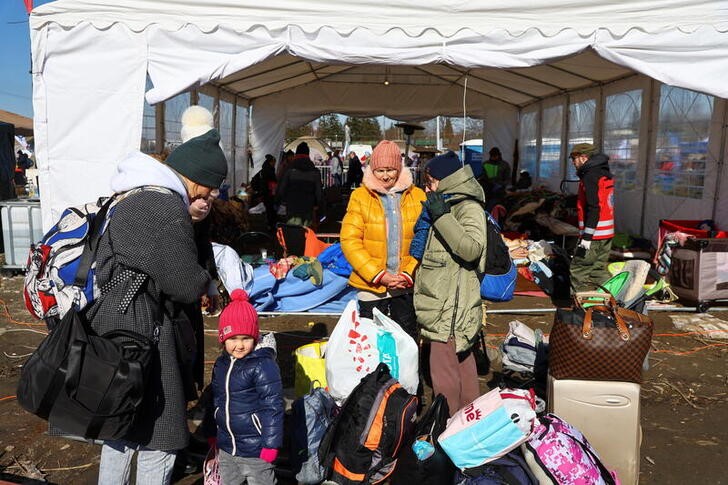
-Once they settled on the border between Romania and Ukraine, what did they start doing?
-We are working in Romania, mainly on the Romanian Ukrainian border and assisting Argentines crossing these border points and all those who are still in Ukraine and have decided to move temporarily or permanently. Our local staff continues to assist us on a non-face-to-face basis, this is the modality that almost all embassies have adopted. To the extent that they do not have to be sheltered in shelters and there is connectivity, local employees have responded and assisted with various tasks, official translations and miscellaneous arrangements. The two diplomats, the consul and myself, are constantly monitored by the two diplomats.
- Do you work in conjunction with other embassies?
- I am in constant contact with the ambassadors accredited to Ukraine and carry out efforts and coordination tasks of political-diplomatic channels with Ukrainian authorities, with the Ministry of the Interior, mayors of different cities, among others, in order to optimize humanitarian and assistance tasks. For example, we have received great support from the mayor of Lviv in order to be able to transfer Argentine citizens from that city to the border with Poland. We are currently on the Romanian-Ukrainian border, also receiving support from the mayor of Chernivtsi, where the Turkish embassy in Ukraine has been relocated. I have received the support of Chancellor Cafiero, my fellow Argentinean ambassadors to Austria, Gustavo Ainchil; Bulgaria, Alfredo Atanasof; Hungary, Hernán Patiño Mayer; Poland, Ana María Ramírez; Czech Republic, Roberto Salafia; and the Chargé d'Affaires in Romania, Carlos Vallarino, as well as the Argentine Diplomatic Network that is part of the to almost 300 diplomatic colleagues who at all times expressed their concern and accompanied me.
- What is the situation of the remaining Argentines in the area?
-In this dynamic context of tragic circumstances, the requirements are constant and demand immediate action to solve pressing cases. In coordination with the consular area of the Ministry, mechanisms are being adjusted to meet the needs and implementing emergency procedures to assist and assist compatriots and their family groups. I am accompanied by the consul, Secretary Yusef Saber, both of us from the Province of San Luis and graduated from the Catholic University of Córdoba. I was the first puntana to enter the Foreign Service through the Institute of the Foreign Service of the Nation and I am very grateful that I am accompanied by a co-provincial at this time of such particular and dramatic characteristics.
- When did they realize that the armed conflict was going to break out and how did they act?
-Escalation was always a possibility, the corresponding area of the Ministry of Foreign Affairs, International Trade and Worship was kept informed through regular reports and proposals. In anticipation of the need for assistance to compatriots, the initial measure that was taken was, from the end of January 2022, to call on the website and networks of the Argentine Embassy in Ukraine and on the Foreign Ministry website, the entire Argentine community resident and non-resident in Ukraine to register with the consulate, update their data, contact numbers and e-mail addresses and to regularize travel documentation. On February 24, we sent an emergency manual with useful suggestions and location of shelters provided by the Kiev Mayor's Office (Kyiv) and other cities that we prepared preventively. That same day, and between the explosions, we were contacted by several tourists and families who had not communicated with us before. During our stay in Kiev, we prioritized assistance to non-resident Argentinian families who were with minors temporarily and to vulnerable nationals. As the airlines canceled flights and the bombings began to intensify, we worked around the clock to assist everyone who communicated. A call was made from the consulate's e-mail to fellow residents to transfer them with government-provided transport on March 2, previously we managed to evacuate several Argentine citizens and their families. On the other hand, there were some mixed marriages that did not respond or decline our invitation, did not renew their passports in time, although the Foreign Ministry has implemented a digital provisional passport that is used to assist Argentine citizens in these difficult circumstances.
- What can you tell about the current situation in Ukraine?
-Although the entire territory of Ukraine faces attacks and there are no longer areas free from potential attacks, the seriousness of the situation has worsened in some regions that have been completely isolated, which in addition to losing all types of connections and means of transport, no safe or humanitarian corridor is respected for evacuating civilians. A few Argentines are in areas of high risk and incommunicado.
- How important was the arrival of the White Helmets mission to the border in order to collaborate with humanitarian aid?
-The White Helmets mission, under the Ministry of Foreign Affairs, was already working on the border with Poland and since Saturday 12 March they have also been in Romania, very prepared for these humanitarian tasks, it is an interdisciplinary team that comes from attending our embassy in Poland and will now accompany us on the Romanian border -Ukrainian and we are in constant contact with the President of White Helmets, Sabina Frederic.
KEEP READING:
Últimas Noticias
Debanhi Escobar: they secured the motel where she was found lifeless in a cistern
Members of the Specialized Prosecutor's Office in Nuevo León secured the Nueva Castilla Motel as part of the investigations into the case

The oldest person in the world died at the age of 119
Kane Tanaka lived in Japan. She was born six months earlier than George Orwell, the same year that the Wright brothers first flew, and Marie Curie became the first woman to win a Nobel Prize

Macabre find in CDMX: they left a body bagged and tied in a taxi
The body was left in the back seats of the car. It was covered with black bags and tied with industrial tape

The eagles of America will face Manchester City in a duel of legends. Here are the details
The top Mexican football champion will play a match with Pep Guardiola's squad in the Lone Star Cup

Why is it good to bring dogs out to know the world when they are puppies
A so-called protection against the spread of diseases threatens the integral development of dogs


