


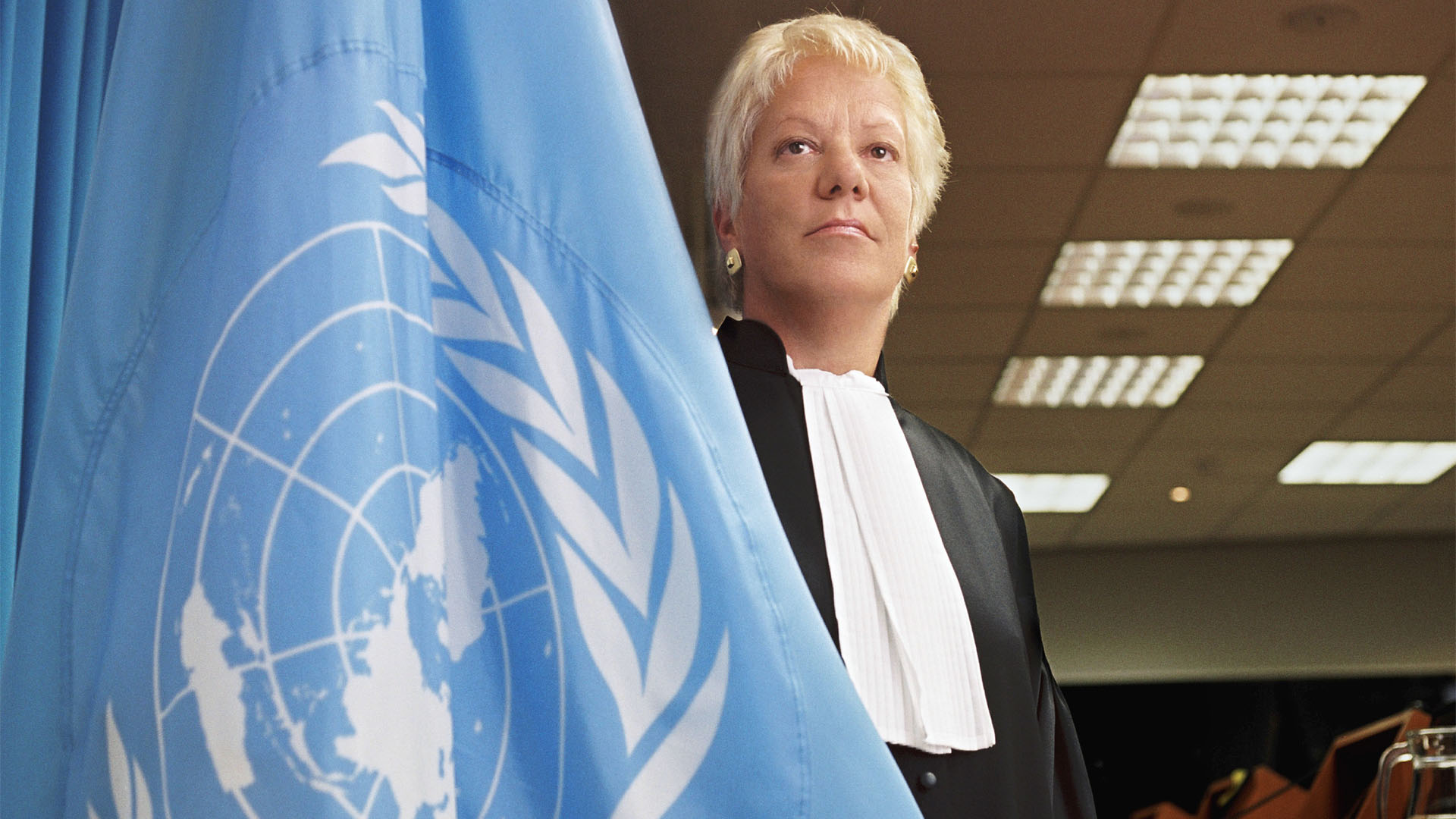
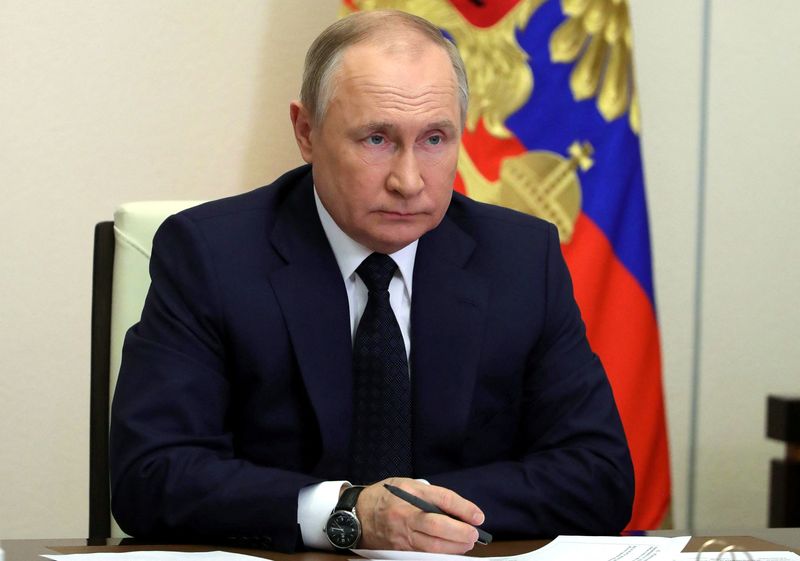
Former war crimes prosecutor Carla Del Ponte has asked the International Criminal Court (ICC) to quickly issue an arrest warrant for Russian President Vladimir Putin for his actions in Ukraine.
“Putin is a war criminal,” said Del Ponte, who rose to prominence investigating war crimes in Rwanda and the former Yugoslavia, in an interview with Le Temps, published on Saturday.
The 75-year-old Switzerland claimed that international arrest warrants are needed against Putin and other senior Russian officials to hold them responsible for war crimes committed since Moscow launched its large-scale invasion of Ukraine on February 24.
After just over five weeks of invasion, thousands of people have died and millions have been displaced while parts of Ukraine have been reduced to rubble.
Del Ponte, who was also part of the UN commission investigating rights abuses in the Syrian war for years, stressed that the issuance of an arrest warrant was an important sign “that the investigative work has been done.”
“It is the only instrument that exists that allows the perpetrator of a war crime to be arrested and brought before the International Criminal Court,” he told Le Temps.
Del Ponte acknowledged that an arrest warrant does not necessarily mean that Putin will be arrested.
“If you stay in Russia, it wouldn't be the case. But it would be impossible for him to leave his country, and it would be a strong sign that he has many states against it.”
The Chief Prosecutor of the ICC, based in The Hague, opened an active investigation on 3 March into possible war crimes in Ukraine, after gaining the support of more than 40 states that are part of the tribunal.
Del Ponte said that his experience as chief prosecutor of the International Criminal Tribunal for the Former Yugoslavia gave him hope that Putin, like former Yugoslav President Slobodan Milosevic, could one day be arrested and charged with war crimes.
And “we must also find incriminating evidence against high-level political and military officials,” he said.
“The difficulty lies precisely in reaching the top of the chain of command to identify those who planned, ordered and executed war crimes.”
Ukraine is not a signatory to the Rome Statute treaty establishing the ICC, but in 2014 it officially recognized the jurisdiction of the tribunal for crimes committed on its territory.
Russia withdrew its signature from the Rome Statute in 2016.
For her part, the United Nations High Commissioner for Human Rights, Michelle Bachelet, said that Russia's bombing and indiscriminate attacks on populated areas of Ukraine generate “immense concern” and could amount to “war crimes”.
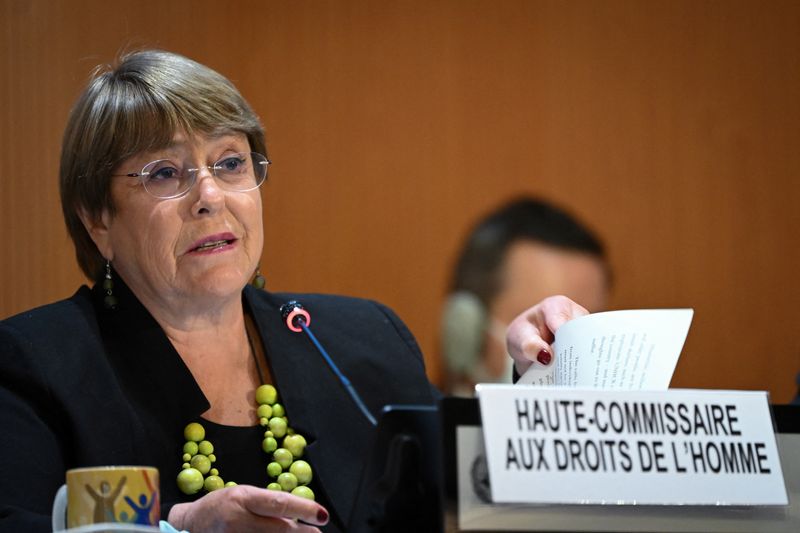
“Indiscriminate attacks are prohibited by international humanitarian law and could amount to war crimes,” the former Chilean president told the UN Human Rights Council in Geneva, resorting to parole by convention, since the accusations must in principle be decided by a court.
The Russian armed forces have used cluster bombs, prohibited by international law, on at least 24 occasions against populated areas of Ukraine in the five weeks since the start of the war, he said.
(With information from AFP and EFE)
KEEP READING:
Últimas Noticias
Debanhi Escobar: they secured the motel where she was found lifeless in a cistern
Members of the Specialized Prosecutor's Office in Nuevo León secured the Nueva Castilla Motel as part of the investigations into the case

The oldest person in the world died at the age of 119
Kane Tanaka lived in Japan. She was born six months earlier than George Orwell, the same year that the Wright brothers first flew, and Marie Curie became the first woman to win a Nobel Prize

Macabre find in CDMX: they left a body bagged and tied in a taxi
The body was left in the back seats of the car. It was covered with black bags and tied with industrial tape

The eagles of America will face Manchester City in a duel of legends. Here are the details
The top Mexican football champion will play a match with Pep Guardiola's squad in the Lone Star Cup

Why is it good to bring dogs out to know the world when they are puppies
A so-called protection against the spread of diseases threatens the integral development of dogs


